Havells R&D Centre
Noida
- Site Area: 7.7 acres
- Built Up: 10,00,000 sq. ft.
A research campus shaped by ceremonial landscape, climatic intelligence, and institutional presence
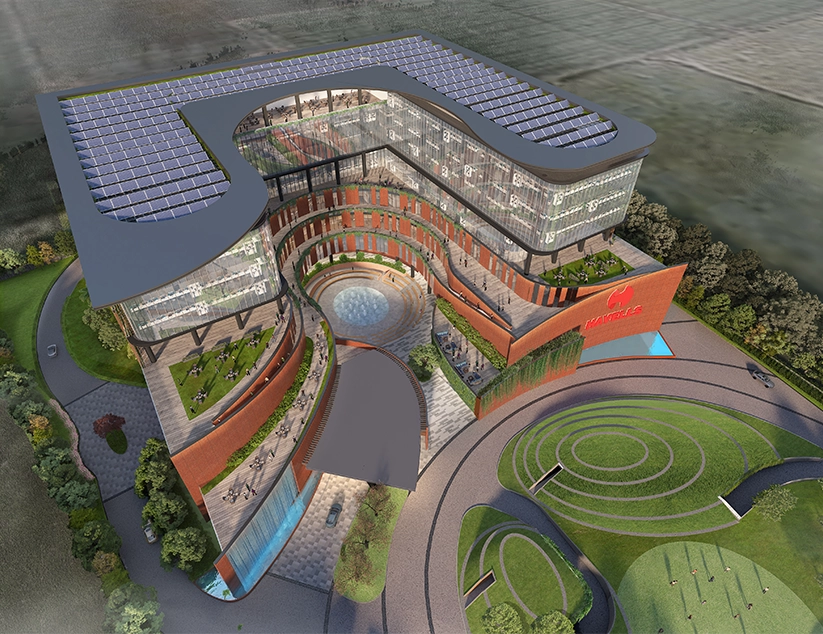
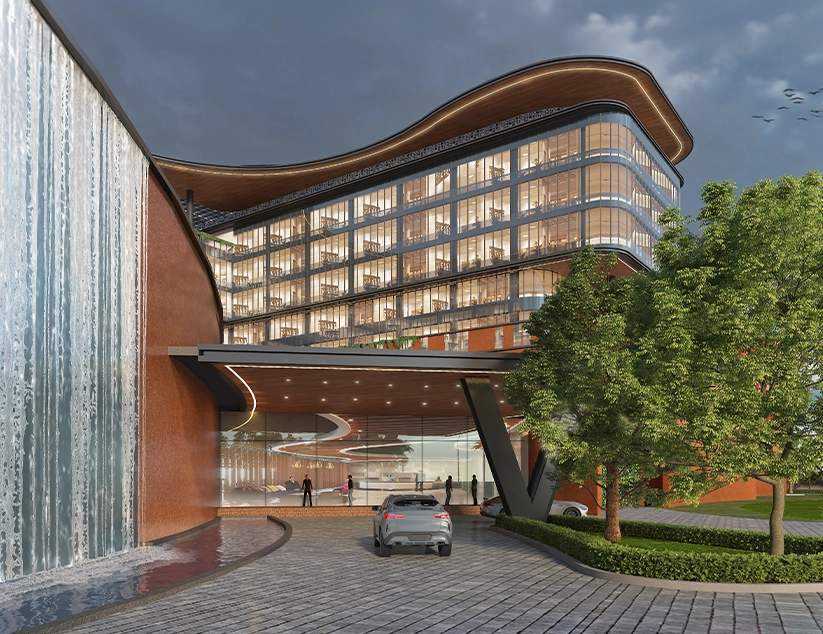
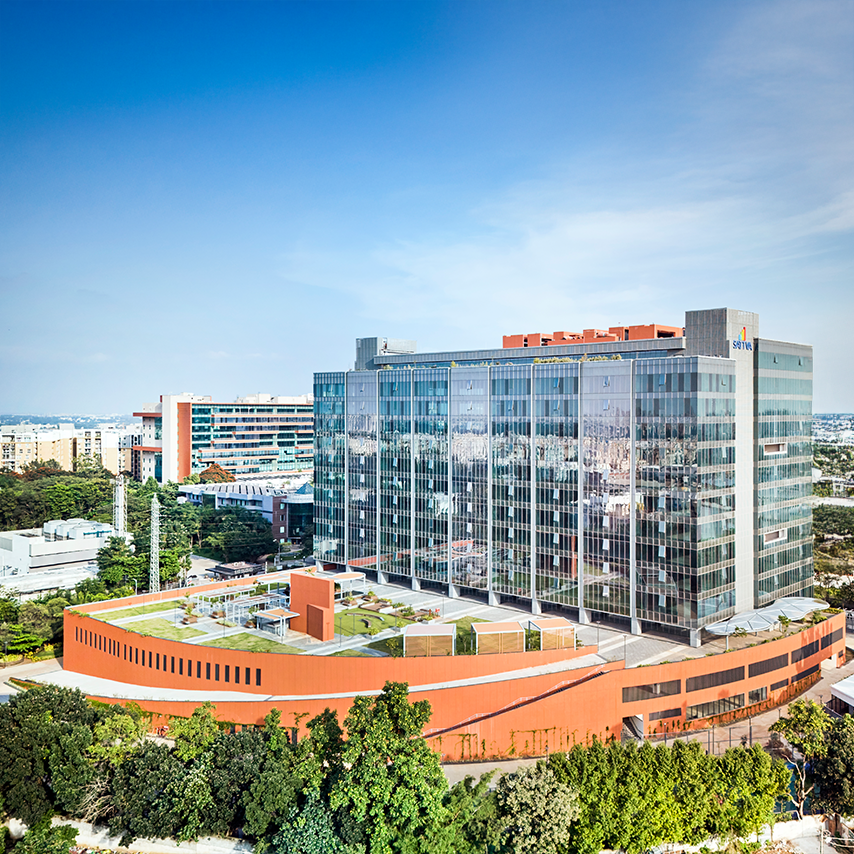
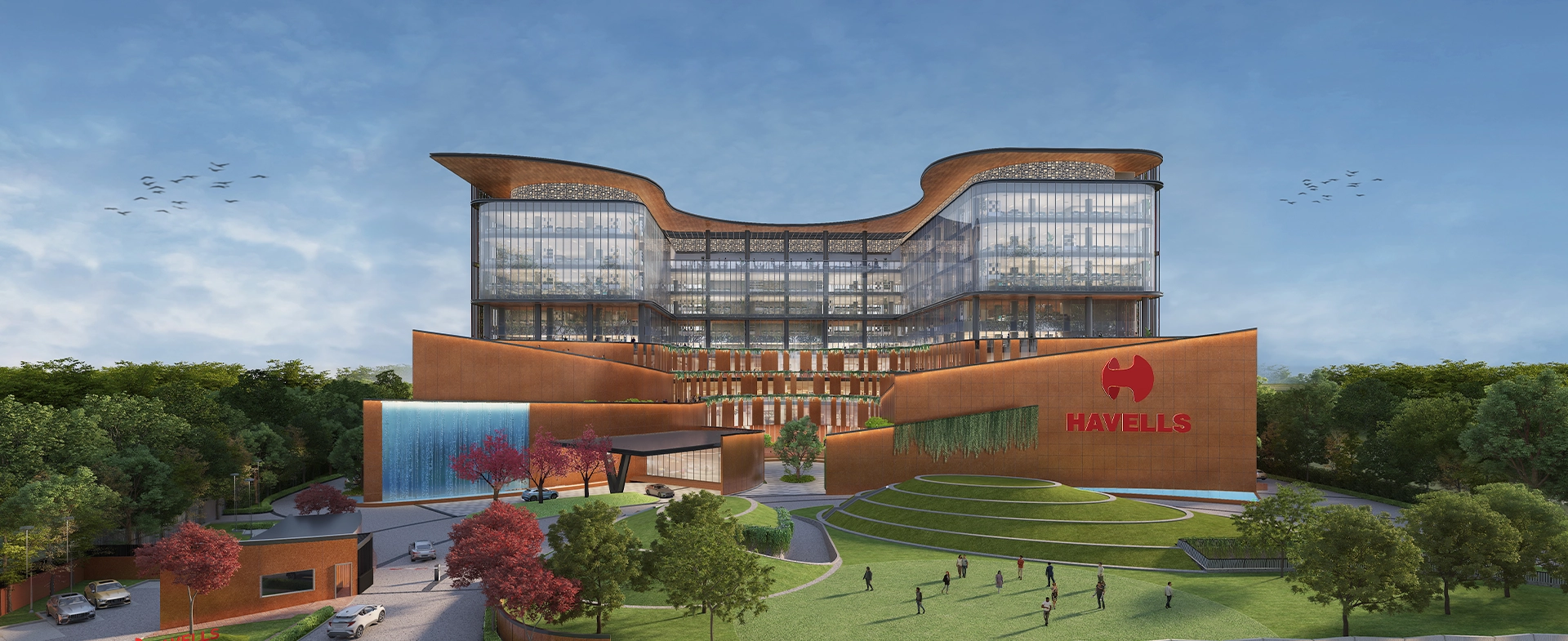
The Havells R&D Centre in Sector 161, Noida, is conceived as a landmark headquarters within an emerging institutional and knowledge corridor. Set alongside the Noida-Greater Noida Expressway, with metro access close at hand, the site offers strong regional visibility and long-range views towards the north, while the elevated rail line and service edges to the south and east call for a more protected and carefully choreographed response. The project draws these conditions together in a campus that is at once publicly legible and deliberately inward in its spatial experience.
The building is organised as a vertically integrated environment for research, learning, display, and future growth. Public and brand-facing functions, including the experience centre, product display, and auditorium, occupy the lower levels, establishing a strong institutional base. Above them, learning and development spaces lead into laboratory floors, while office levels and future expansion zones are accommodated higher up within the stack. Terraces, planted spill-out spaces, and collaborative zones are woven through the section, allowing the building to remain adaptable while extending the workplace beyond enclosed interiors.
What gives the project its particular character, however, is the way landscape is treated as an architectural act rather than as foreground decoration. Ceremonial mounds, reflective water bodies, a dramatic water curtain, and a central open-air amphitheatre are composed as part of the same curvilinear language as the building itself, producing an arrival sequence that feels both grand and controlled. The landscape softens the infrastructural demands of the site, conceals ramps and service elements, and creates spaces for gathering, pause, and collective identity. The boundary wall is likewise conceived as a sculptural extension of the architecture, giving the campus a strong roadside presence while also forming a backdrop to the congregation lawn within. This fusion of architecture, landscape, and environmental thinking is reinforced by the project’s broader design strategy, which integrates passive measures, green terraces, microclimatic outdoor spaces, and a calibrated sectional organisation to support performance as well as experience.