Wipro Campus
Hyderabad
- Site Area: 38 acres
- Built Up: 16,35,725 sq. ft.
Habitable Outdoors Replace Indoor Square Footage
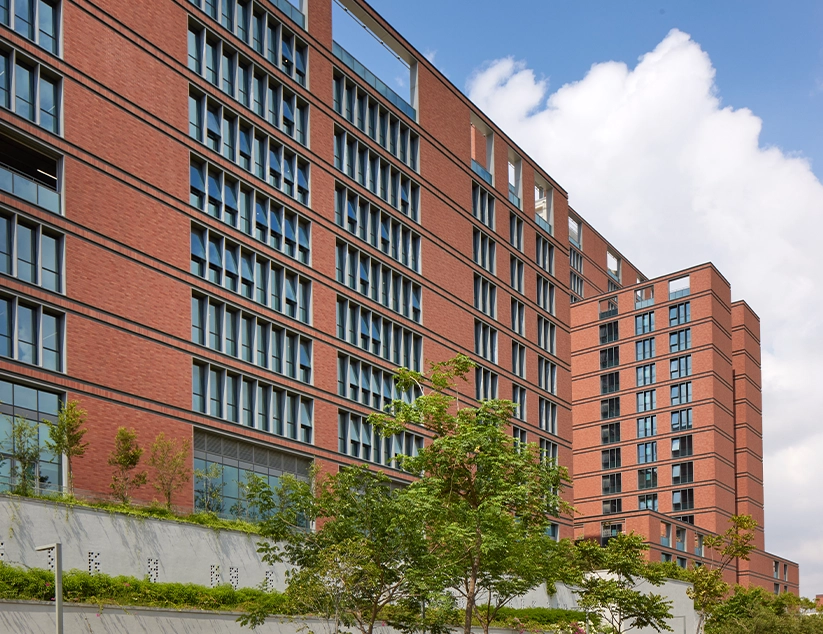
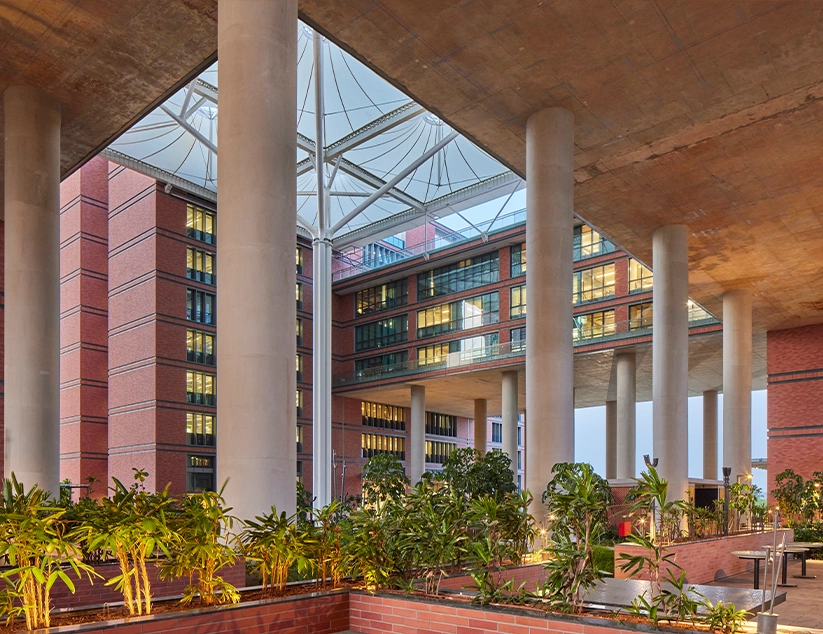
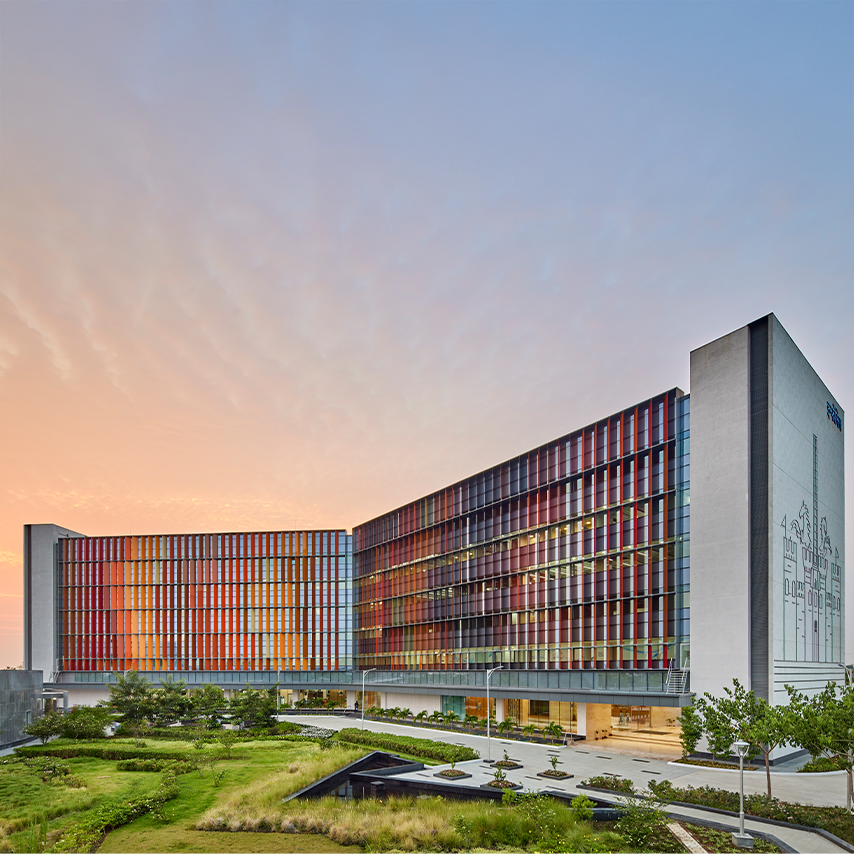
Spread across Gopanpally near Hyderabad’s Financial District, the Wipro Corporate Campus accommodates 11,000 employees within a nearly one million square foot workplace environment designed around climate responsiveness, operational efficiency, and employee wellbeing. Conceived as a community-oriented corporate precinct, the campus reflects Wipro’s ambition to create a future-ready workplace that draws equally from environmental performance and local context.
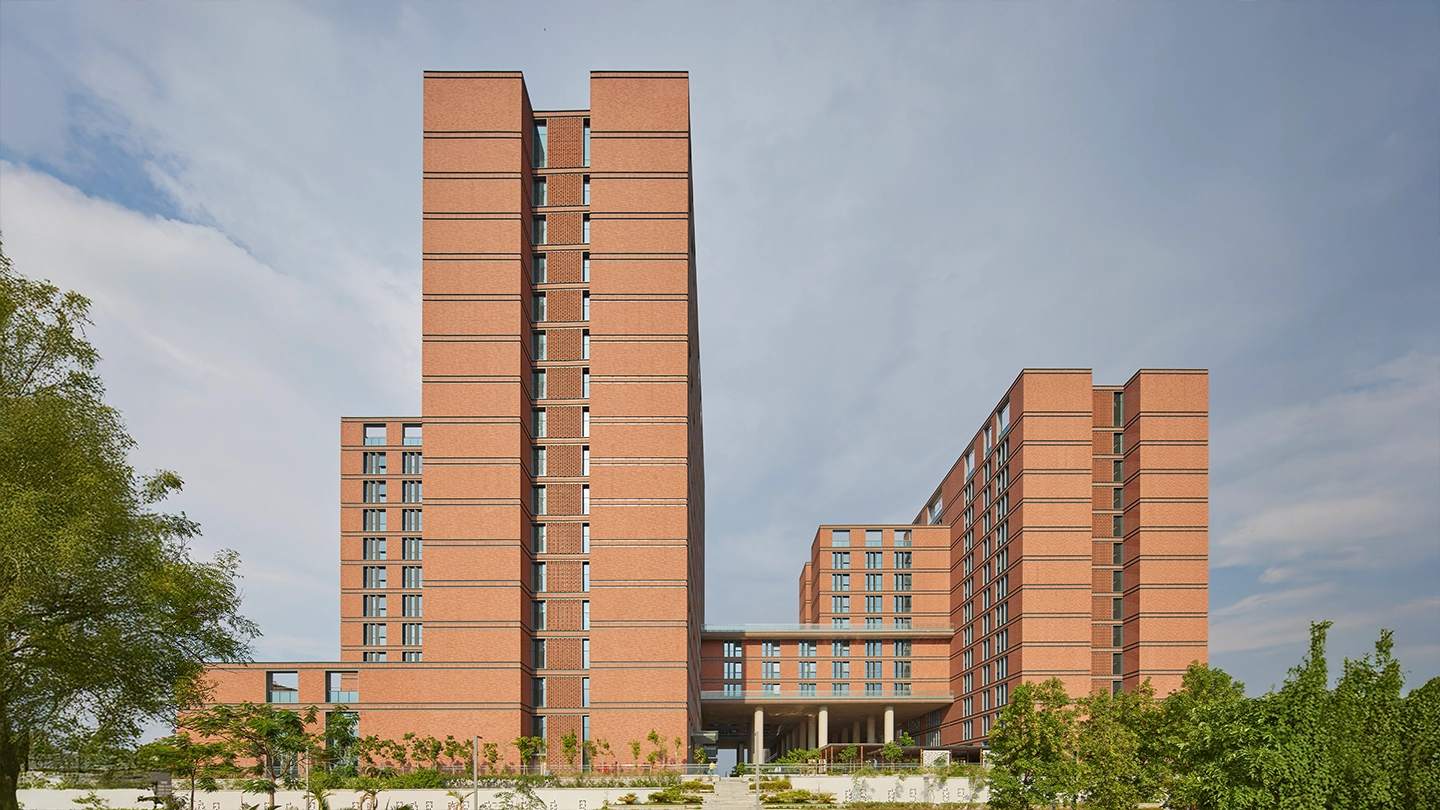
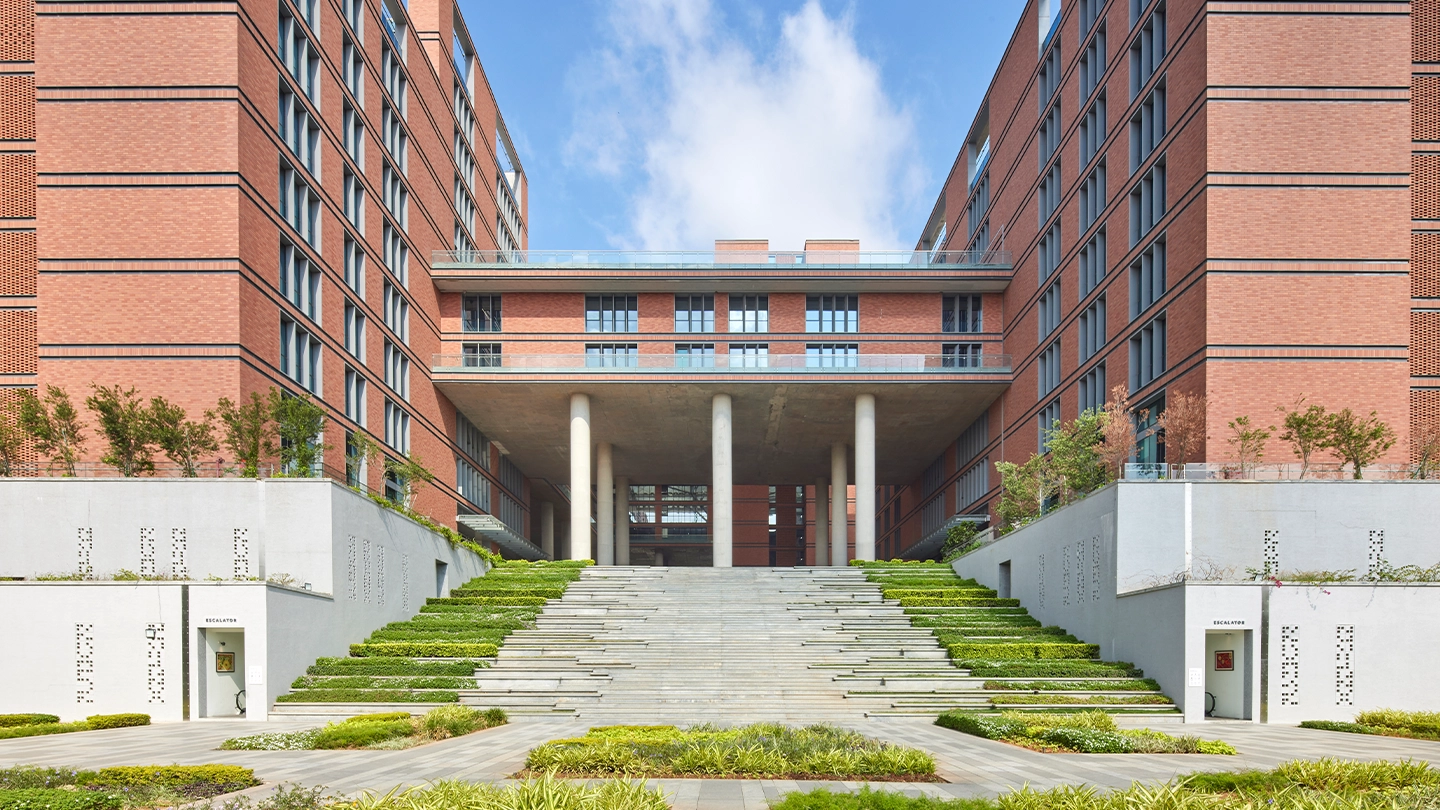
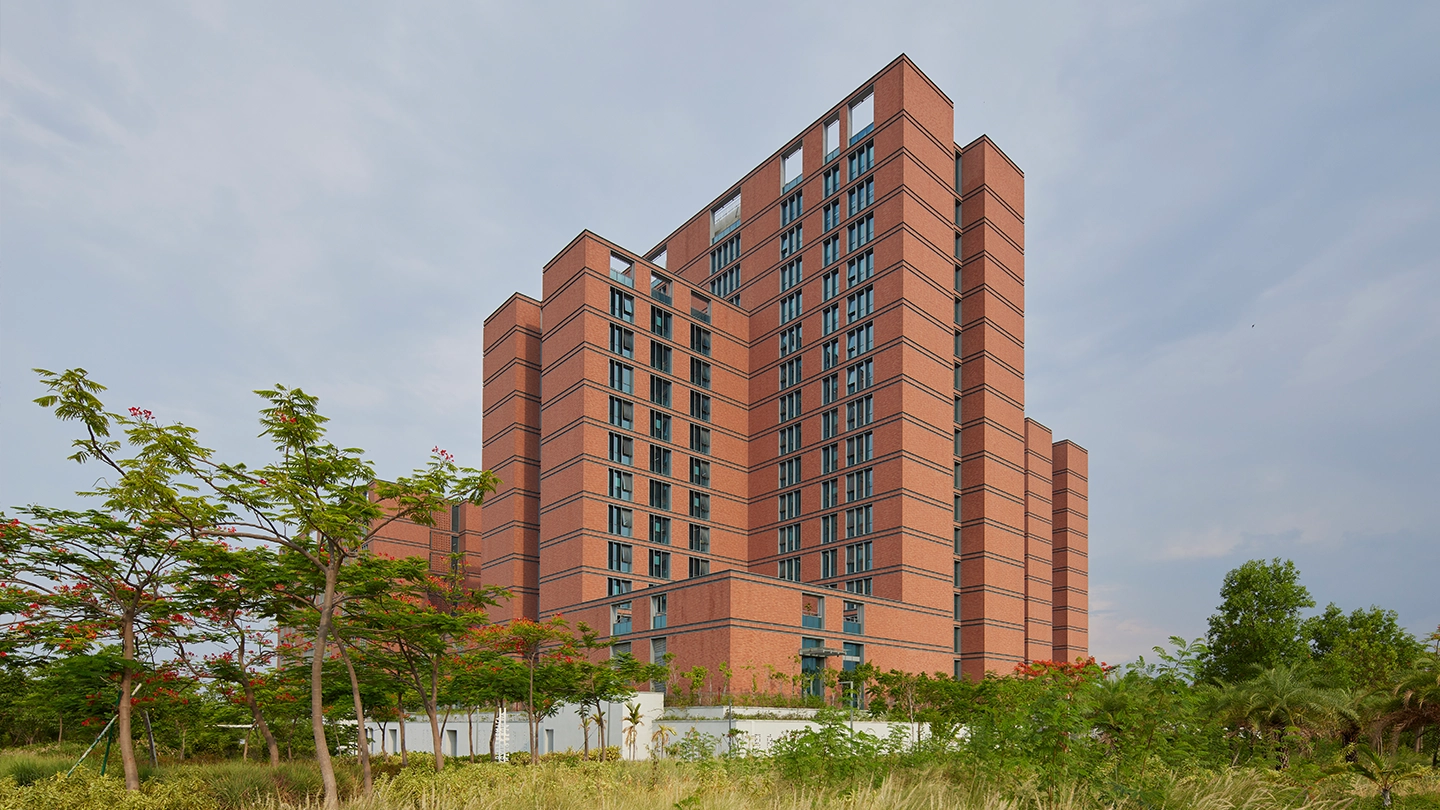
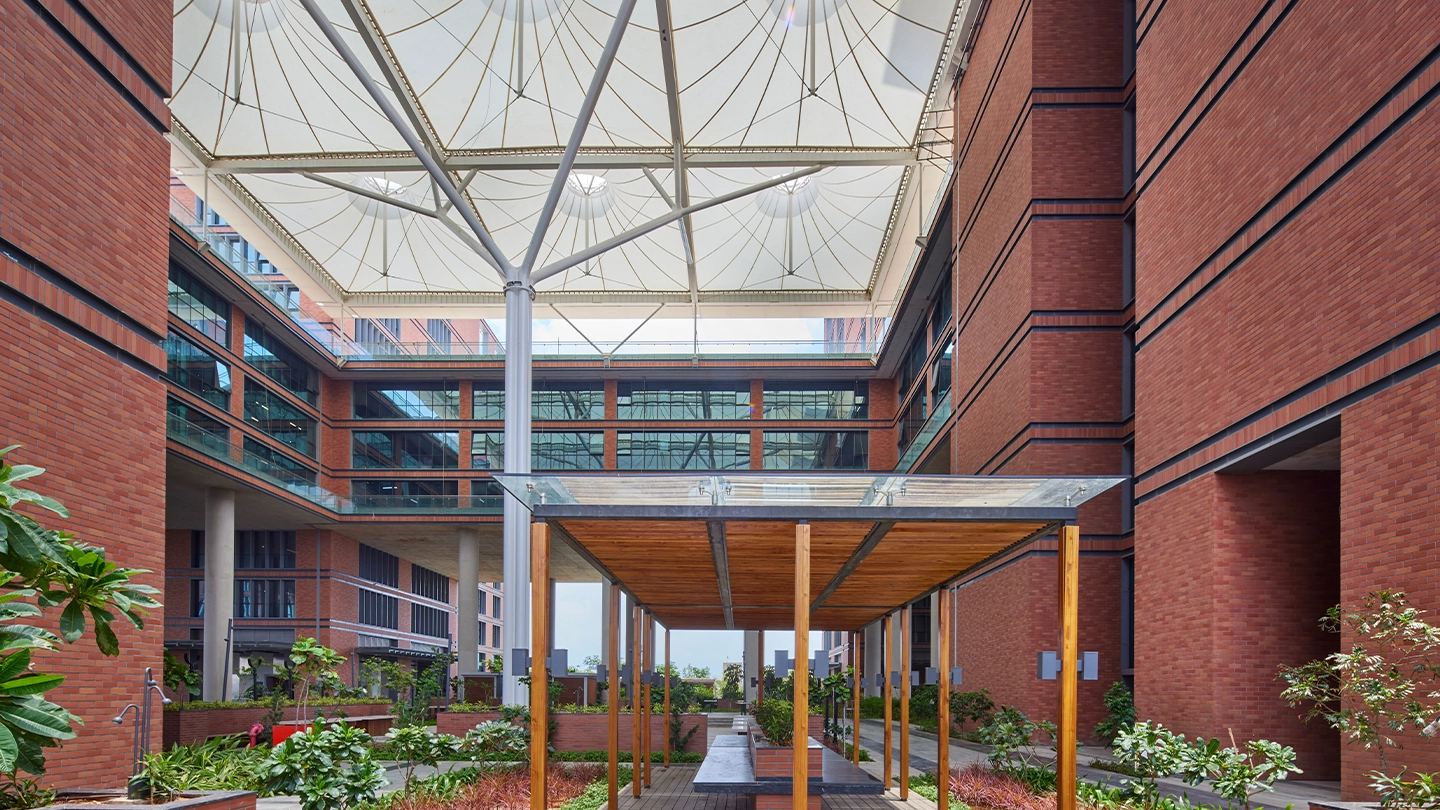
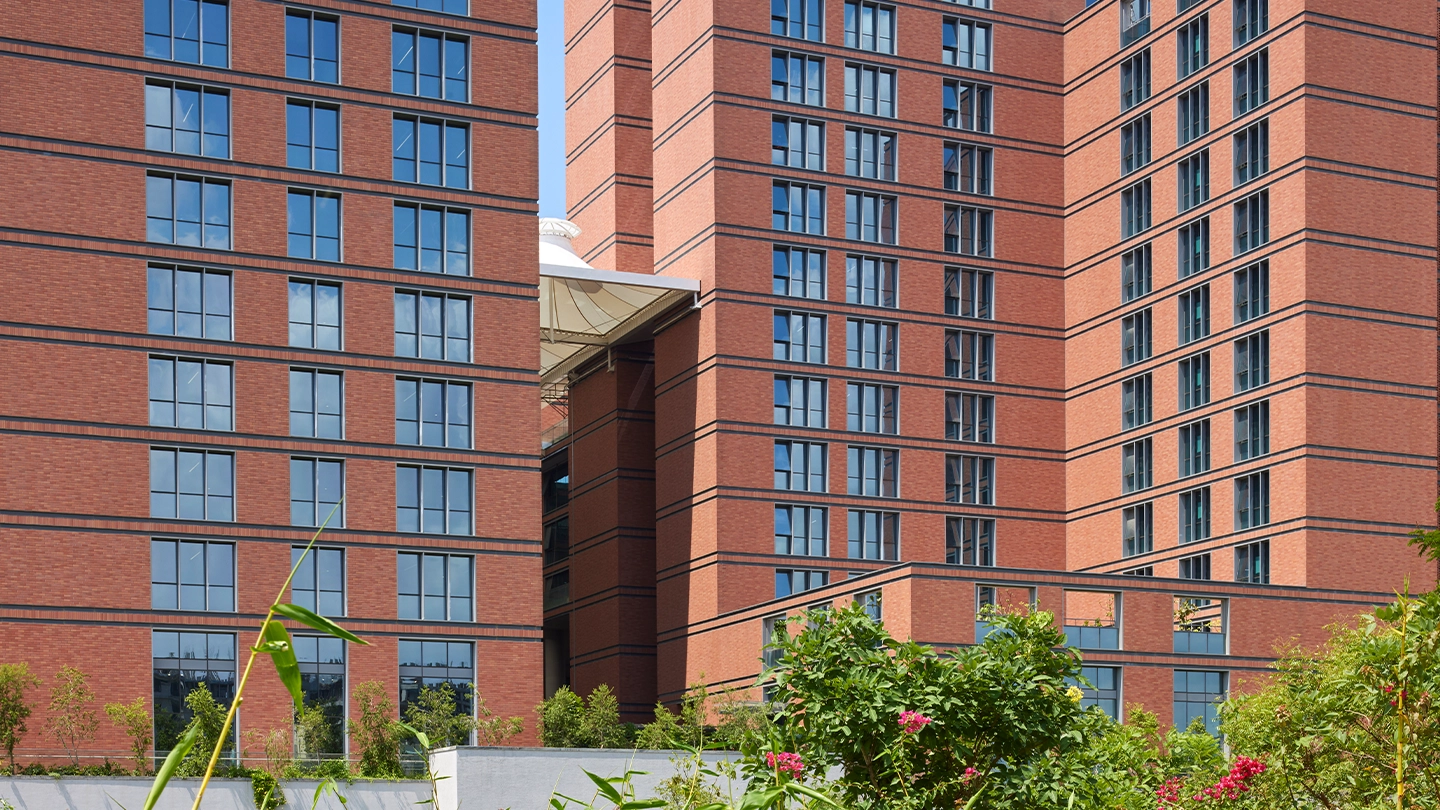
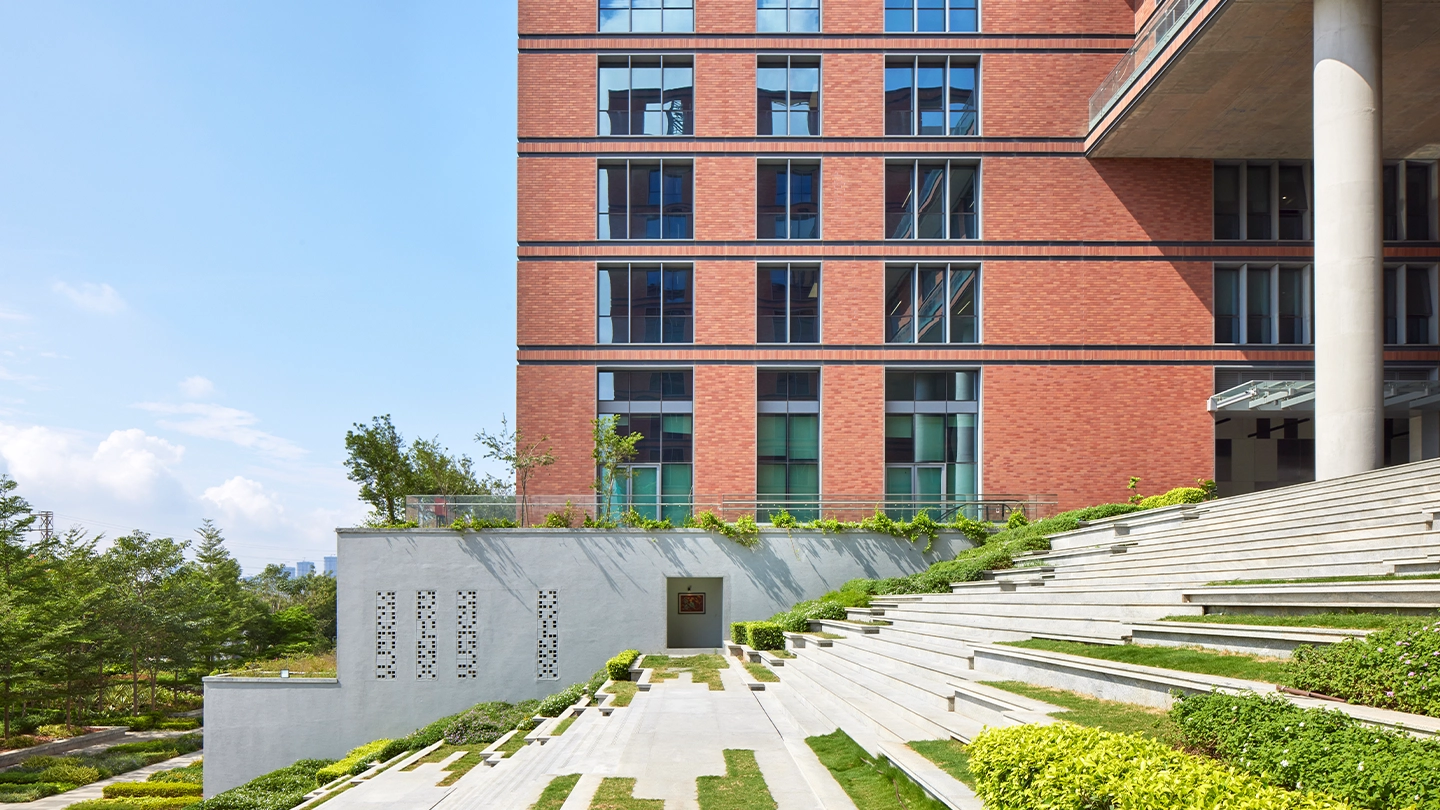
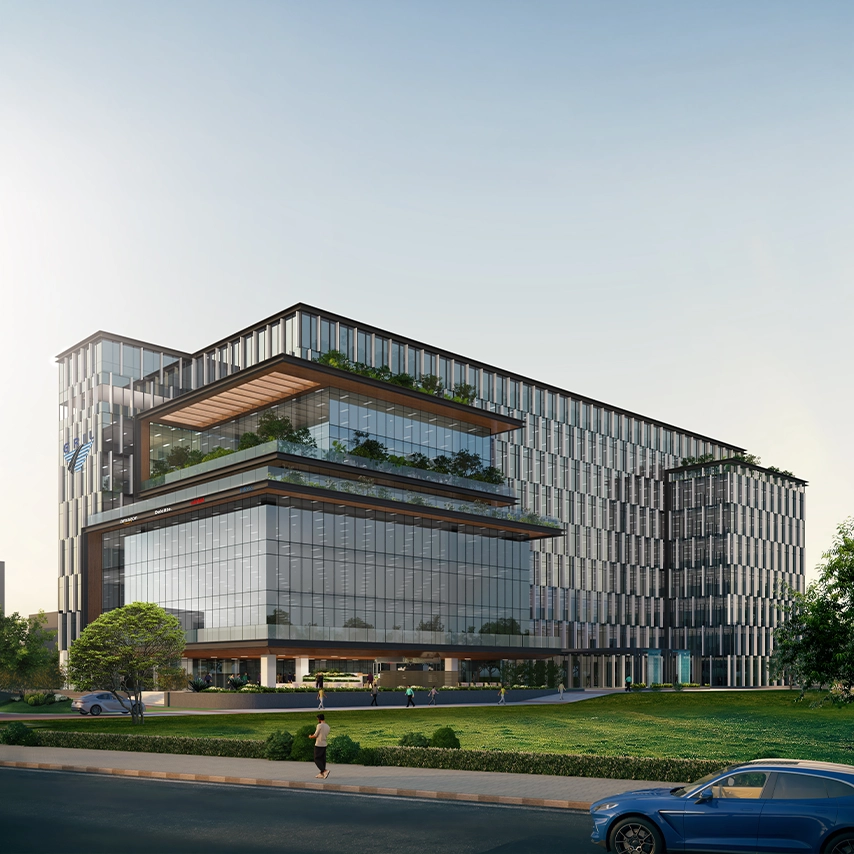
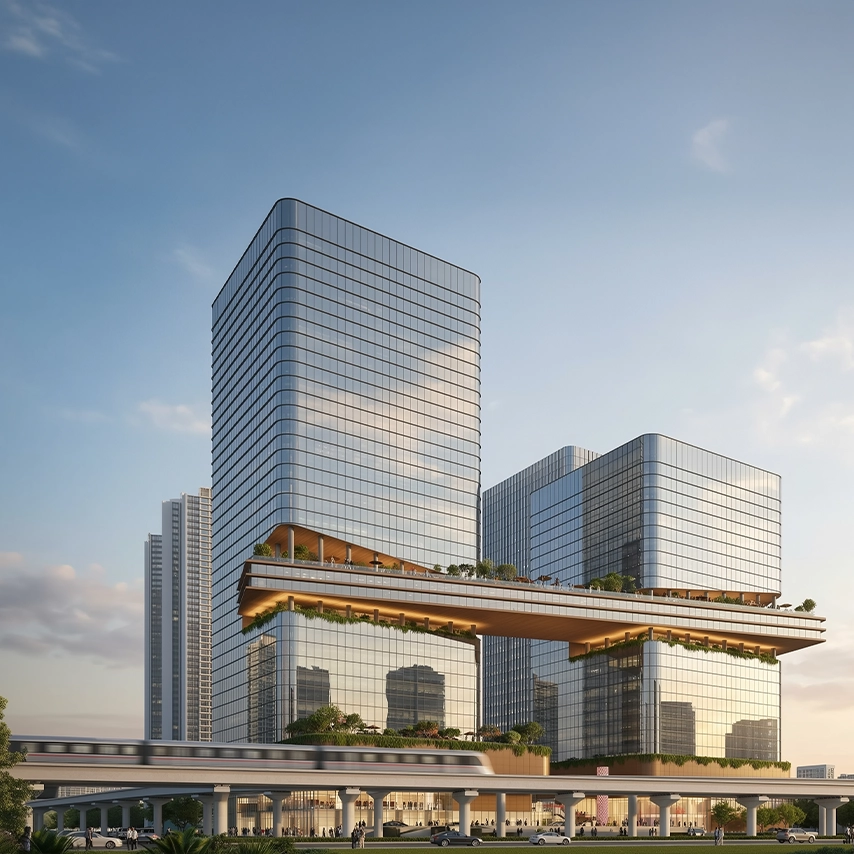
Designed for Hyderabad’s tropical climate, the campus responds to two interconnected objectives: maximising workplace capacity within an efficient footprint while advancing the company’s net-zero aspirations. Buildings are aligned along the north-south axis to reduce heat gain, while staggered massing creates self-shading and improves airflow across the site. Deep terraces extend the workplace into the landscape, creating outdoor environments that encourage interaction, informal collaboration, and everyday engagement with nature.
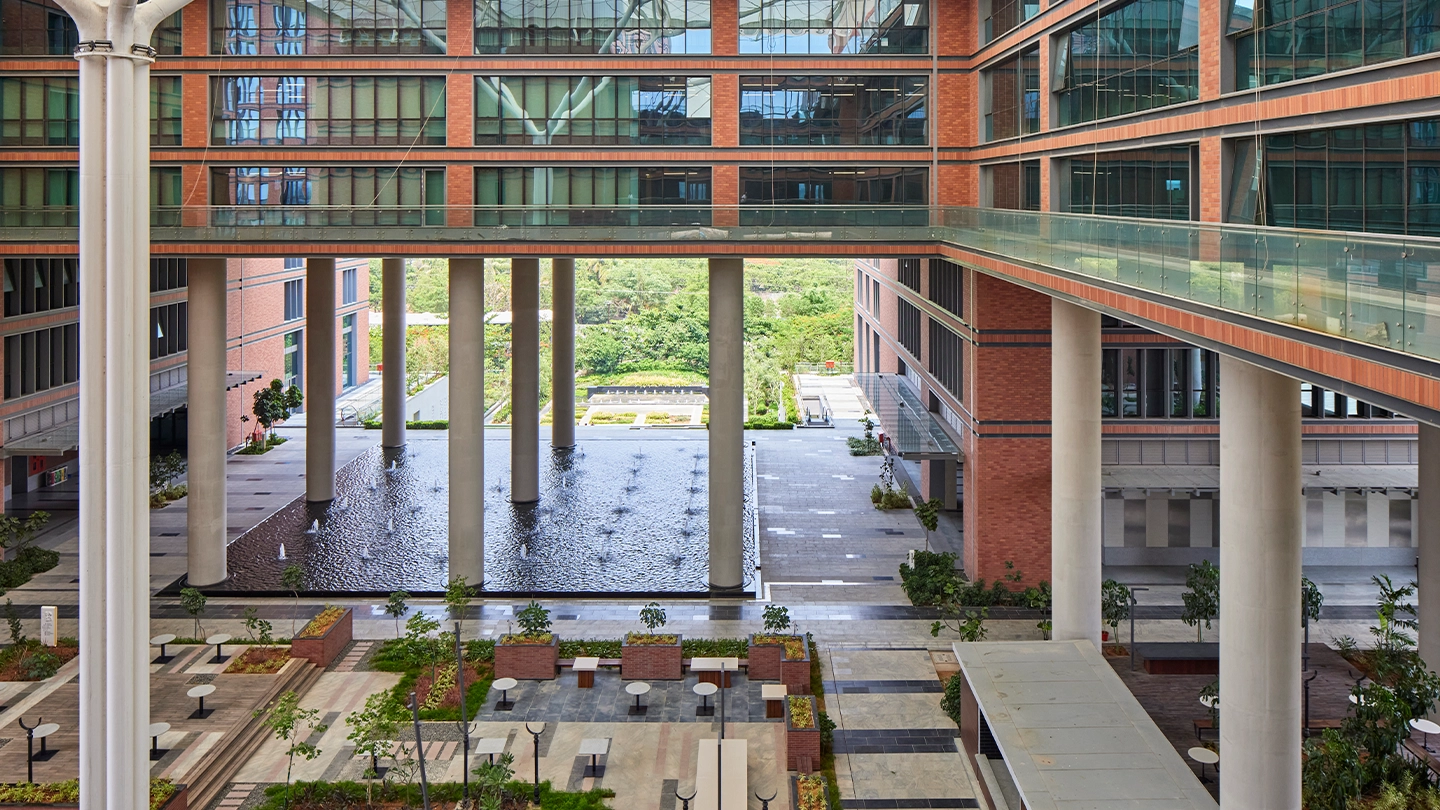
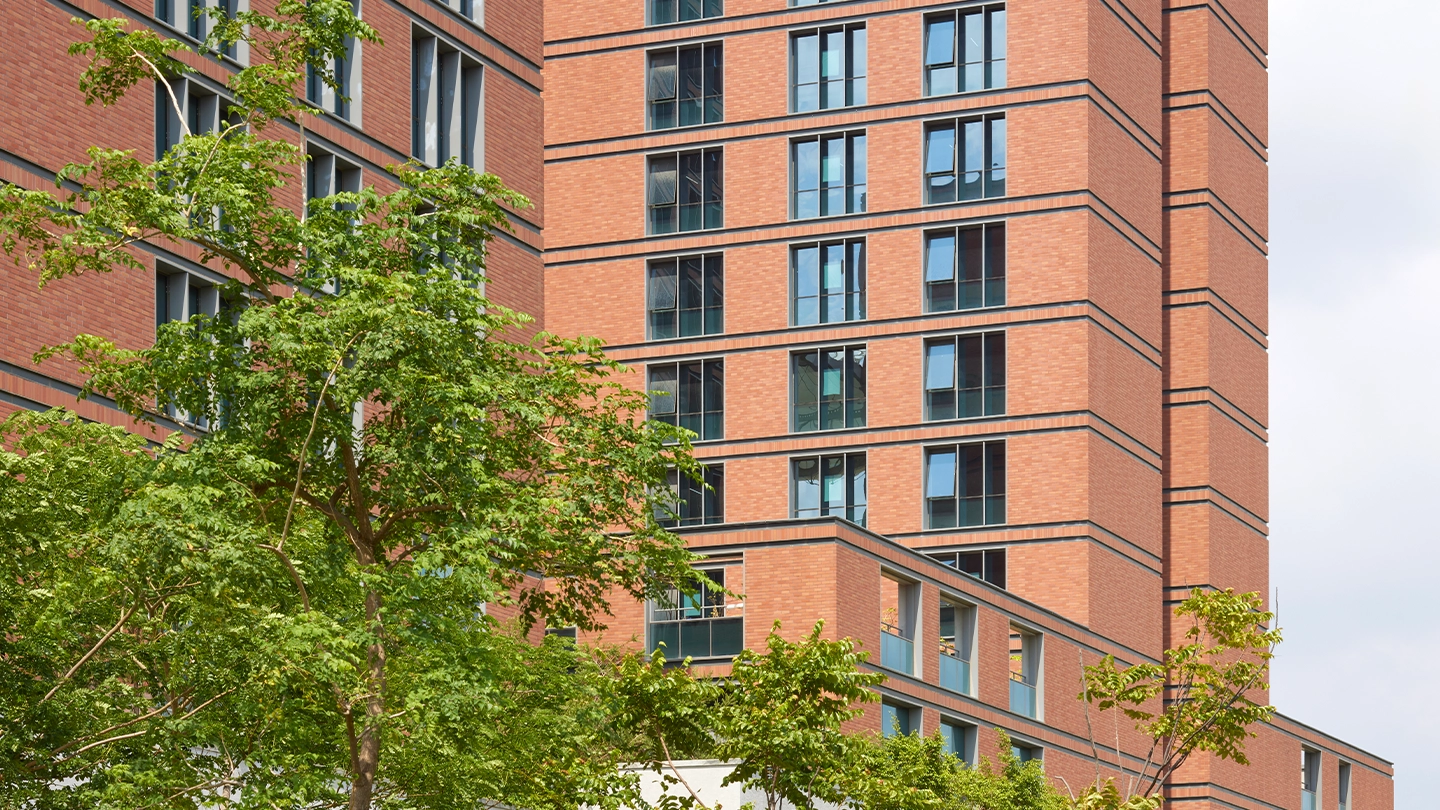
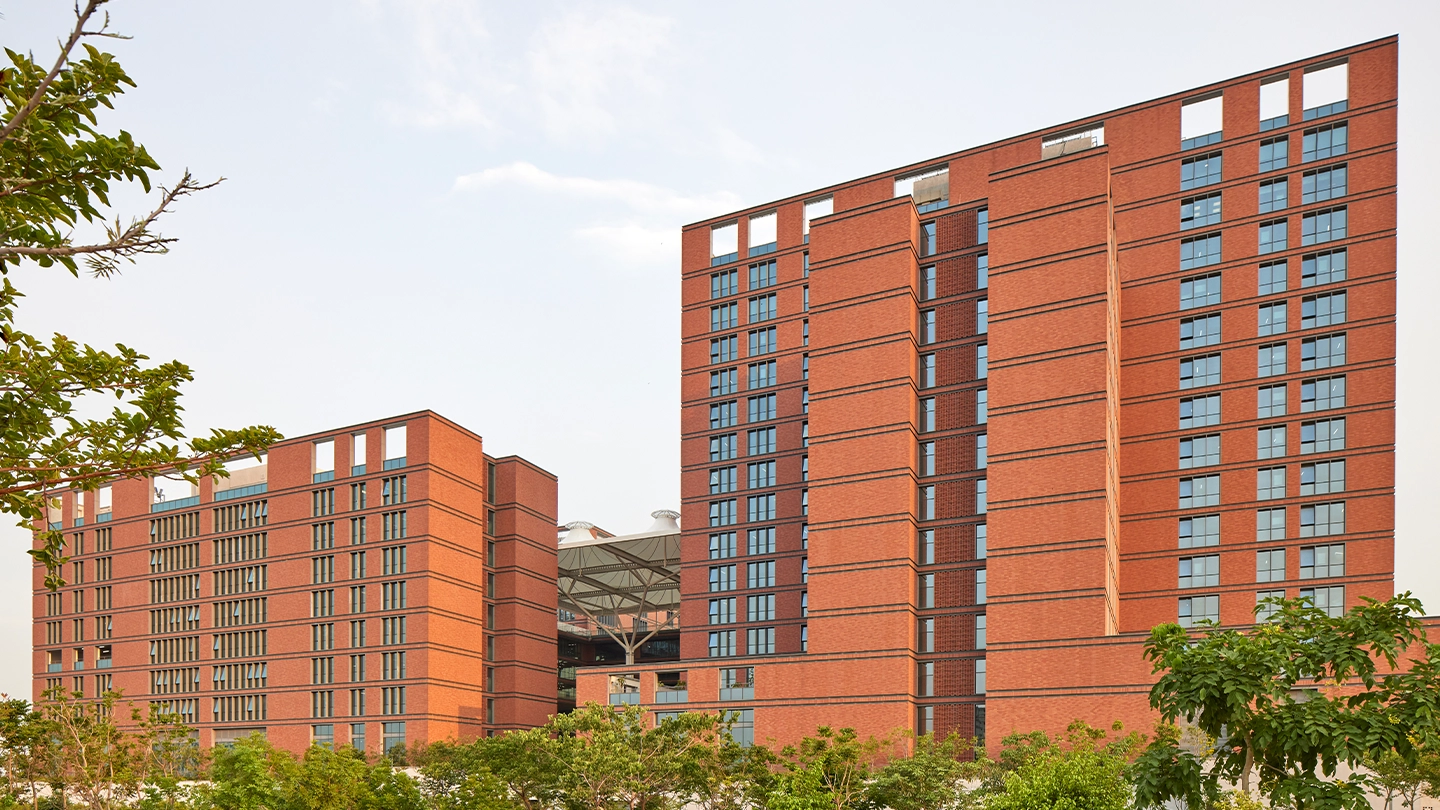
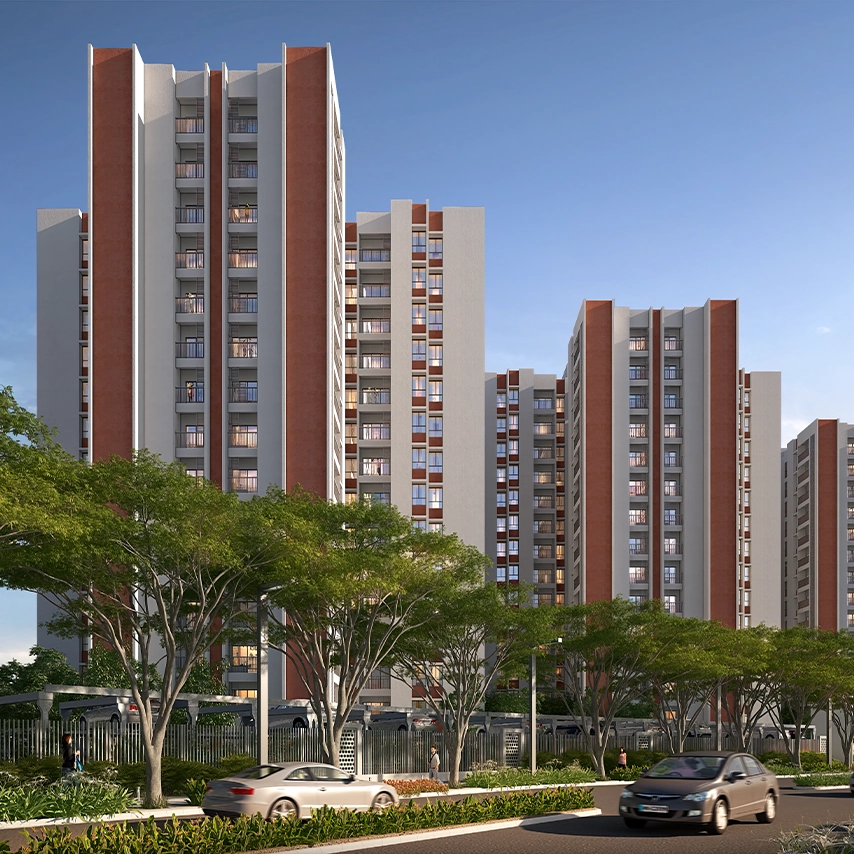
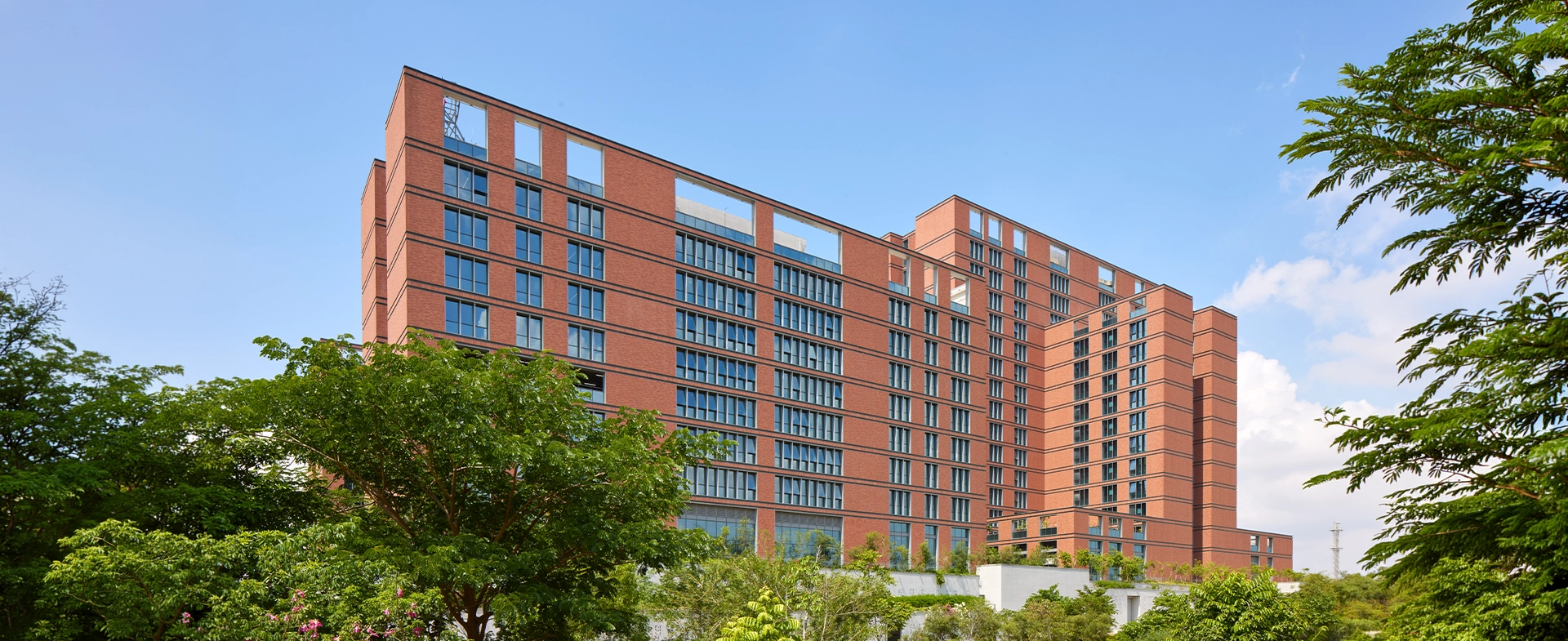
Detailed wind and solar studies informed the design of the towers, where internal courtyards introduce daylight deep into the floor plates while supporting cross-ventilation and user comfort. Facades combine double-skinned glazing with terracotta clay tiles to reduce thermal loads, while earth-toned materials establish a connection to regional architectural traditions. Water features inspired by the spatial and climatic logic of baolis and ghats contribute to evaporative cooling and enrich the campus microclimate, while the site’s natural topography is retained to minimise cut and fill.
Environmental performance is achieved through an integrated approach that combines passive design strategies with advanced building systems, including underfloor air distribution, real-time monitoring, rainwater harvesting, and complete greywater recycling. A vehicle-free ground plane prioritises walkability, safety, and social interaction, reinforcing the campus as a connected workplace community.
By integrating climate-responsive planning, landscape, and technology, the campus demonstrates how large-scale corporate environments can support both environmental responsibility and human experience, creating a workplace that is efficient, adaptable, and deeply rooted in its setting.