Pagariya Corporate Office
Nagpur
- Site Area: 1.85 acres
- Built Up: 3,00,000 sq. ft.
A corporate campus shaped by brand identity, terraced workspaces, and public engagement
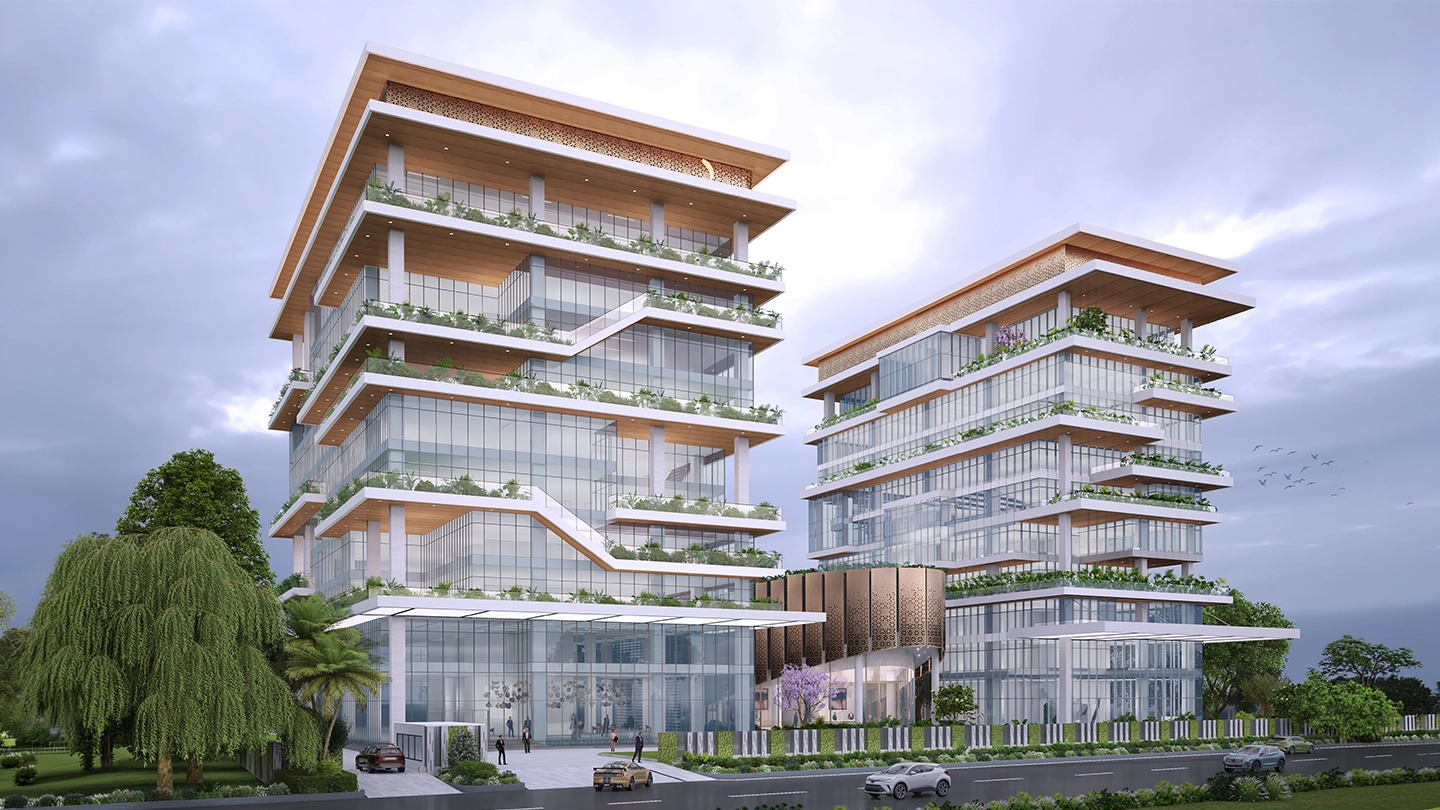
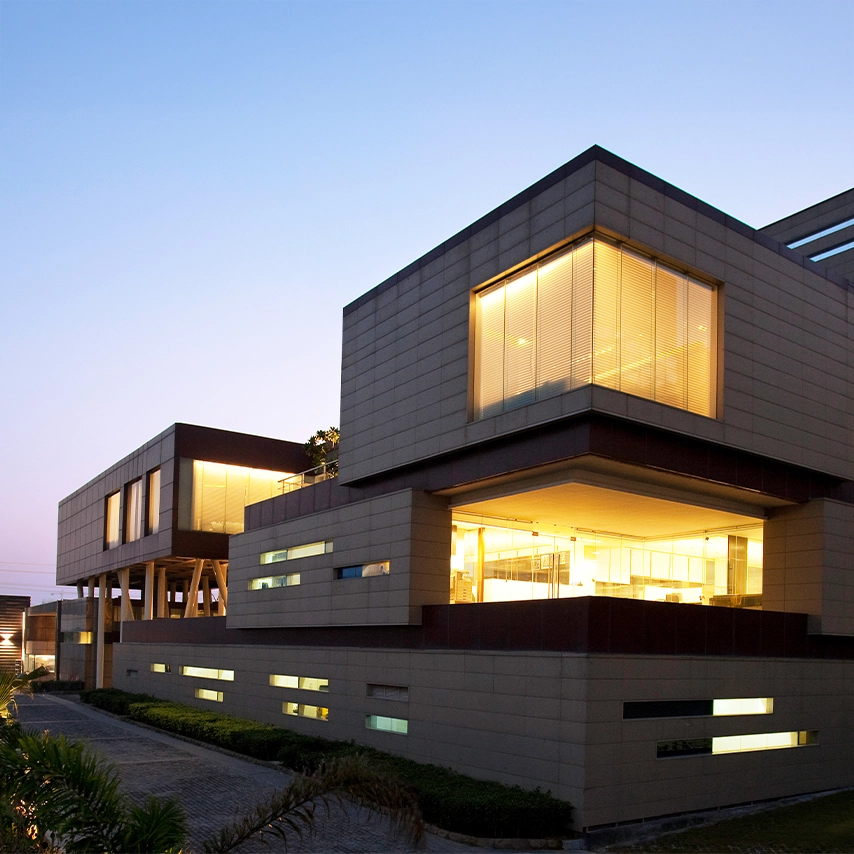
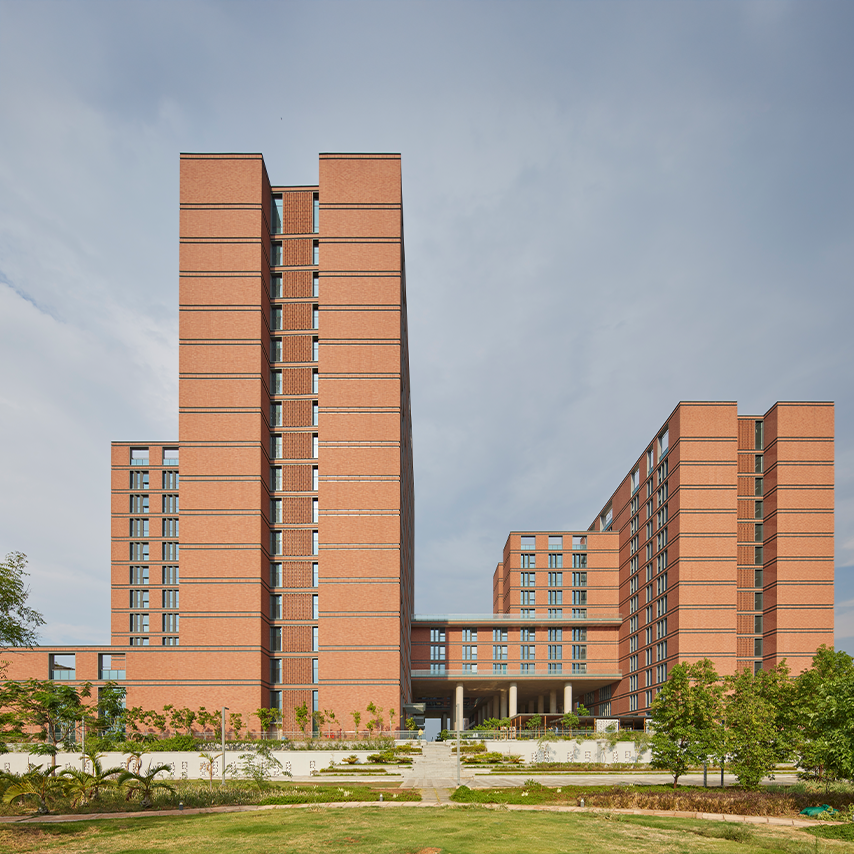
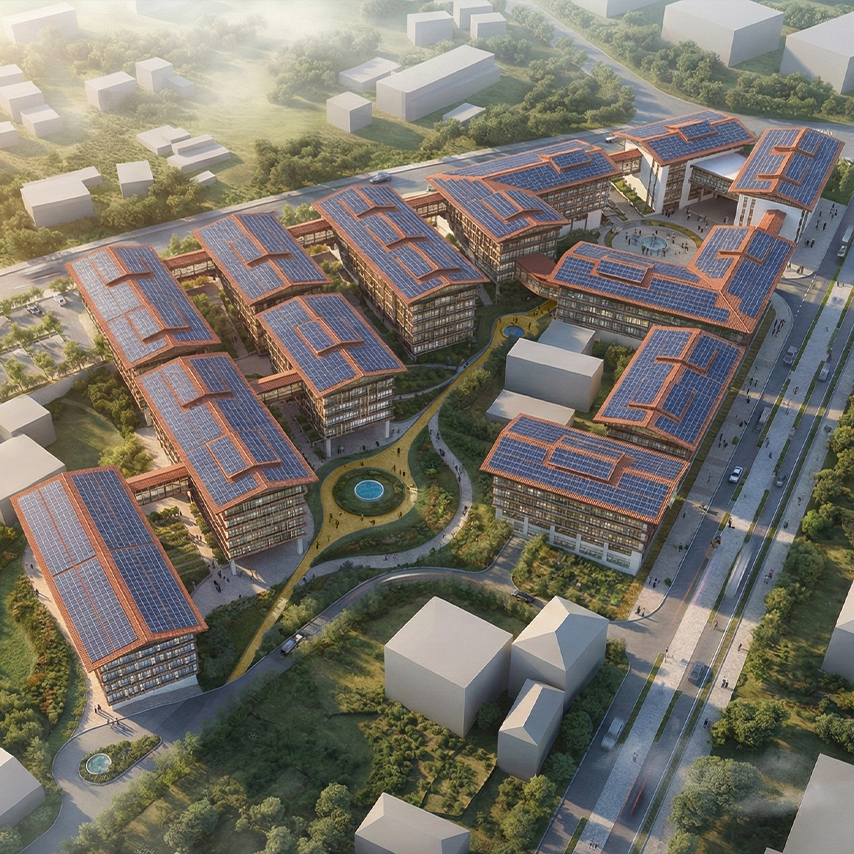
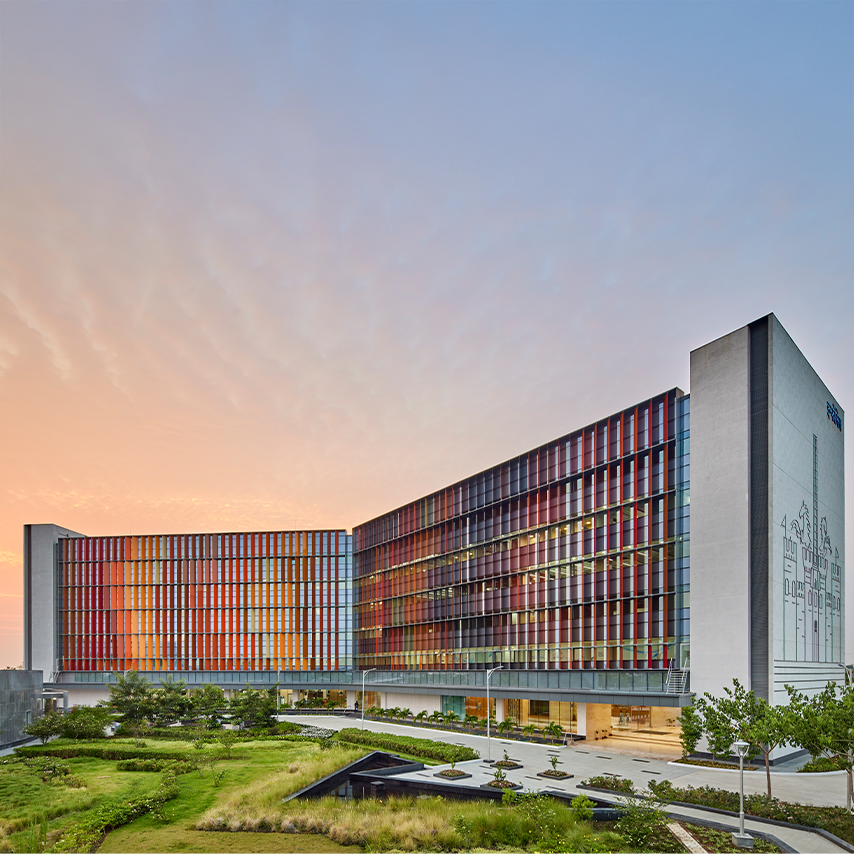
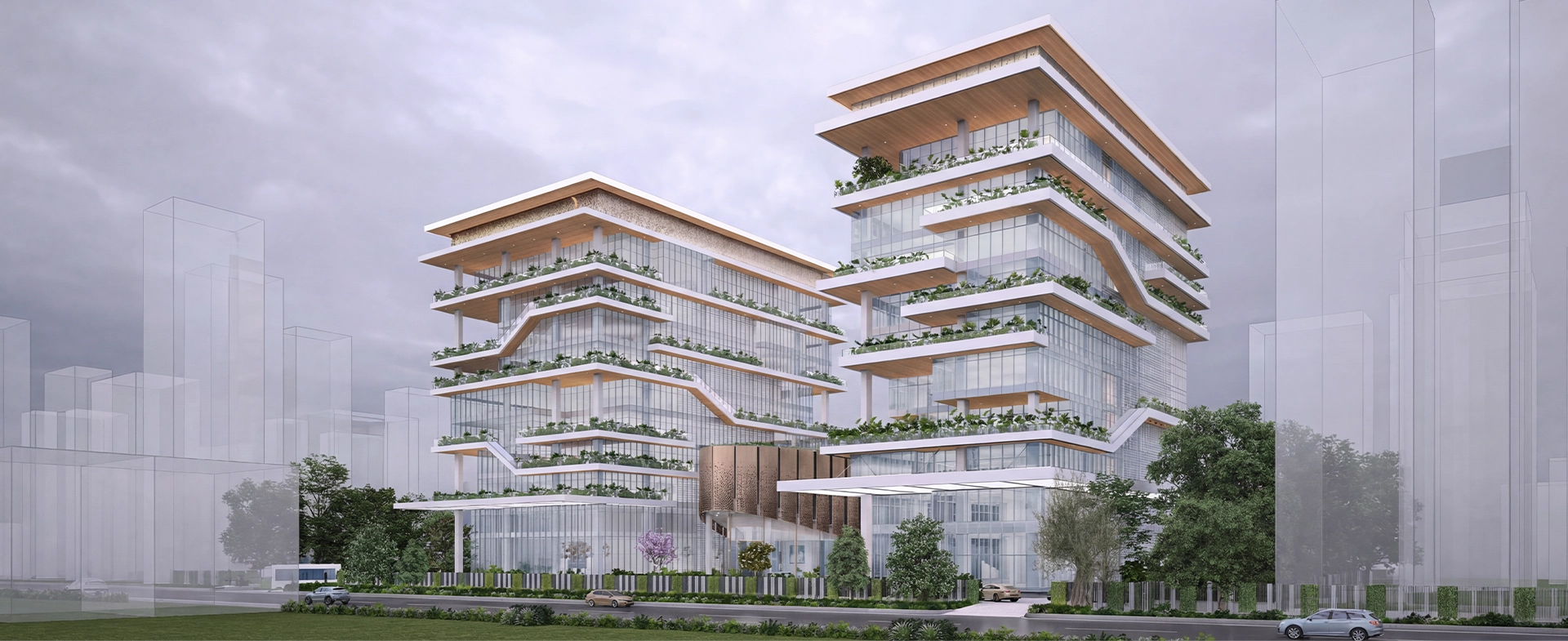
Located along Bhandara Road near the Nagpur-Jabalpur Expressway, the project is conceived as an extension of the existing Pagariya campus in Nagpur. Set within a largely low-rise context with open views on most sides, the site benefits from visibility and openness while also requiring protection from traffic noise and pollution along the adjoining highway edge. The design responds to these conditions by organizing the new development as a coherent campus that integrates the existing Phase 1 building, a new Phase 2 office block, and a dedicated museum as a people engagement centre.
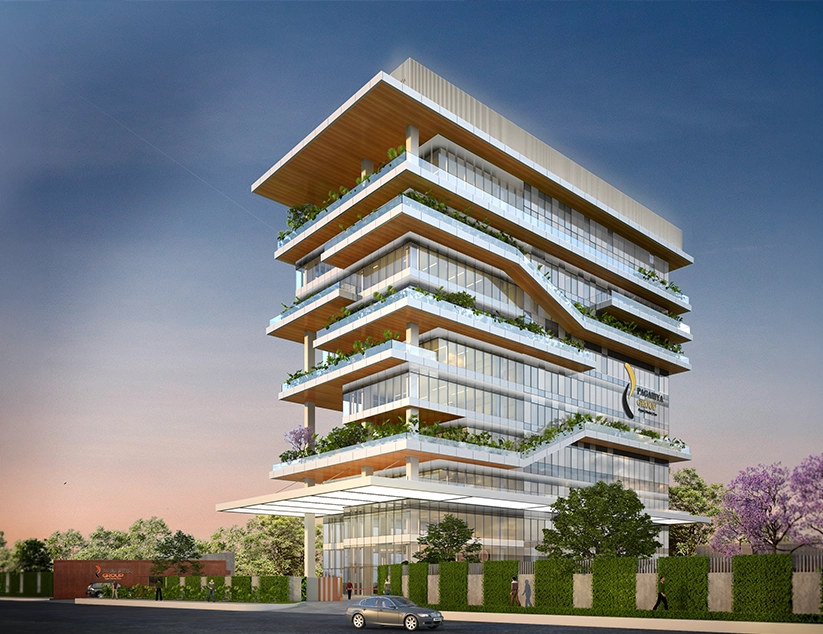
The office building is planned around shallow floorplates restricted to approximately 11 metres in depth, allowing the workspaces to remain naturally daylit and glare-free. Extended terraces, double-height cut-outs, and covered spill-out spaces are woven through the massing to create a more interactive and climate-responsive workplace. These terraces are conceived not merely as visual features but as functional breakout spaces that support collaboration, informal meetings, and a stronger connection between employees and the outdoors. The building also targets high efficiency in planning, with flexible floorplates capable of accommodating business centre functions, co-working, cafeteria and recreation levels, and single or dual-tenant office configurations across the upper floors.
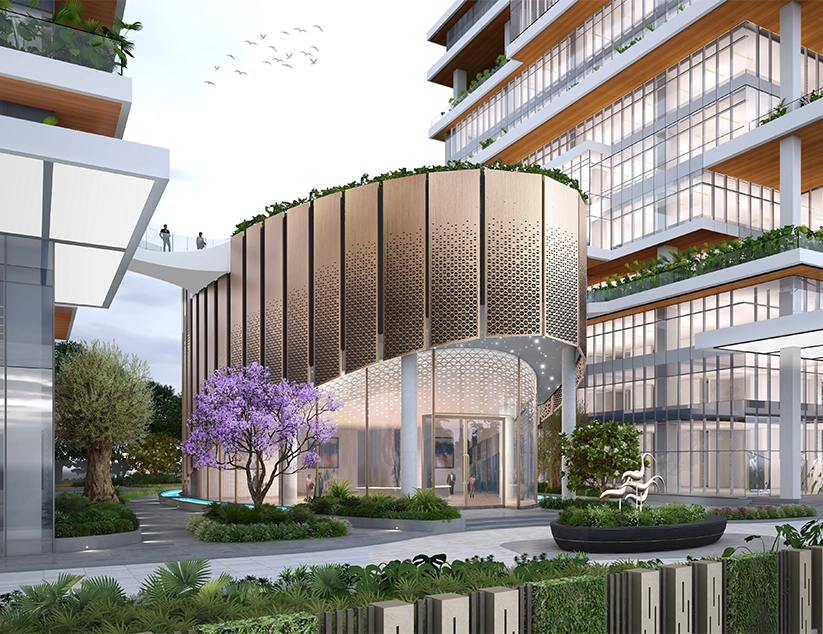
A strong landscape strategy ties the campus together. Arrival is designed as a sensory experience shaped by nature trails, shaded drop-offs, and open green spaces, while the museum introduces a more public-facing cultural layer to the development. Conceived as a landmark element within the site, the museum combines exhibition space, café, and a 200-seat auditorium, giving the campus a stronger civic and brand-building presence beyond the office environment.
The result is a corporate campus that combines workplace efficiency, climate-responsive design, and public engagement within a distinctive architectural identity.