
Nima College
Bhutan
- Site Area: 15.75 acres
- Built Up: 2,68,600 sq. ft.
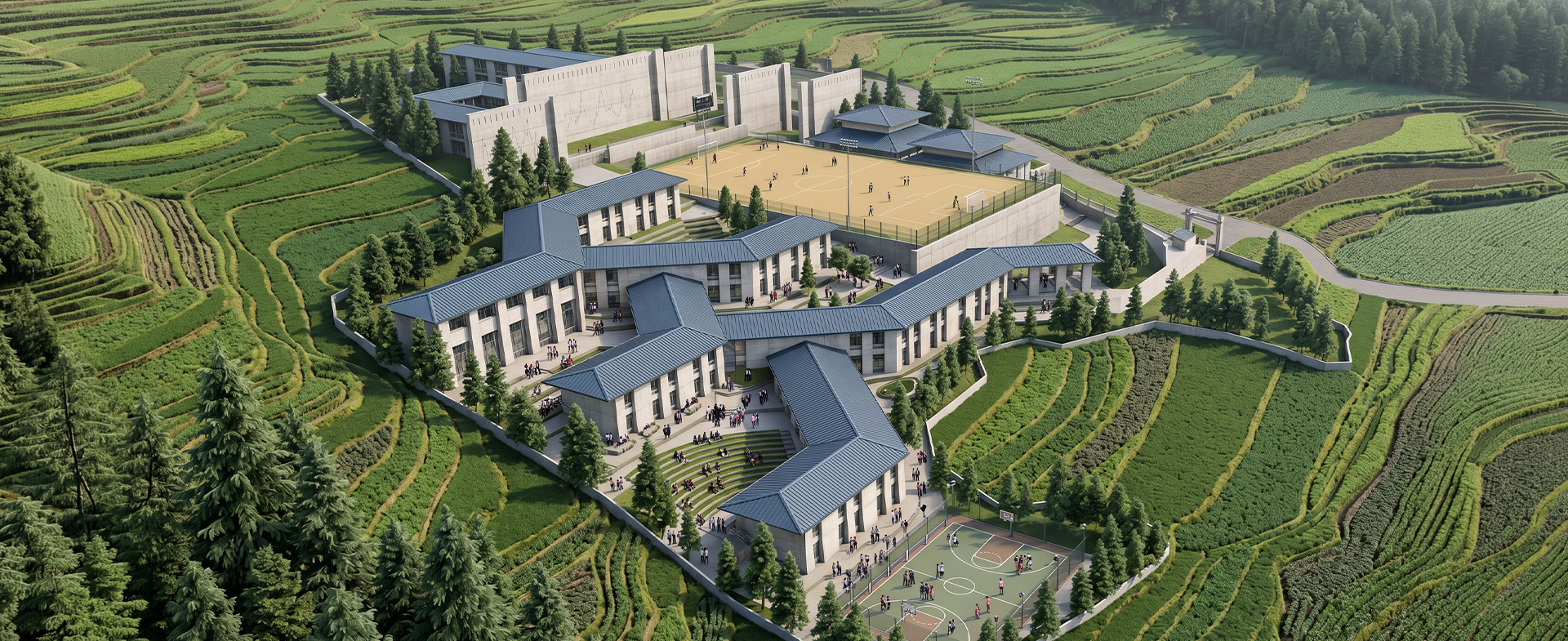
A campus conceived as an ascent through the Himalayan landscape, where learning becomes a journey from valley to summit.
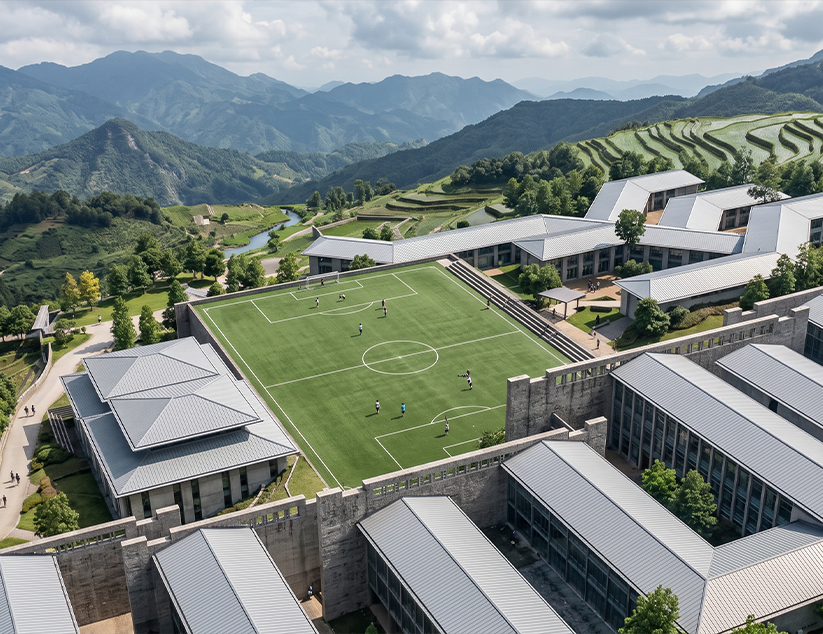
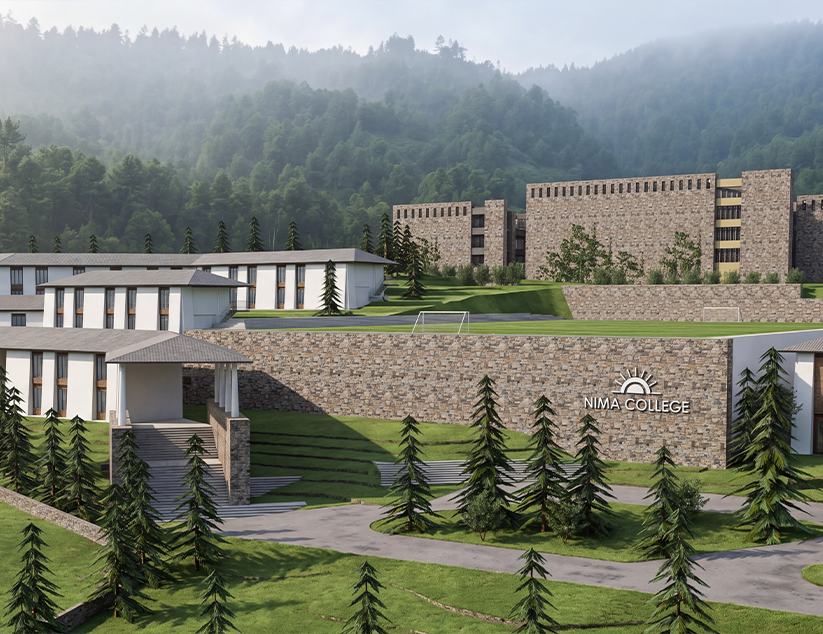
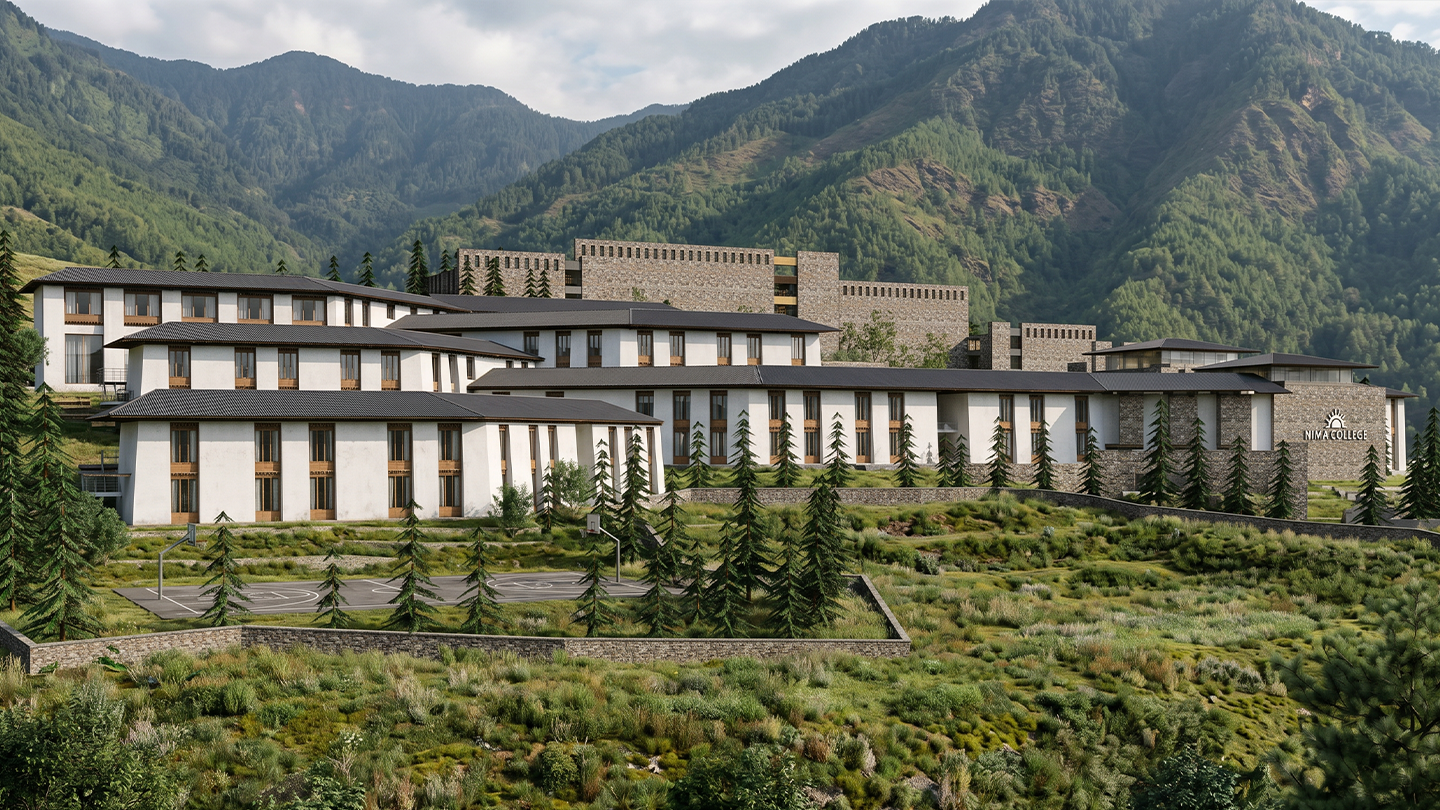
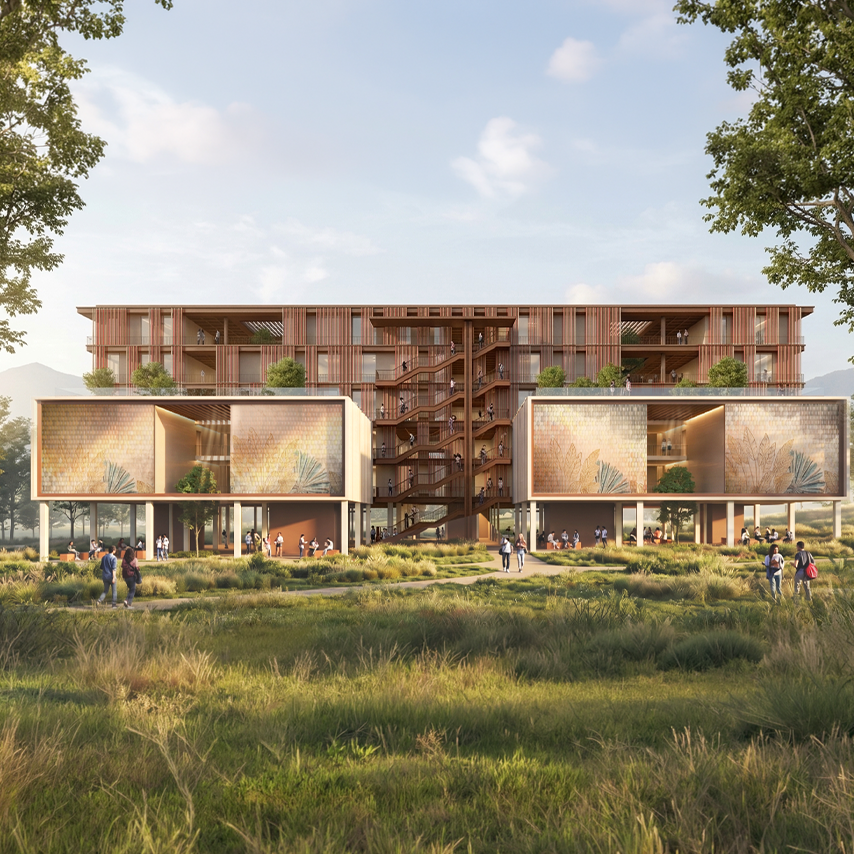
Set within the extraordinary mountain valley of Paro, Nima College is envisioned as a contemporary interpretation of Bhutan’s enduring relationship between landscape, culture, and learning. Rather than imposing a singular architectural object onto the terrain, the campus emerges as a series of interconnected academic and residential precincts that follow the site’s natural contours, transforming education into a spatial journey.
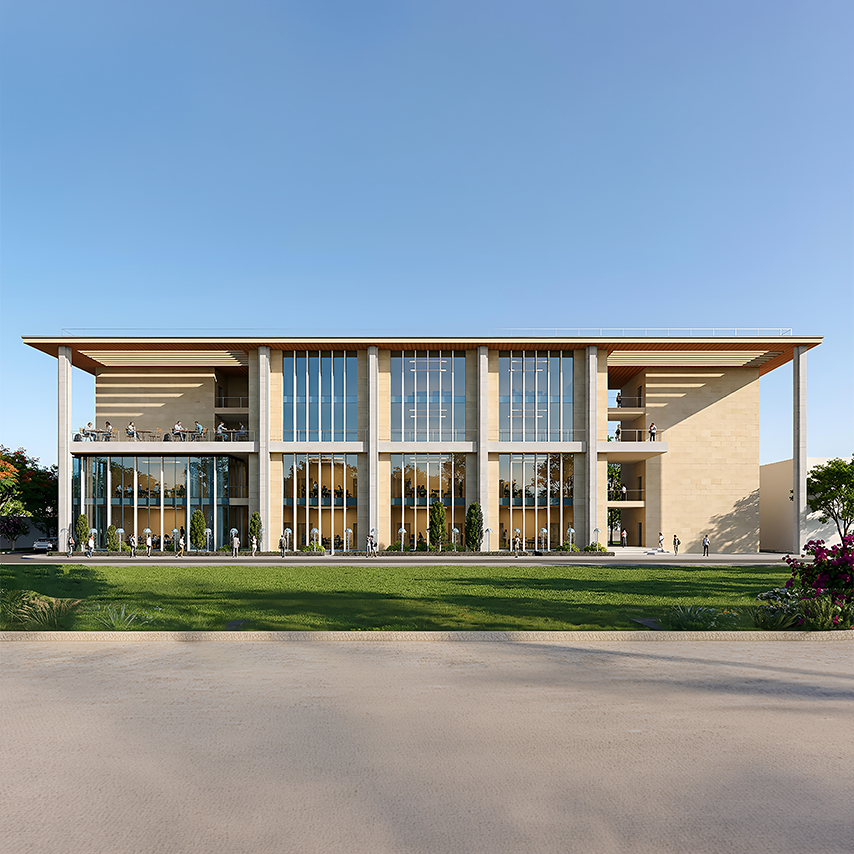
The design draws inspiration from the idea of progression: an ascent through knowledge mirrored by a gradual movement across the Himalayan hillside. Academic buildings occupy the prominent edges of the site, opening toward expansive valley panoramas, while residential clusters are carefully embedded within sheltered terraces, creating a sequence of intimate courtyards protected from the region’s cold mountain winds. Together, they establish a campus that balances collective engagement with moments of reflection.
Responding to Paro’s temperate highland climate, the architecture is shaped by principles of passive environmental performance. South-facing classrooms maximize access to daylight, naturally ventilated corridors act as transitional social spaces, and fragmented building forms generate shaded courtyards that cultivate a comfortable microclimate throughout the year. The resulting environment reduces dependence on mechanical systems while enhancing the quality of daily campus life.
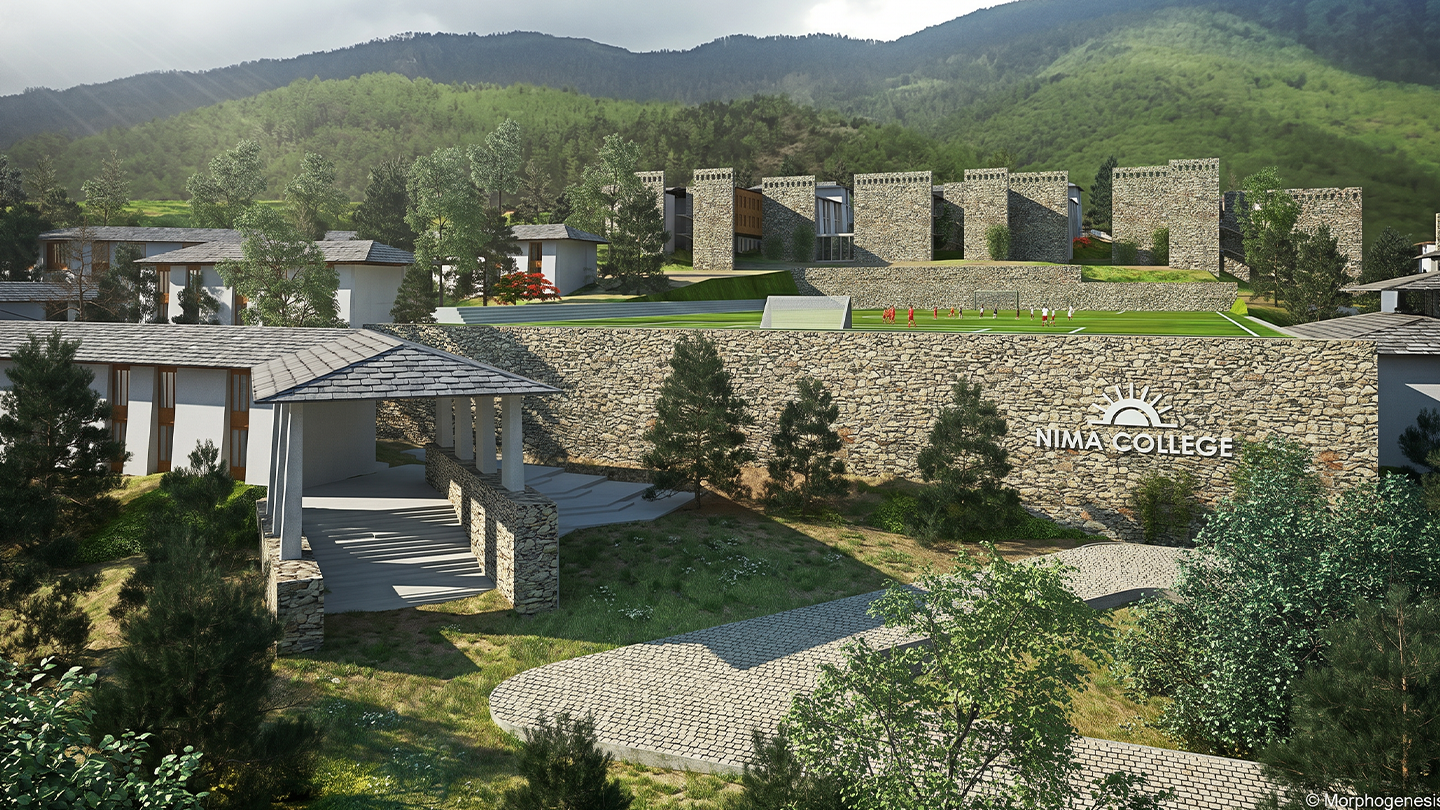
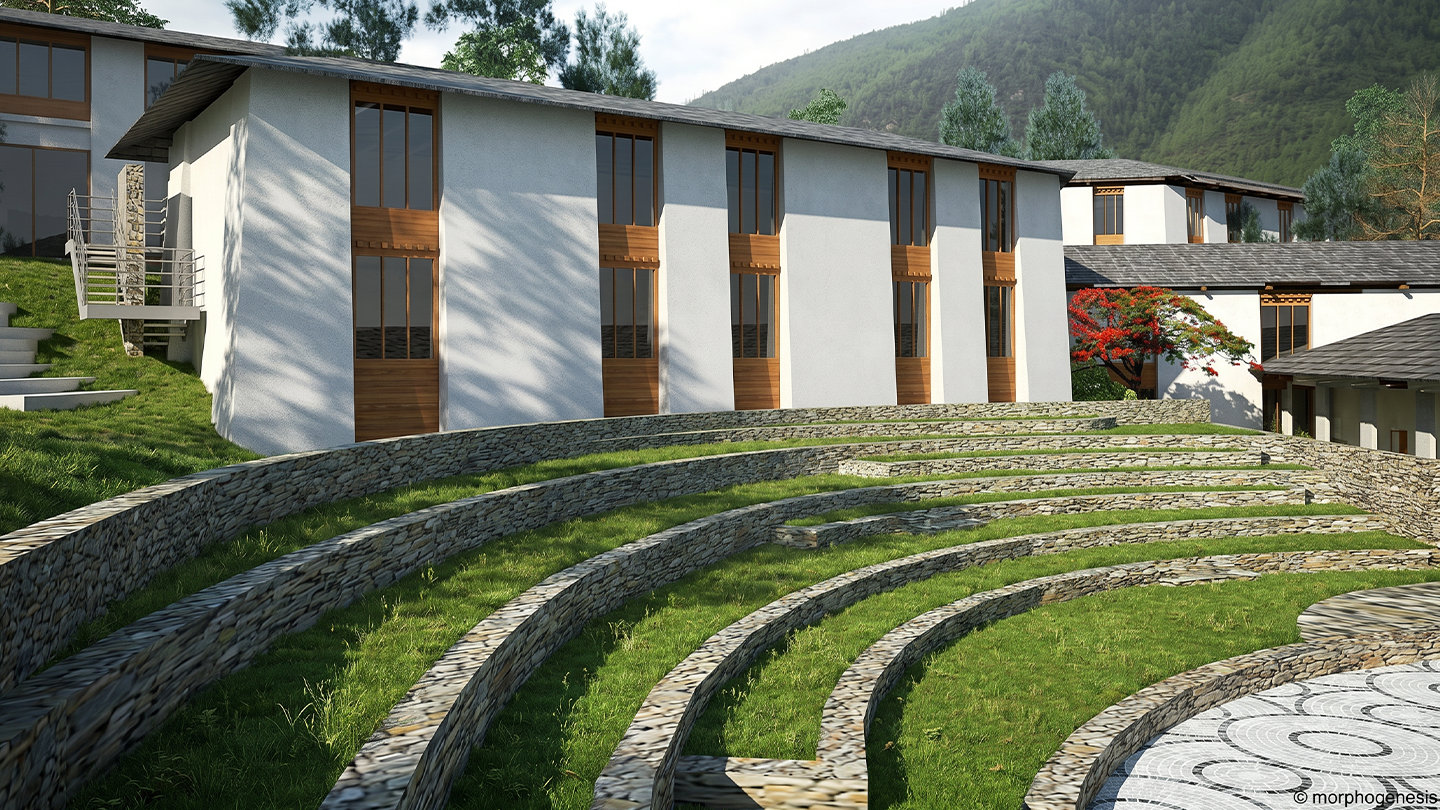
Landscape is conceived as an active learning infrastructure rather than a residual element. Terraced gardens, open-air gathering spaces, sports fields, and an amphitheatre are woven into the site’s topography, allowing academic life to extend beyond the classroom. Movement across the campus becomes a continuous dialogue between built form and nature.
Materially, the project reinterprets Bhutanese construction traditions through a contemporary lens, employing earth walls, lime plaster, timber structures, and locally sourced stone. Rooted in place yet forward-looking in its ambitions, Nima College proposes a new model for educational environments in the Himalayas, where architecture, ecology, and culture converge to shape an enduring institution for future generations.