Institute For Integrated Learning in Management
Noida
- Site Area: 8 acres
- Built Up: 1,75,000 sq. ft.
A courtyard–street habitat inspired by Shahjahanabad for a safe, sociocultural student community
A climate-responsive cluster morphology that nurtures interaction, daylight, security and a sense of belonging
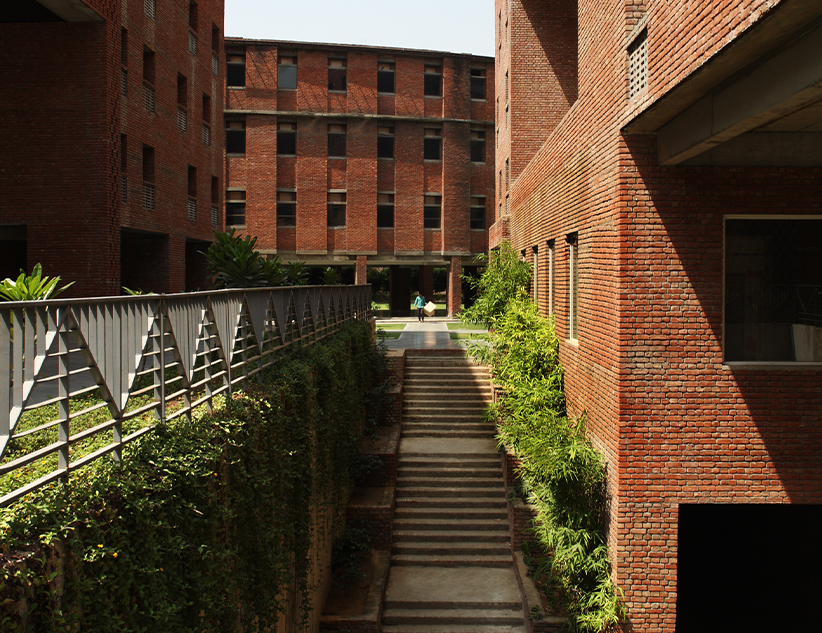
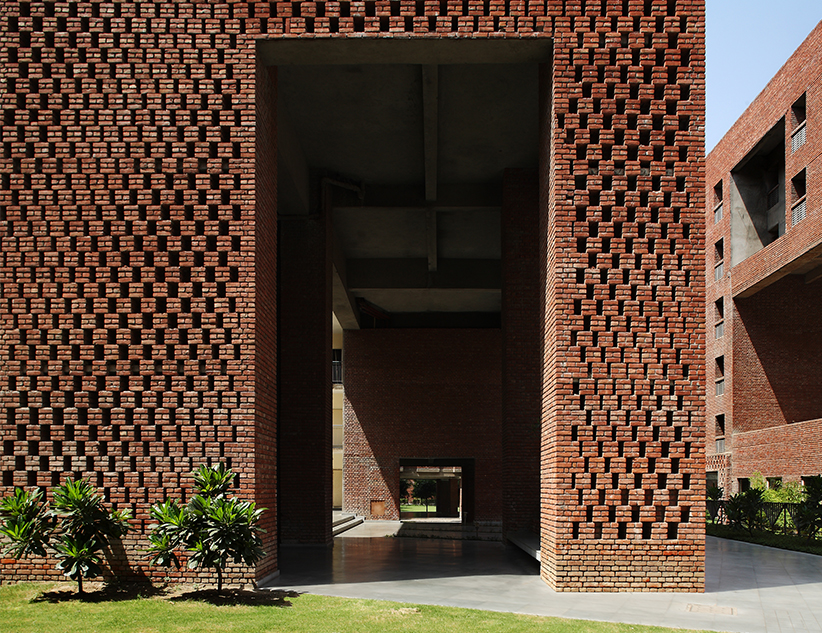
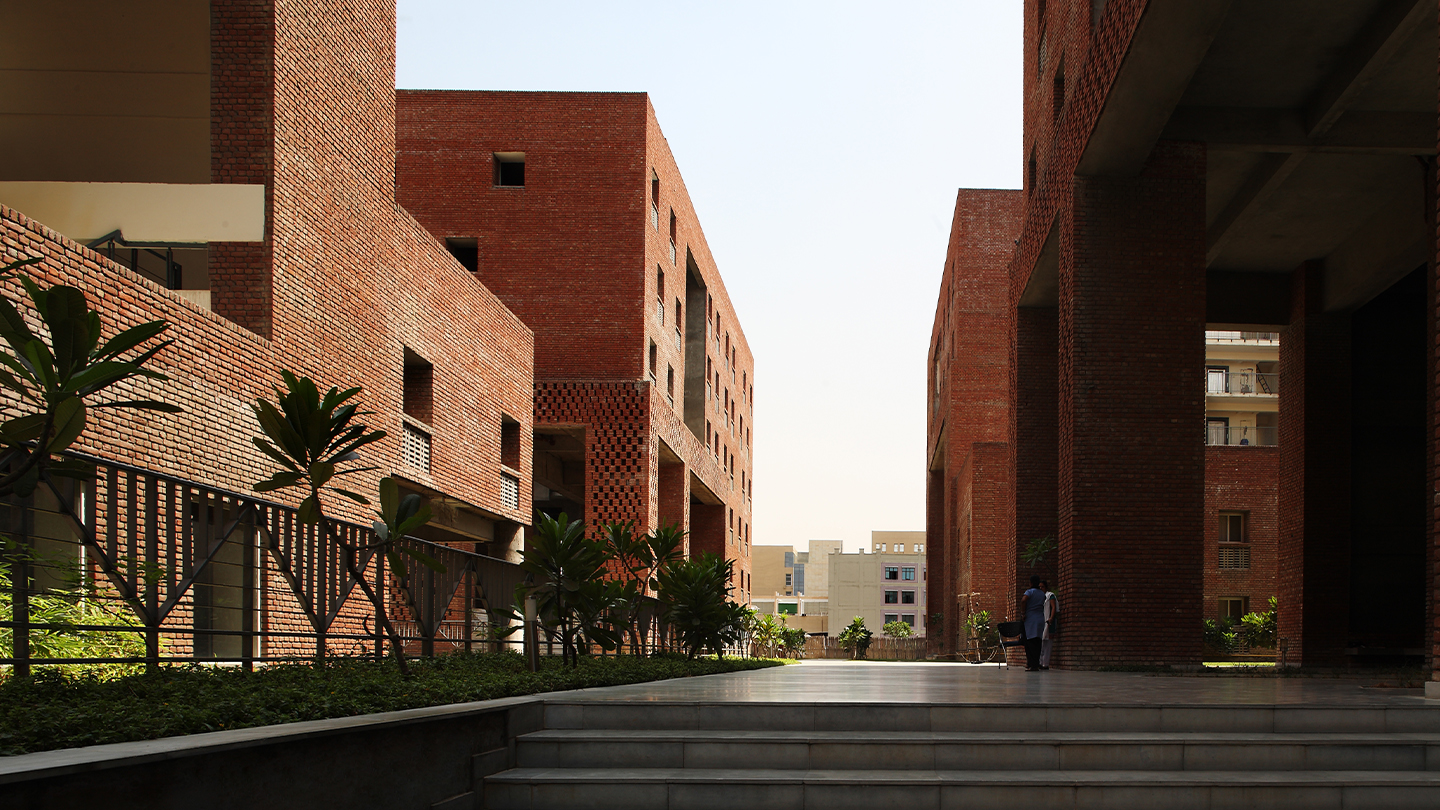
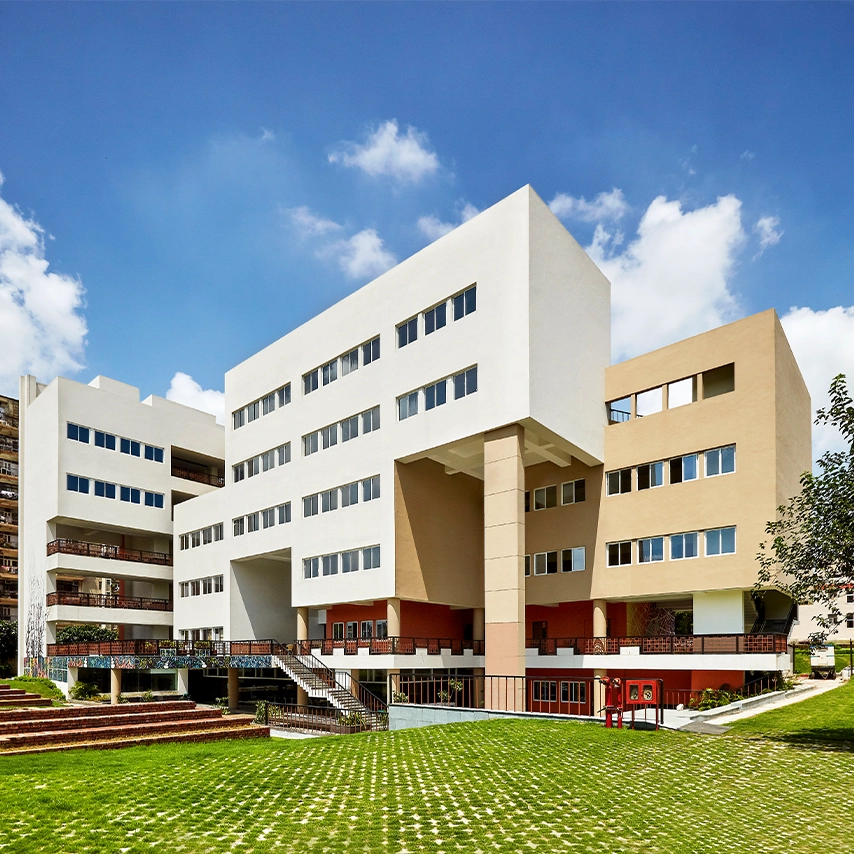
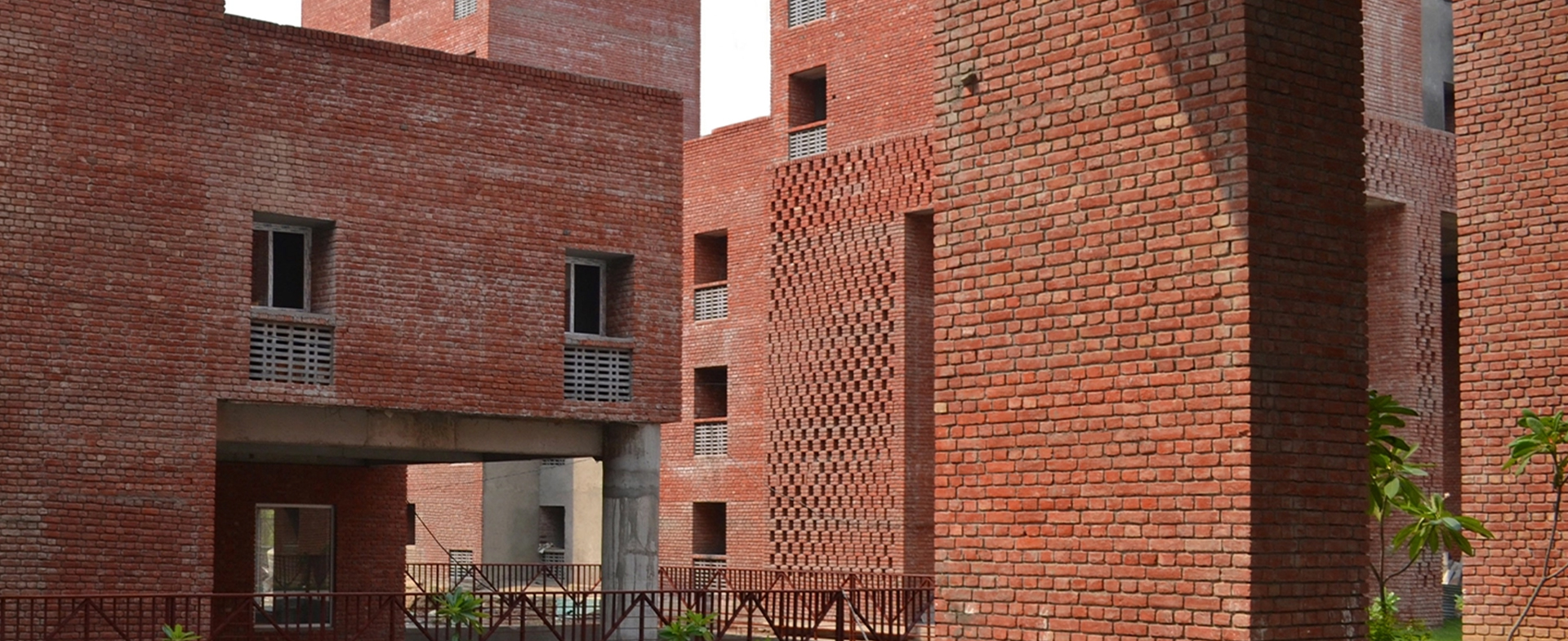
The student housing at the IILM Campus, Greater Noida, is conceived as a spatial framework that encourages sociocultural exchange among students. Inspired by the urban morphology of Shahjahanabad, where courts, clusters and streets functioned as social infrastructure, the project reinterprets these principles within a contemporary academic setting. A narrow central movement spine forms the organizing element of the campus, with all residential blocks addressing it, transforming circulation into a shared community space.
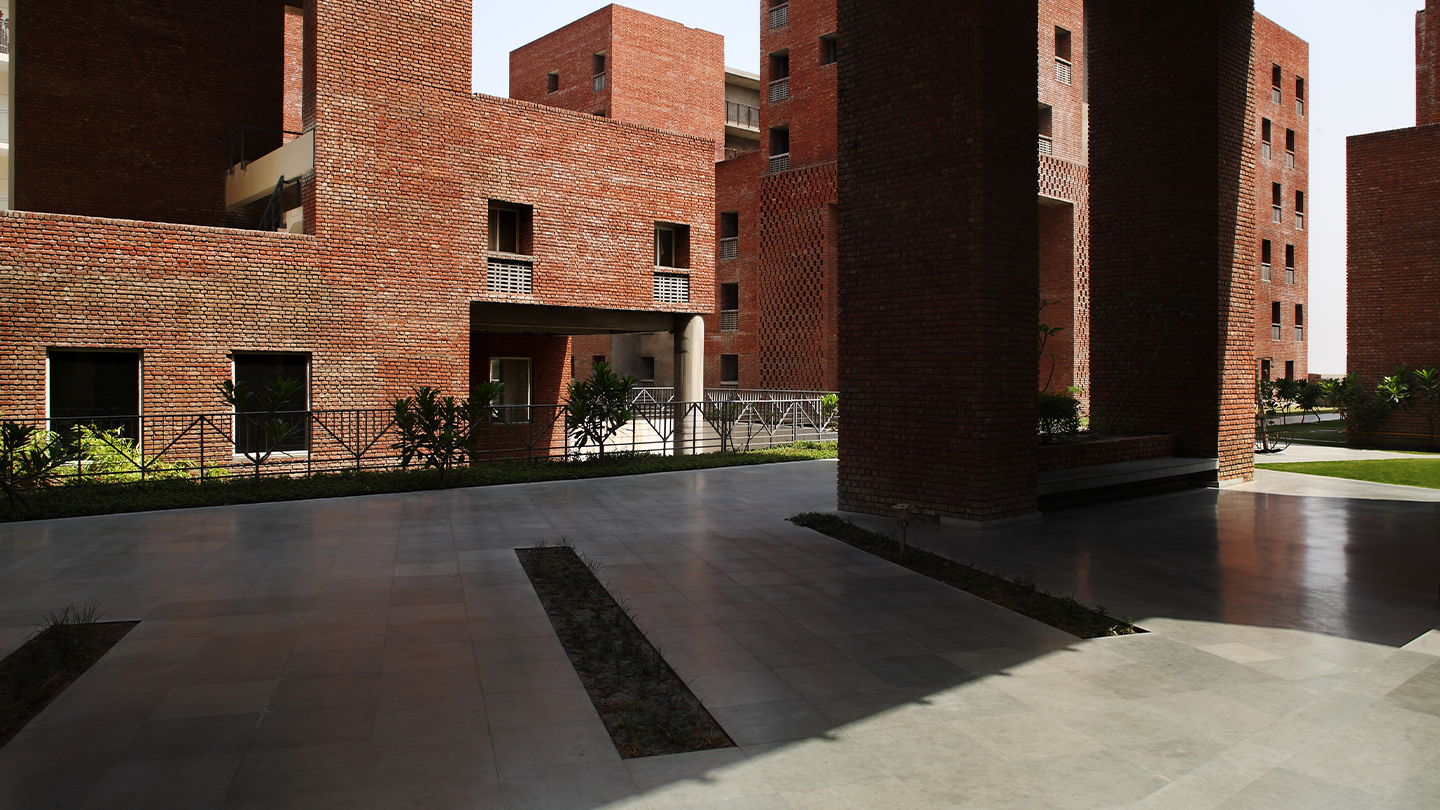
Each block is structured around internal open-to-sky courtyards that act as collective living rooms. Spiralling vertical voids rise through the building volumes, creating visual connections between floors and overlooking both the central spine and cluster courts. This layered porosity enhances safety and social engagement through constant visibility, aligning with the idea of informal surveillance described as “eyes on the street.”
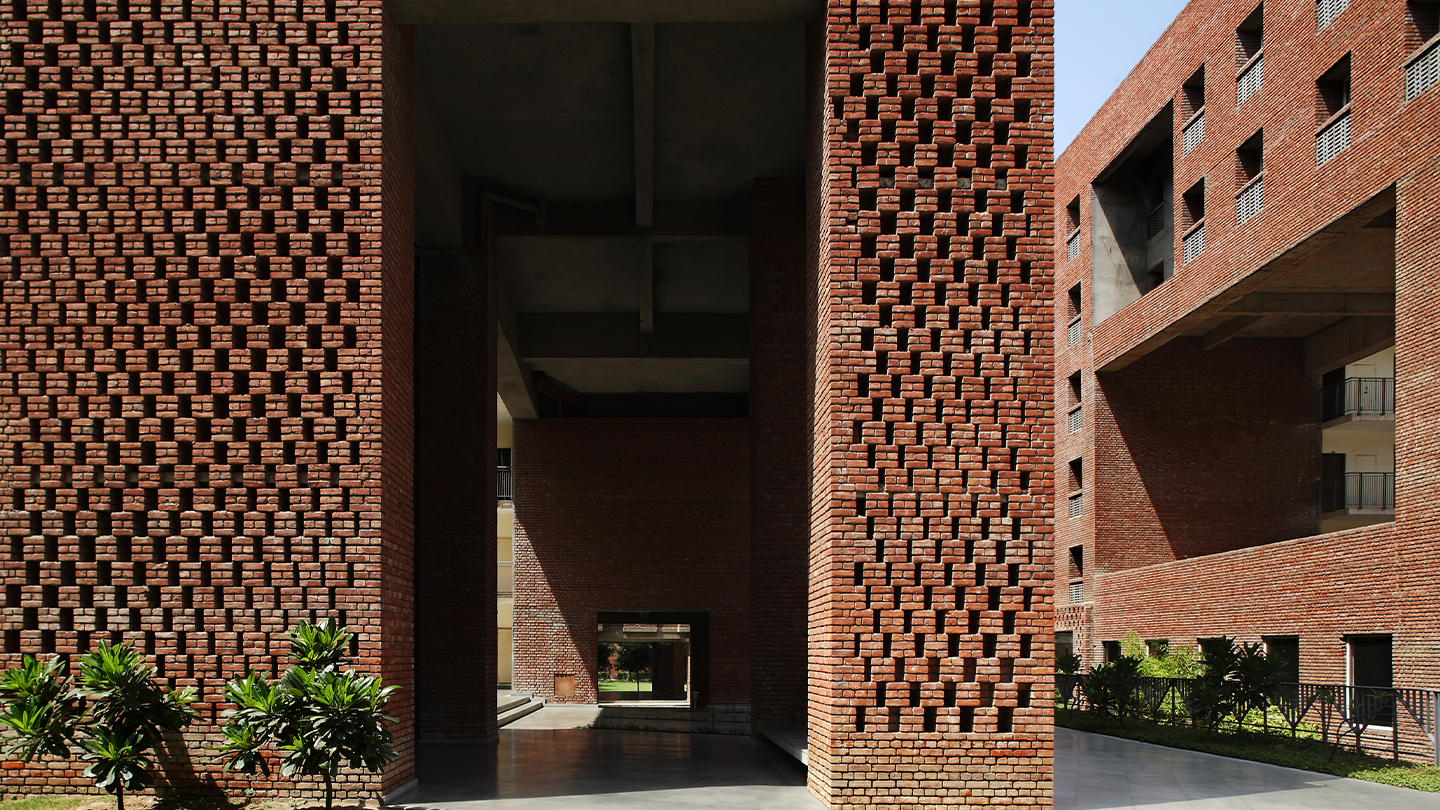
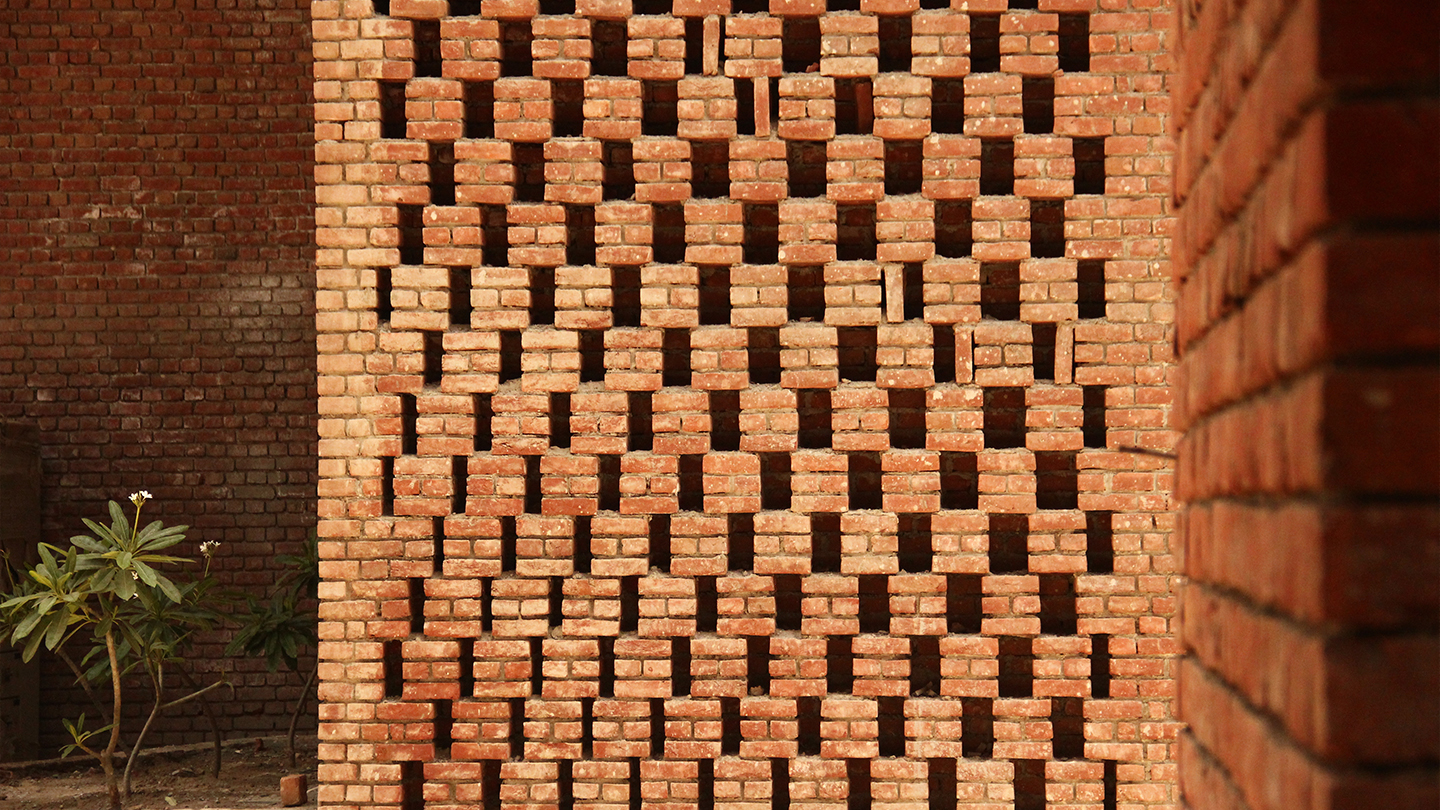
Accommodation units follow an apartment-style layout and are placed along the external periphery of the blocks to ensure maximum daylight and privacy. Internal corridors overlook the courtyards, recalling the traditional chawl typology where shared spaces extend daily living beyond the private room. Over time, these courtyards take on distinct identities as students appropriate them for gatherings, celebrations and informal activities. Porous brick jaalis enable cross ventilation, while shifting sunlight animates façades with changing patterns of light and shadow.
Courtyard proportions and placement are carefully calibrated to enhance shading and generate comfortable microclimates, extending the usability of outdoor spaces despite extreme weather conditions. Daylight studies guide façade articulation to balance natural light with thermal comfort. Subterranean gathering spaces further expand communal life, opening into earth-sheltered courtyards with water elements and stepped seating that create cooler, refuge-like environments. Through passive strategies, material restraint and socially driven morphology, the project creates a resilient, climate-responsive and community-oriented residential environment for students.