Forest Essentials
Rishikesh
- Site Area: 0.5 acre
- Built Up: 10,500 sq. ft.
Net Positive Hill-Top Manufacturing Facility
Designed to revive tradition, generate livelihoods, and set a benchmark for decentralized, sustainable production
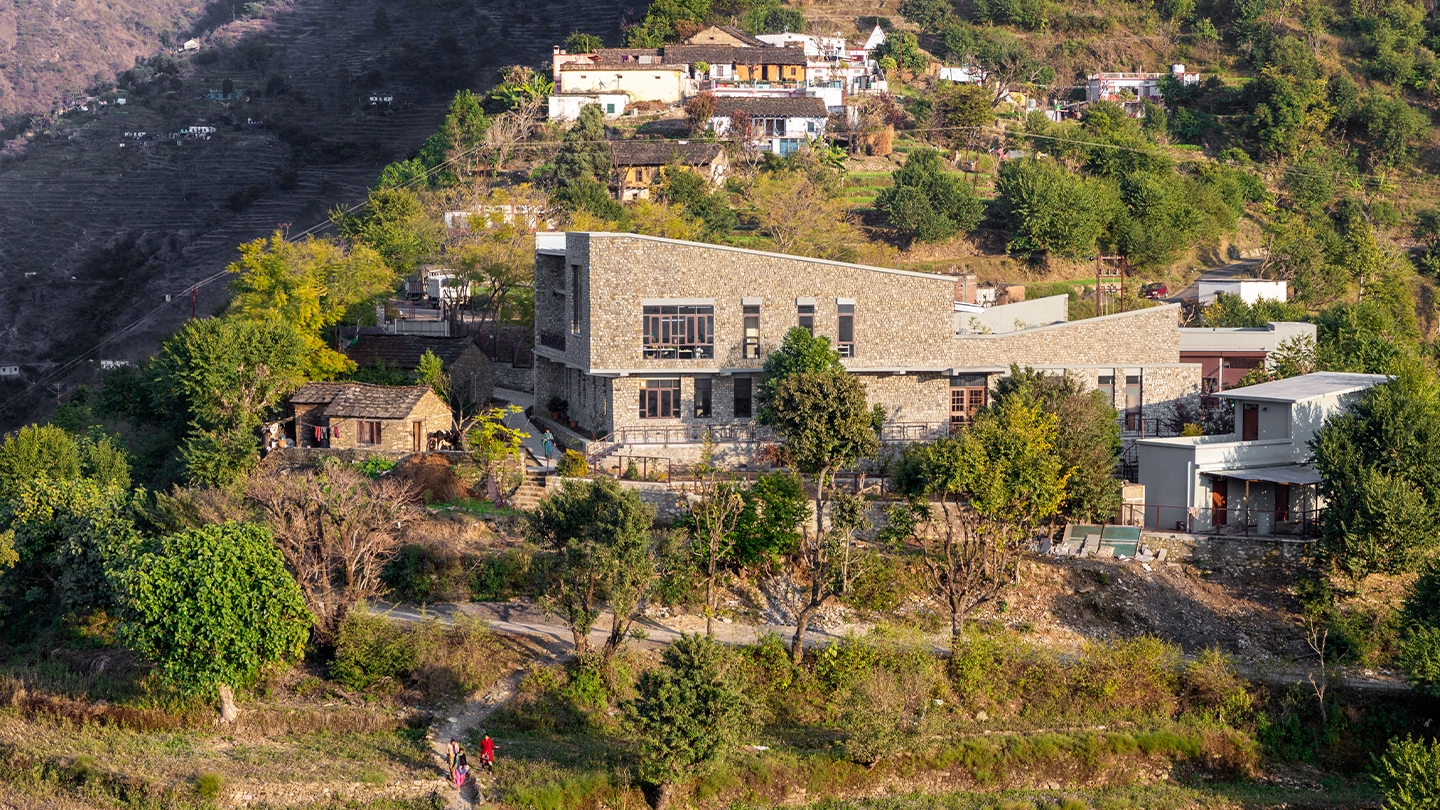
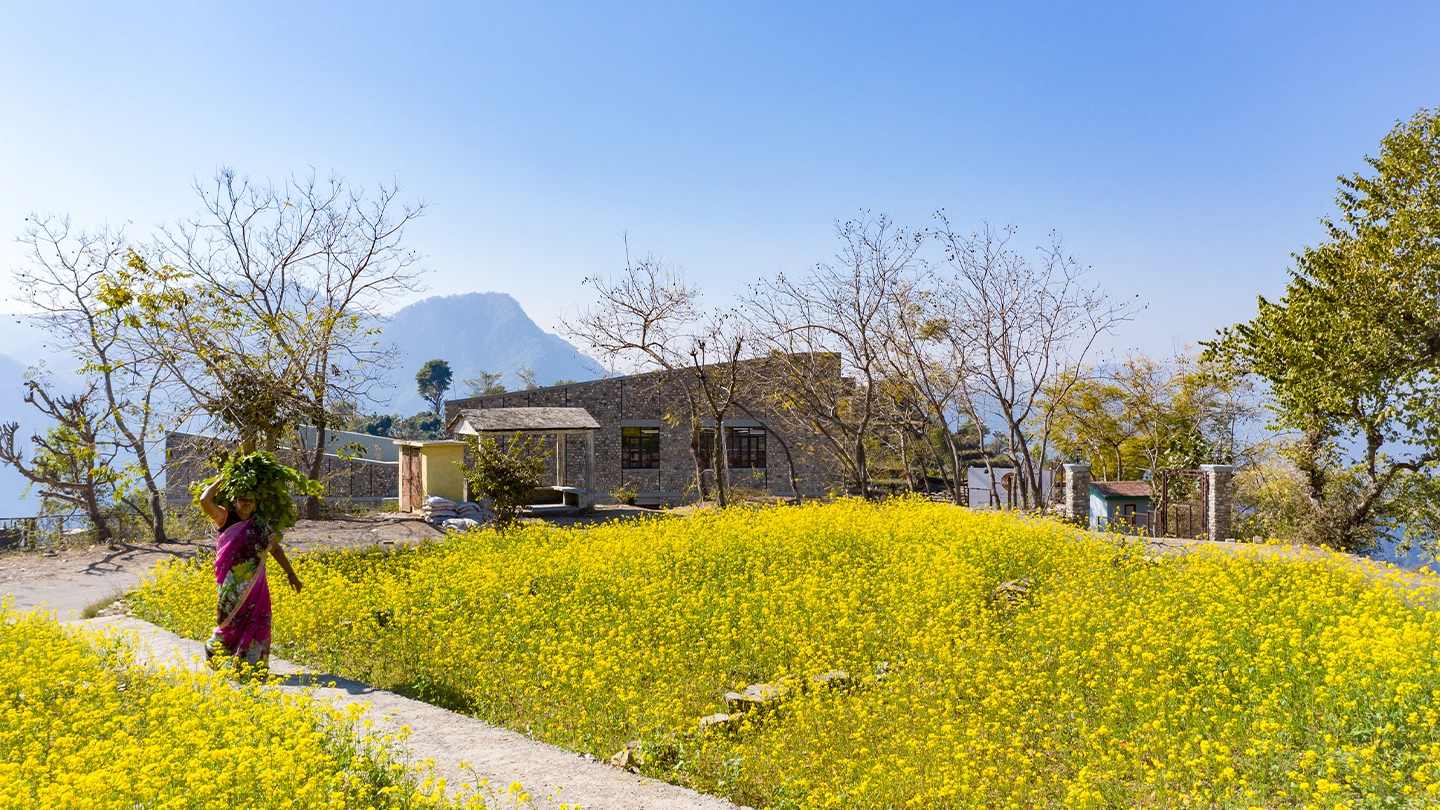
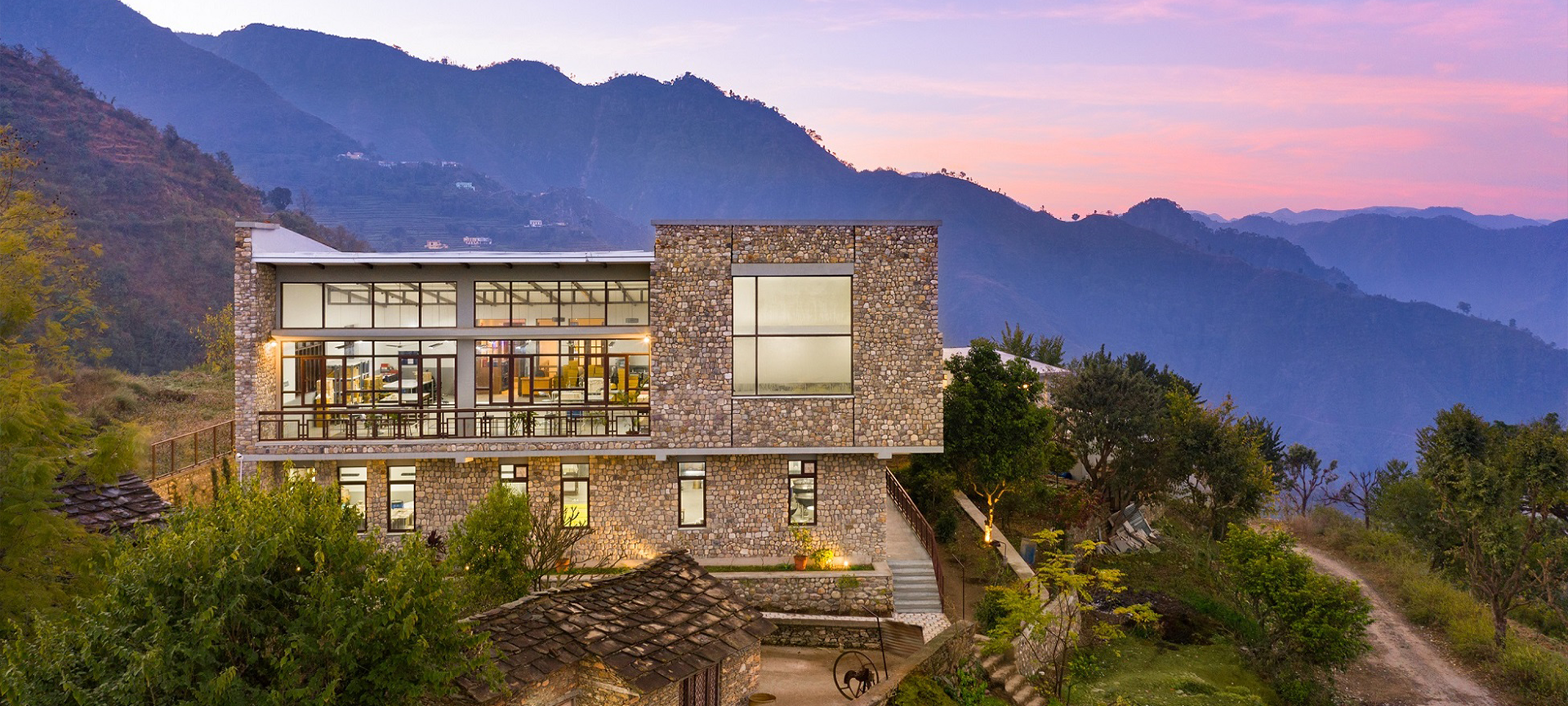
Set along the Ganges in the Himalayan foothills, the Lodsi Community Project for Forest Essentials redefines how a manufacturing facility can engage with its environment and community. Conceived for a global skincare brand rooted in Ayurveda, the project fuses indigenous wisdom with contemporary sustainability practices to create a net-zero, off-grid production unit that is deeply site-responsive.
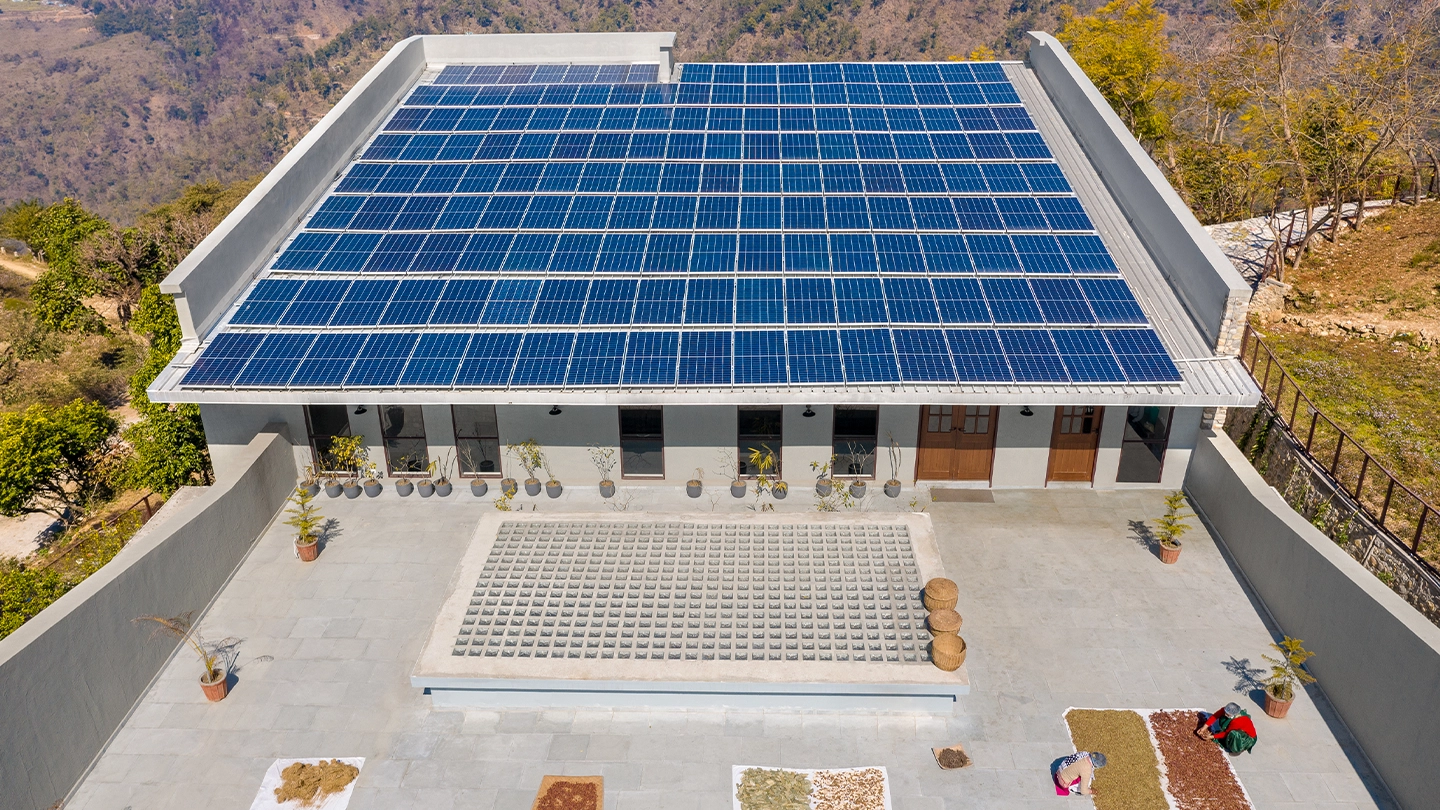
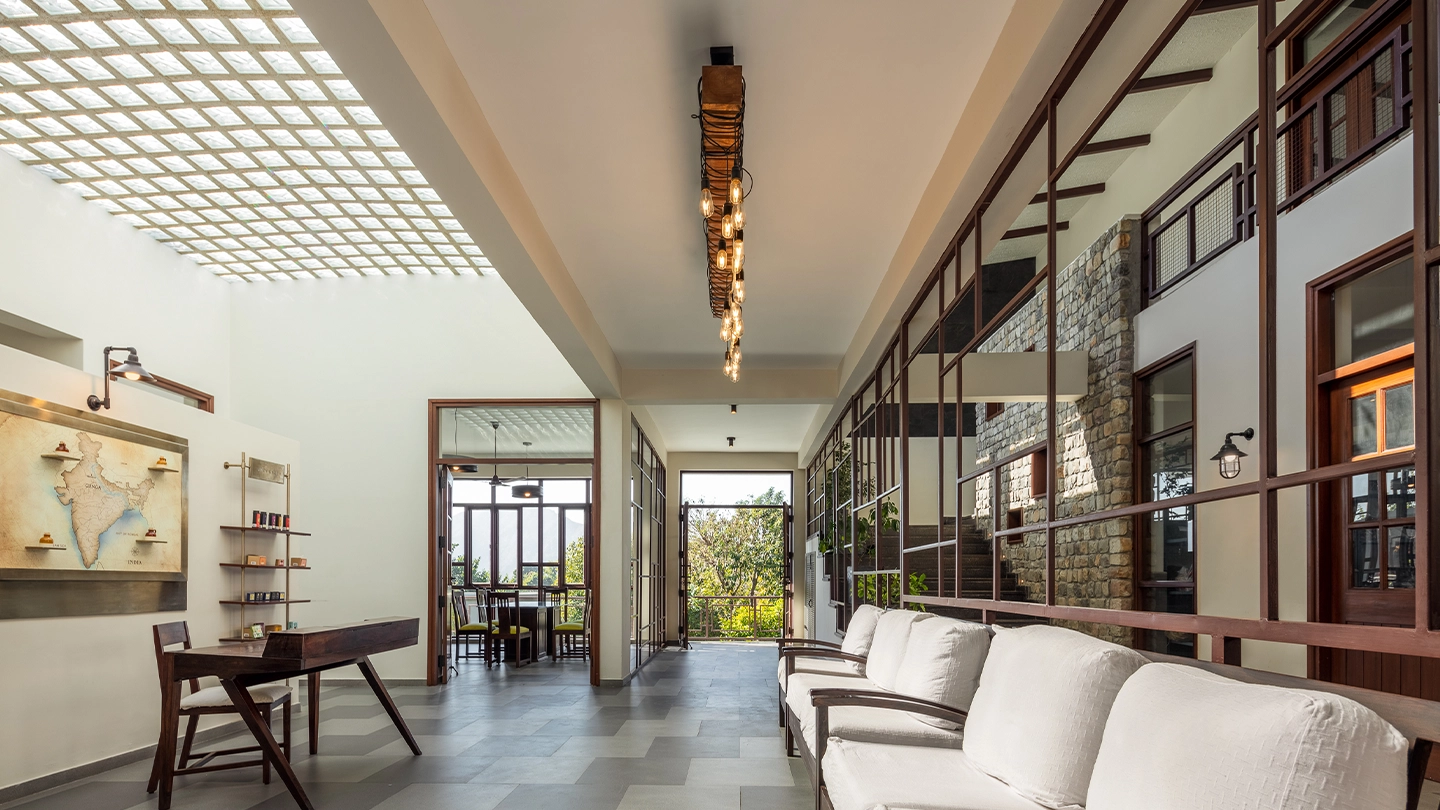
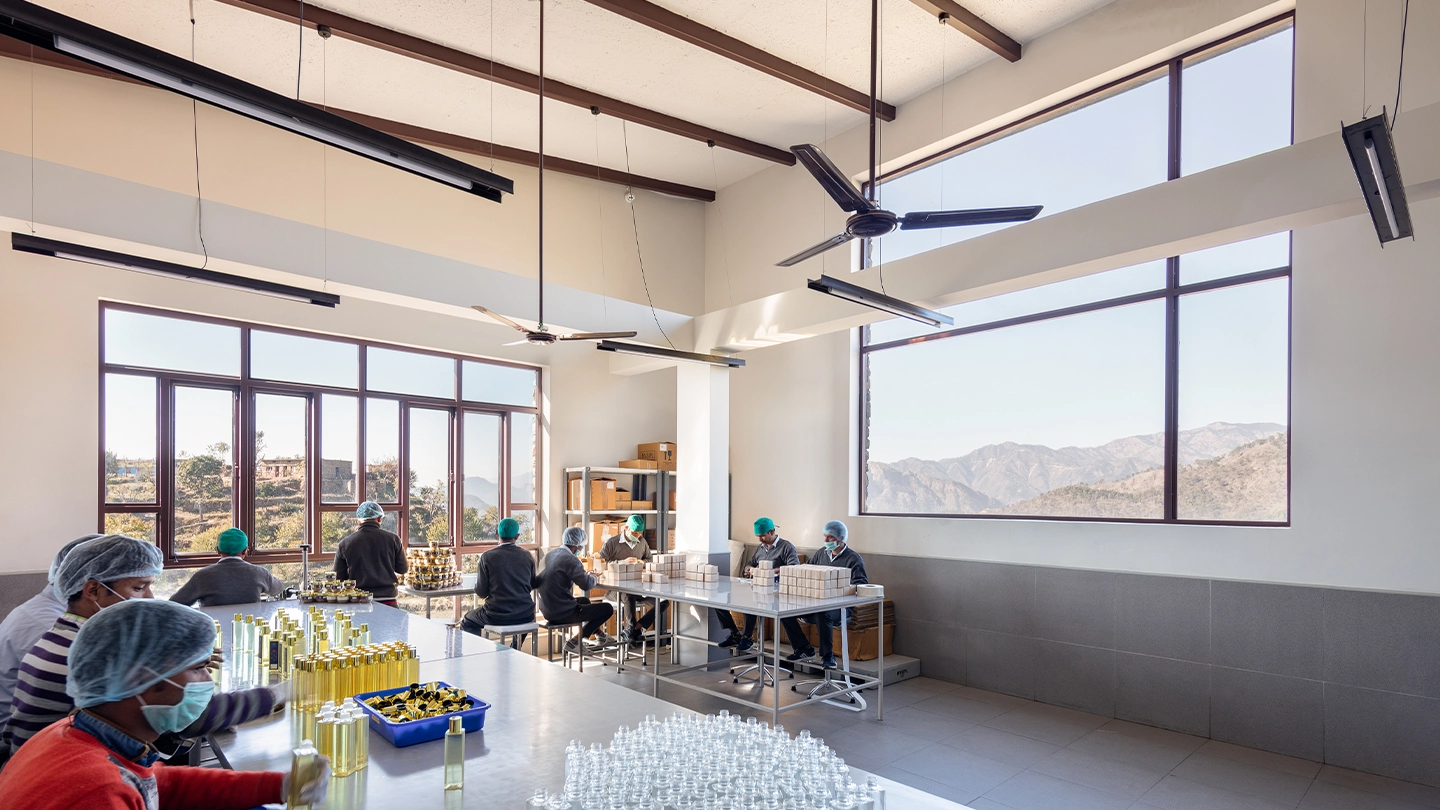
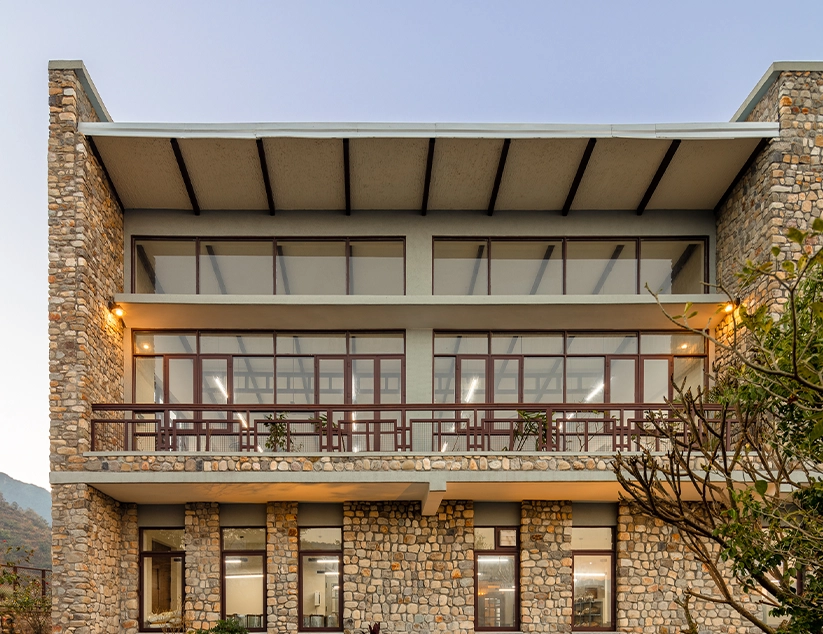
The design works with, not against, its fragile context. Respecting the footprint of the earlier structure, the building adapts to the terrain, resources, and budget while minimizing ecological impact. Inspired by the Garhwali kholi, a traditional rectilinear house form, the facility is oriented east–west and bisected by a central entry. Cooler functions such as grinding, storage, and packaging occupy the lower level, while heat-intensive processes are placed above. A butterfly roof, recalling vernacular forms, maximizes cross ventilation, clerestory lighting, and thermal comfort. With 80% of interiors naturally daylit, the workplace reduces dependence on artificial systems while maintaining healthy working conditions.
Passive strategies define performance. Shading devices, high thermal mass construction, and optimized window-to-wall ratios deliver an energy performance index of 35 kWh/m²/year. A 50 kWp solar array not only powers operations but also feeds surplus back to the grid, achieving an “Energy+” rating. Rainwater harvesting, reuse of construction waste, and upcycling from reclaimed rafters as lighting to chisels as door handles ensure net-zero water, energy, and waste outcomes.
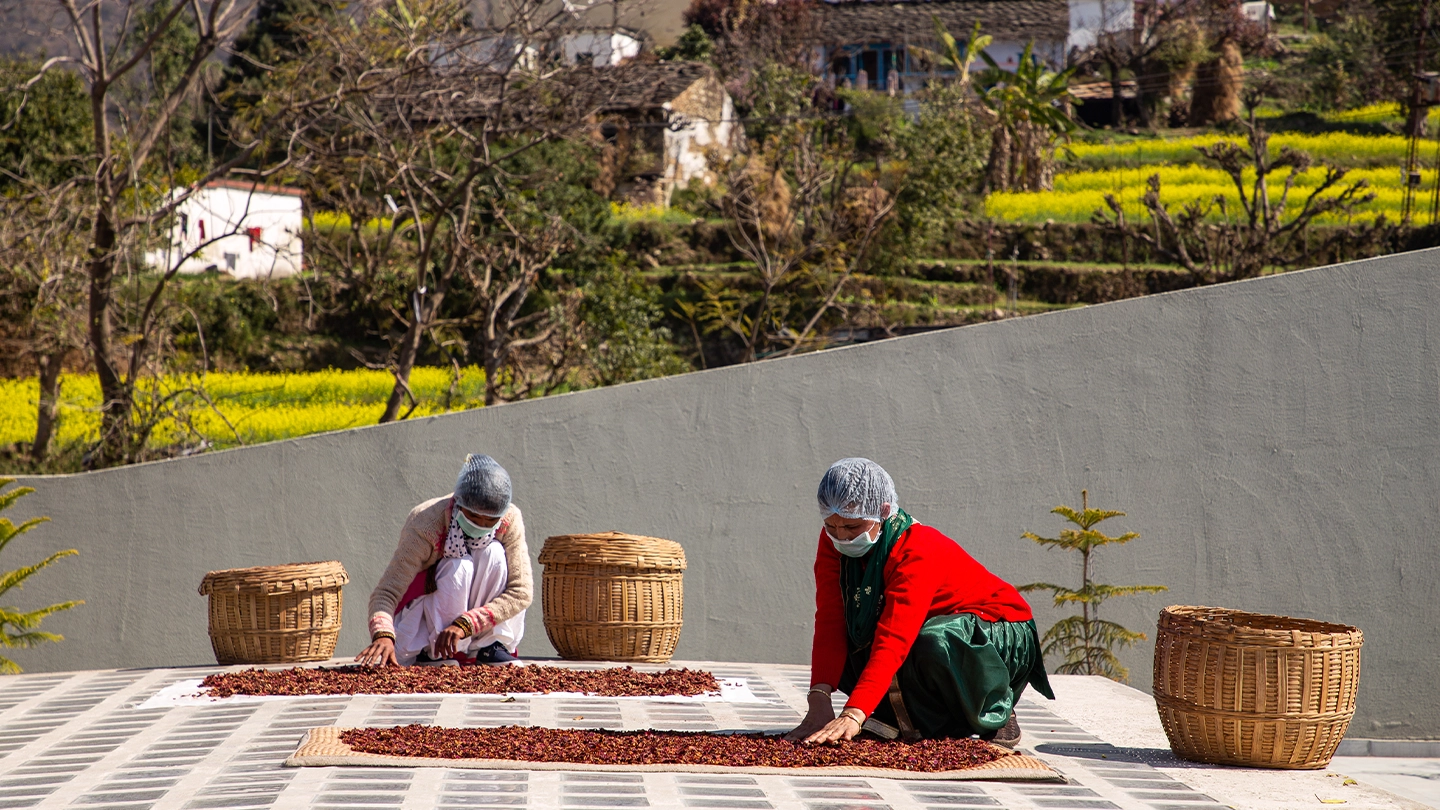
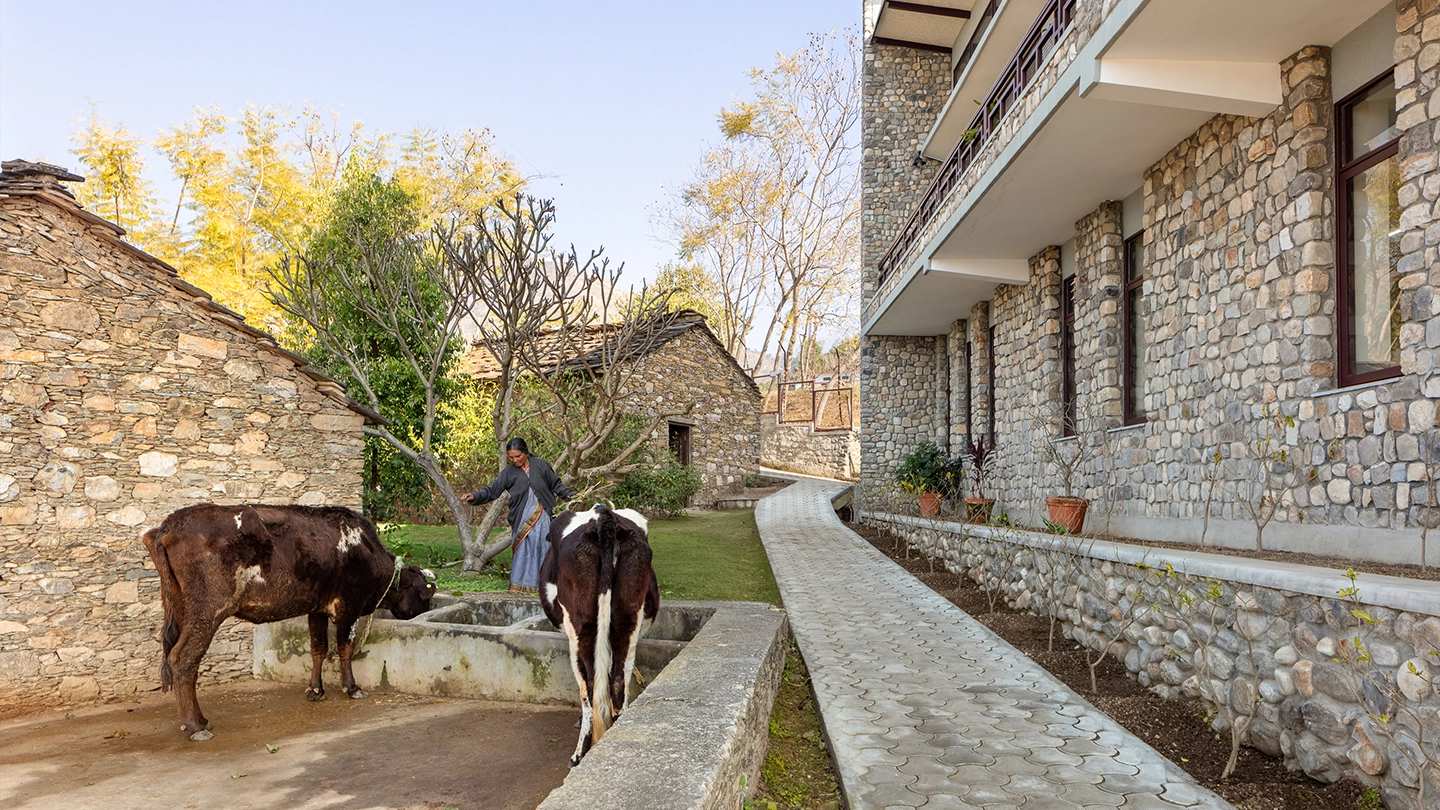
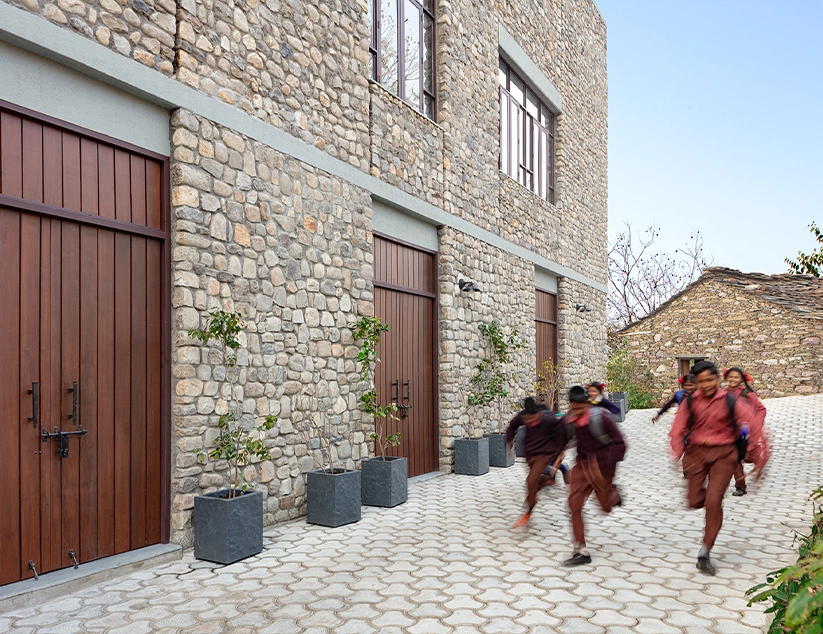
The project is equally a social enterprise. An existing gaushala was integrated and expanded, while large aangans foster community interaction. Employing 65 people and sustaining 75% of local households, the facility embodies a philosophy of “by the locals, for the locals.”
The Lodsi Community Project demonstrates that manufacturing can be ecological, decentralized, and rooted in place — a global model for sustainable production that empowers local communities.