Surat Diamond Bourse
Surat
- Site Area: 35.3 acres
- Built Up: 71,00,000 sq. ft.
World's Largest Office Building with Shortest Commute
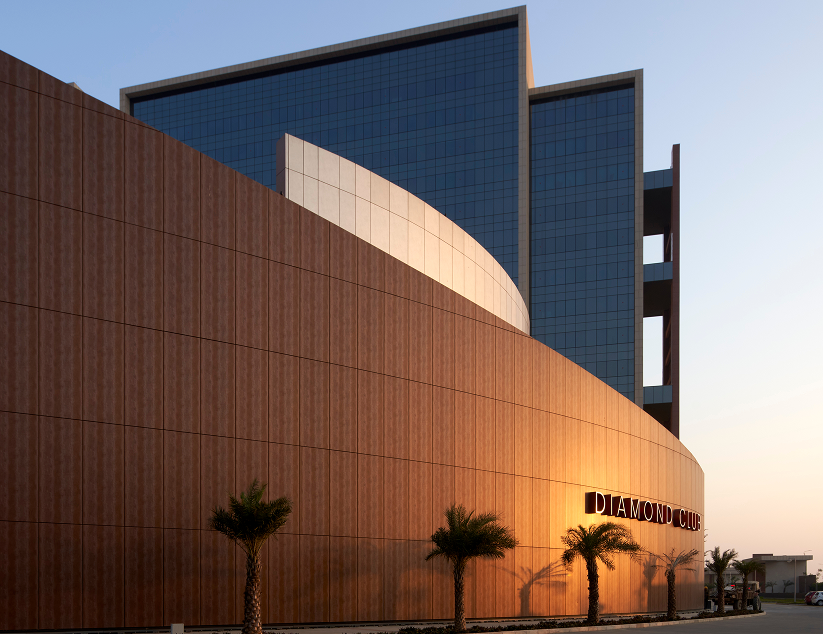
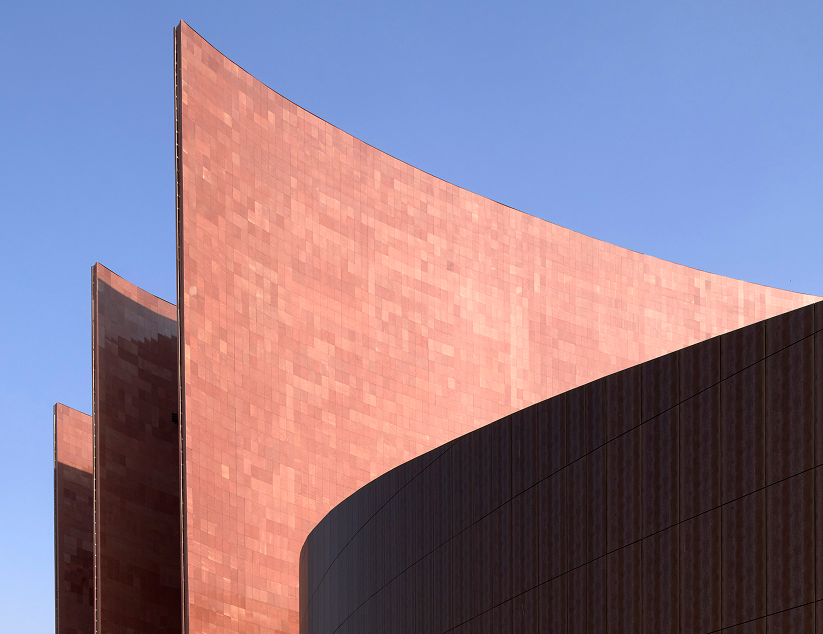
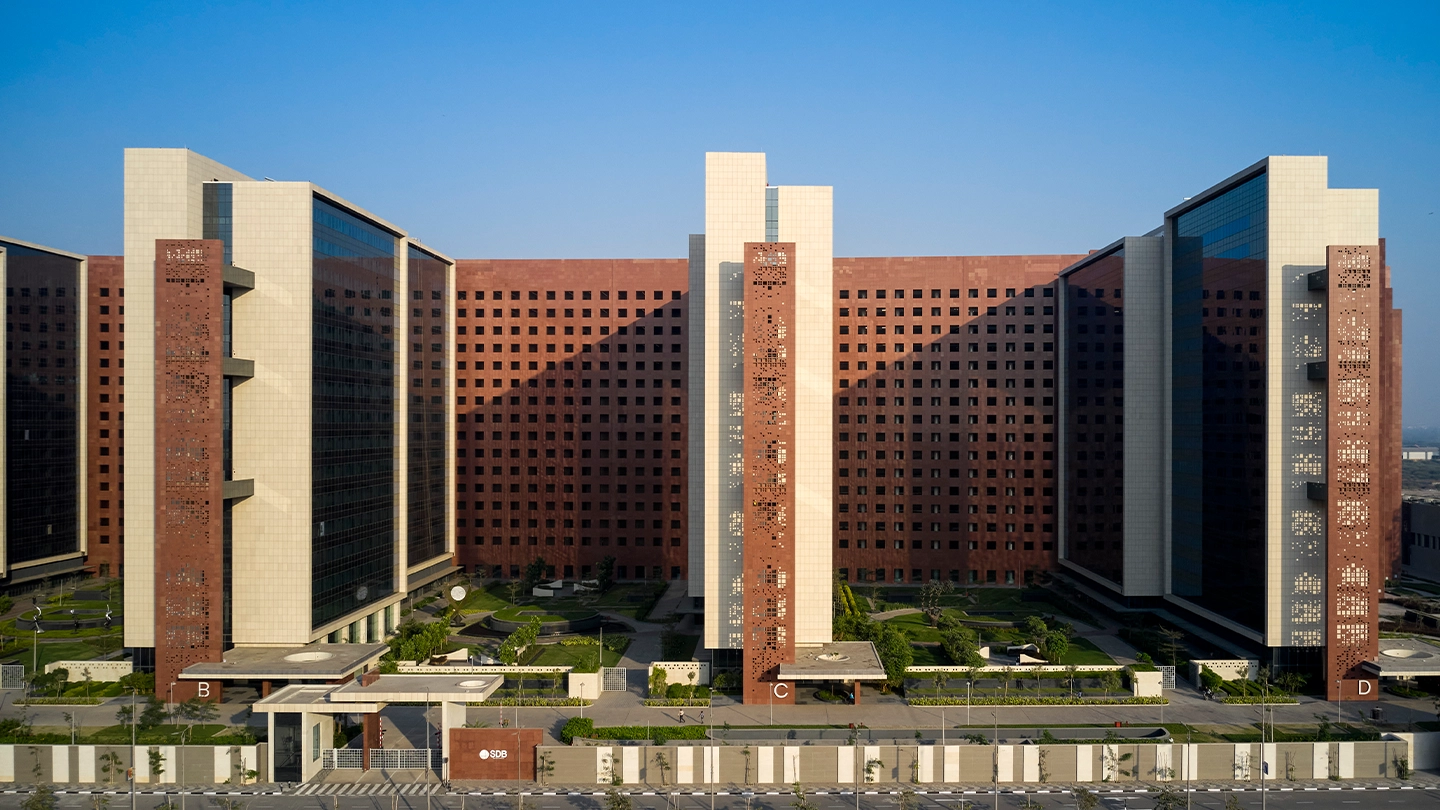
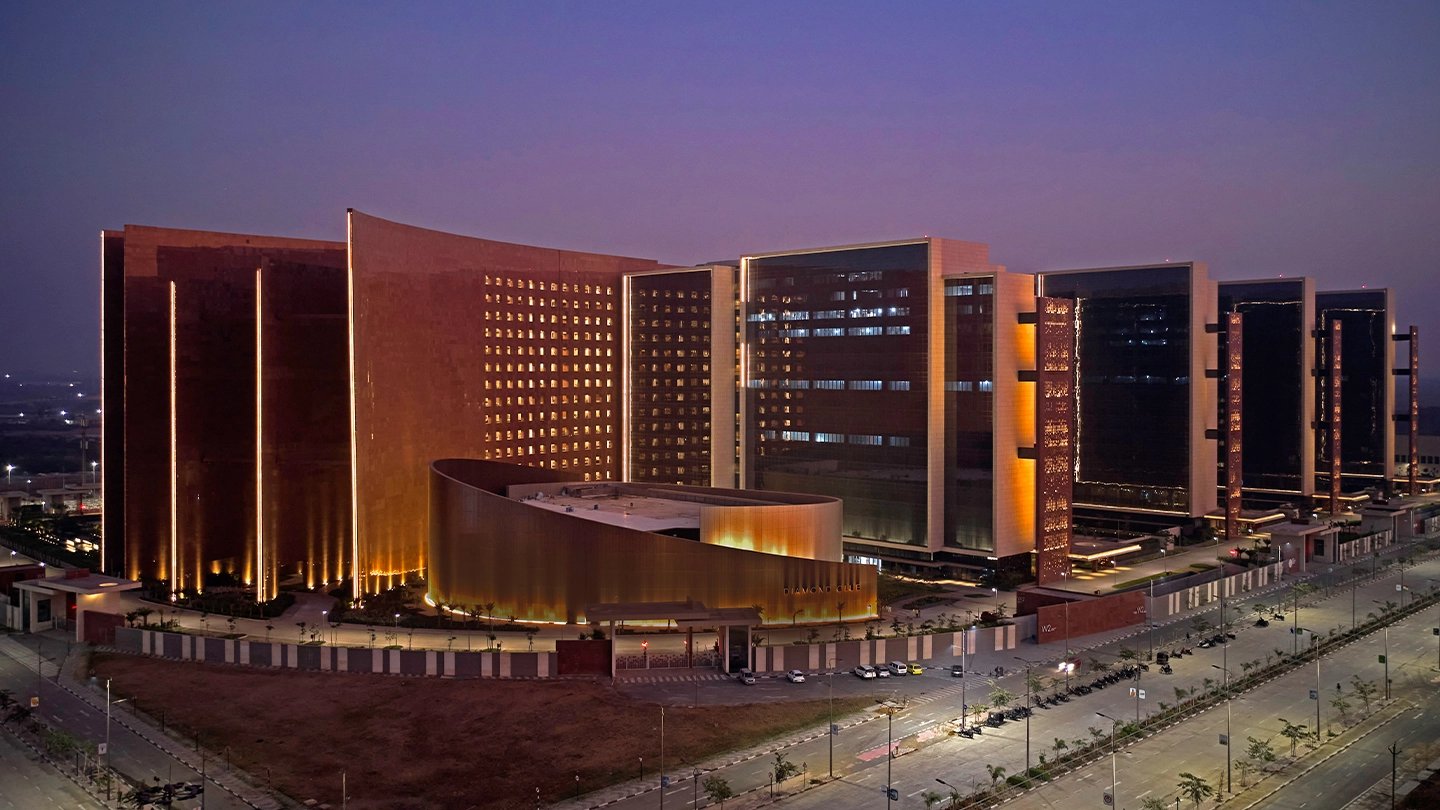
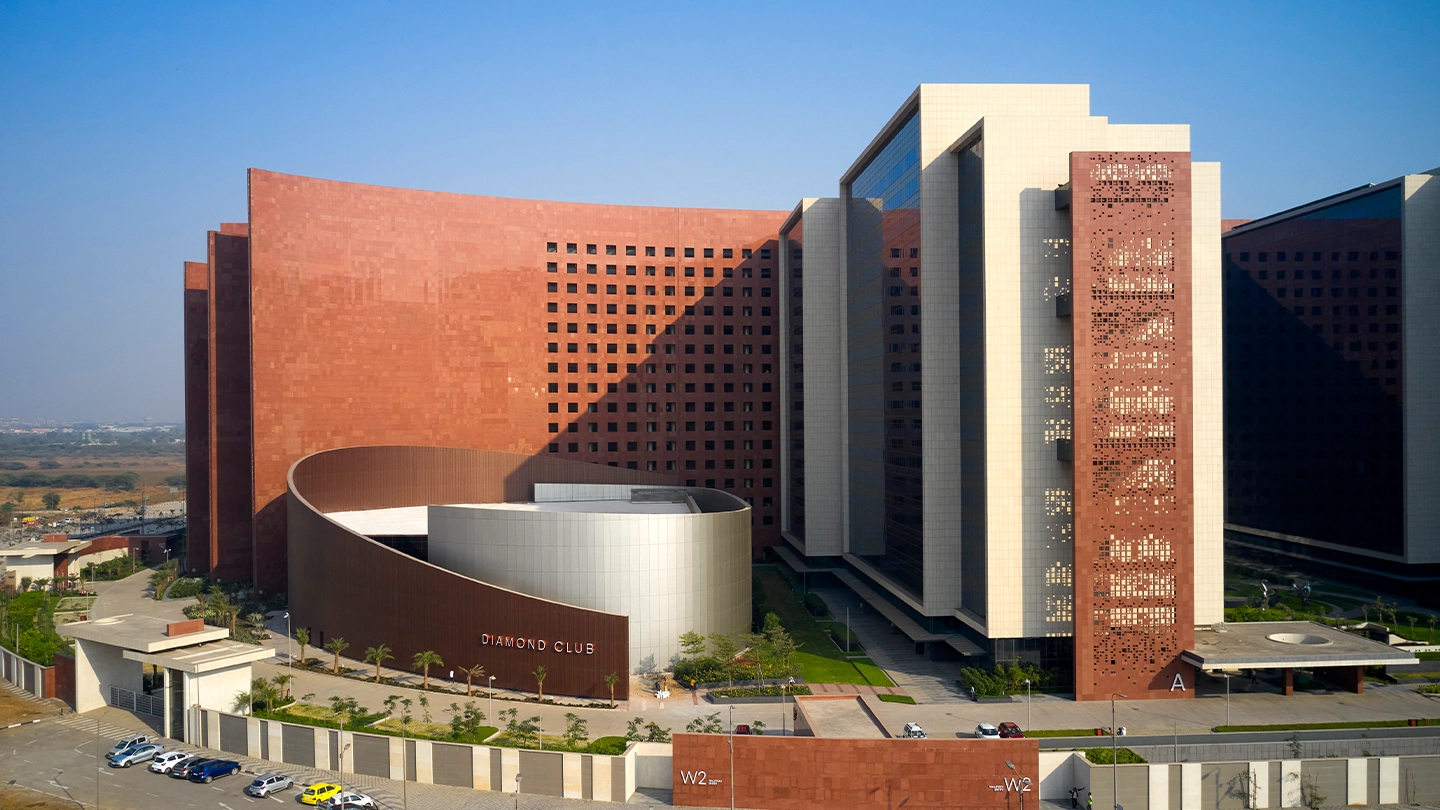
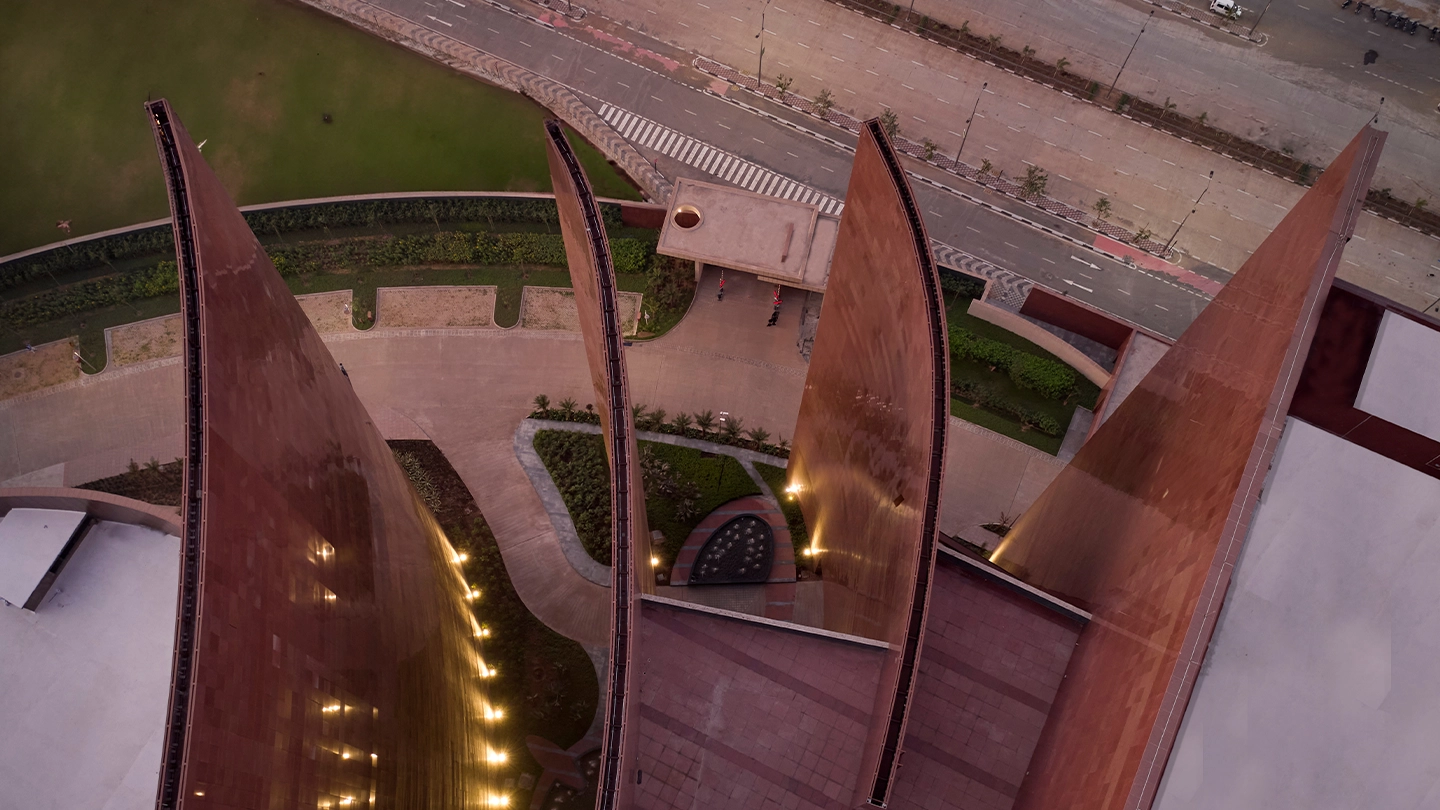
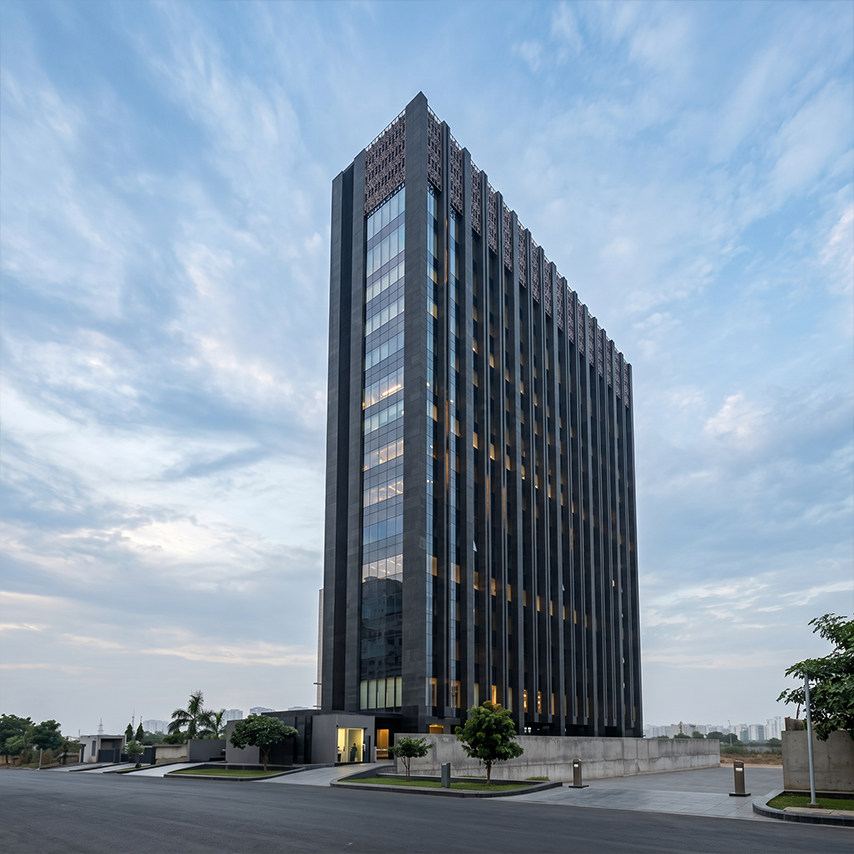
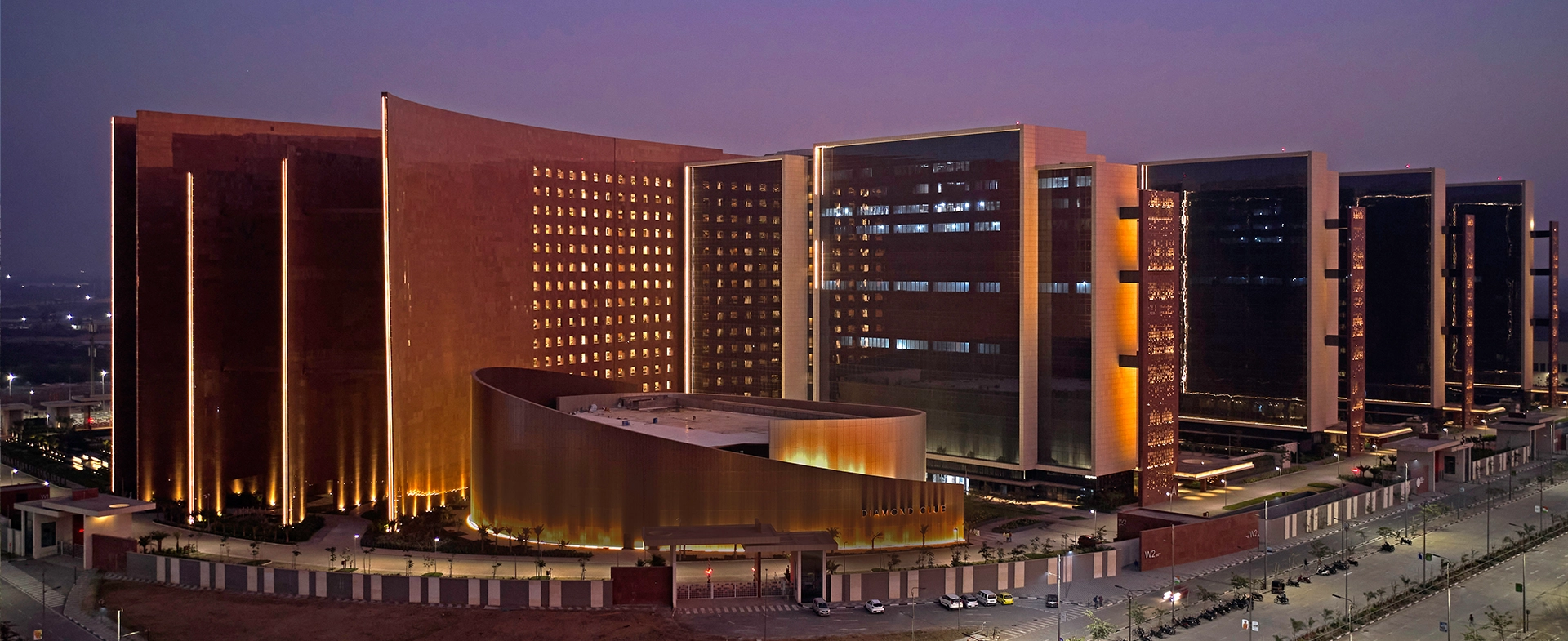
The Surat Diamond Bourse in Gujarat is the world’s largest office building, surpassing the Pentagon with a built-up area of 7.1 million square feet. Spread across thirty-six acres, it accommodates sixty-seven thousand professionals and up to seventy thousand daily users, bringing the global hub of diamond cutting, polishing, and trading together under one roof. Yet the project’s significance lies not only in its scale, but in how that scale is organised around the everyday experience of its users.
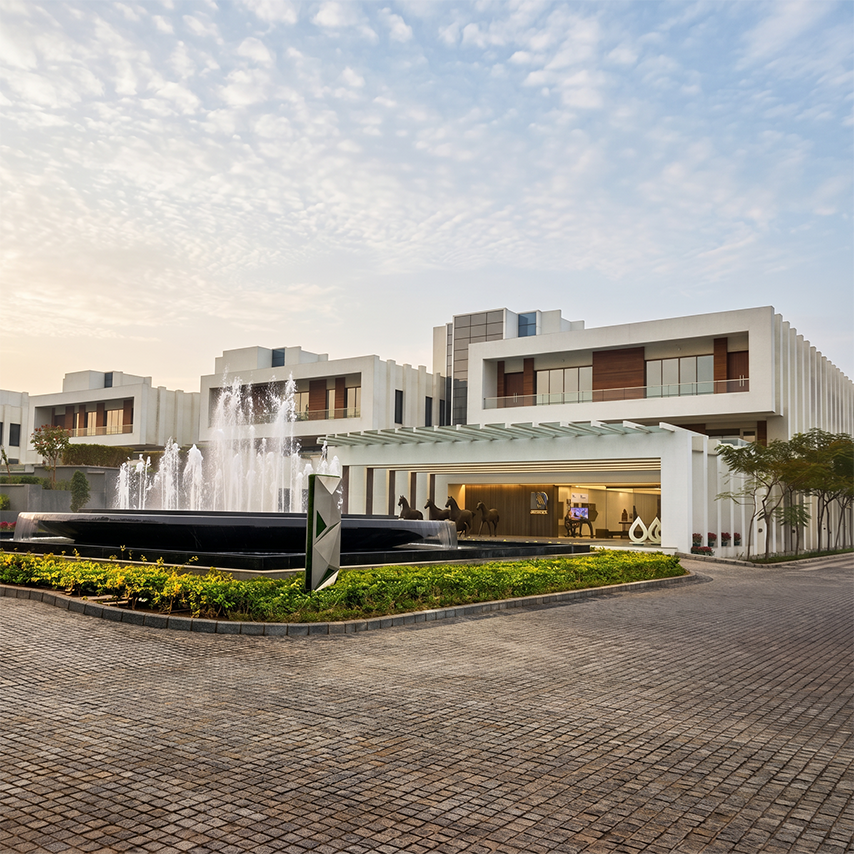
For decades, many members of Surat’s diamond community travelled long distances to Mumbai for business. The Bourse responds by consolidating an entire industry within a single destination, dramatically reducing travel time while fostering greater collaboration and efficiency. Conceived as a city within a city, it houses 4,700 offices alongside retail, wellness facilities, a 10,000-square-metre food zone, and landscaped community spaces that support informal trading, social interaction, and everyday life.
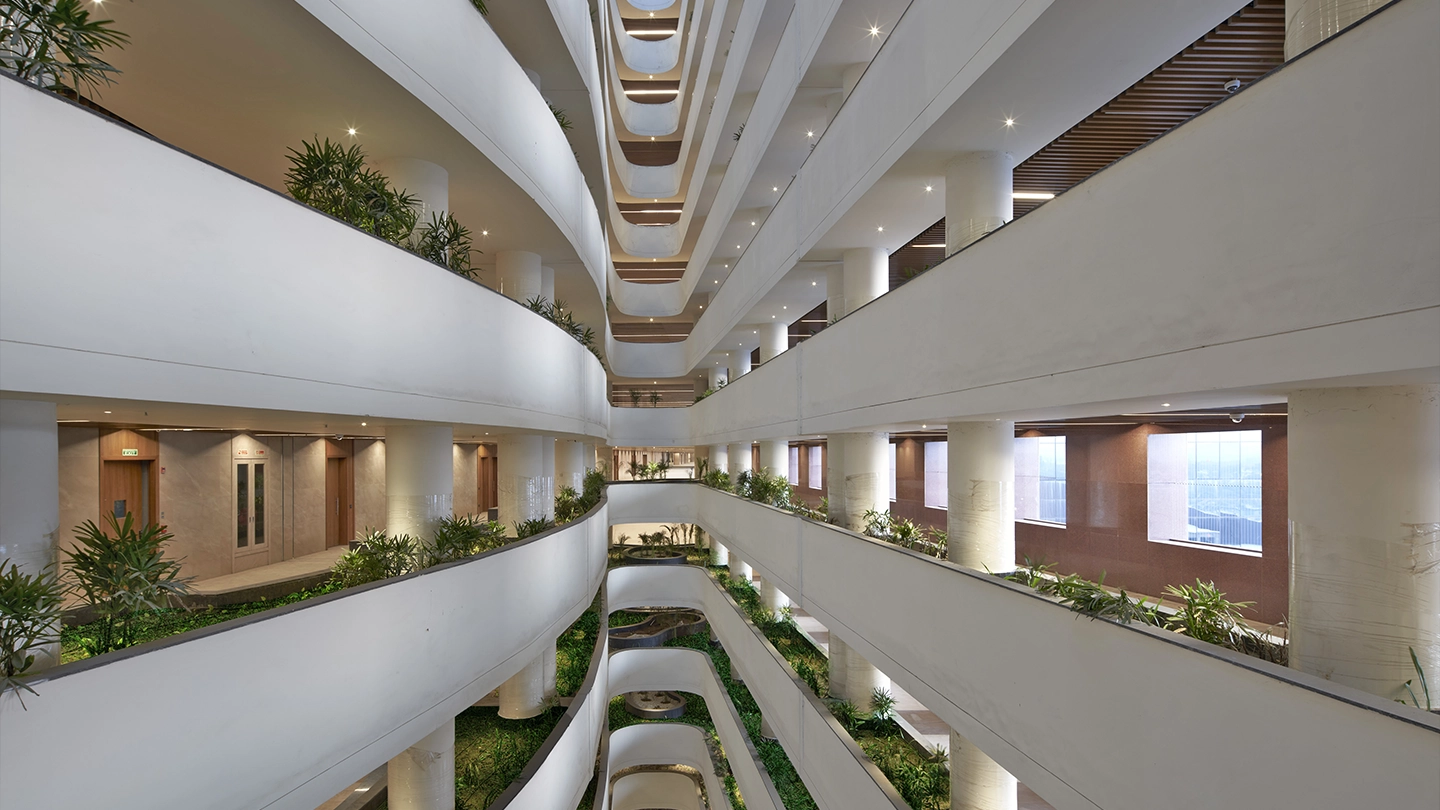
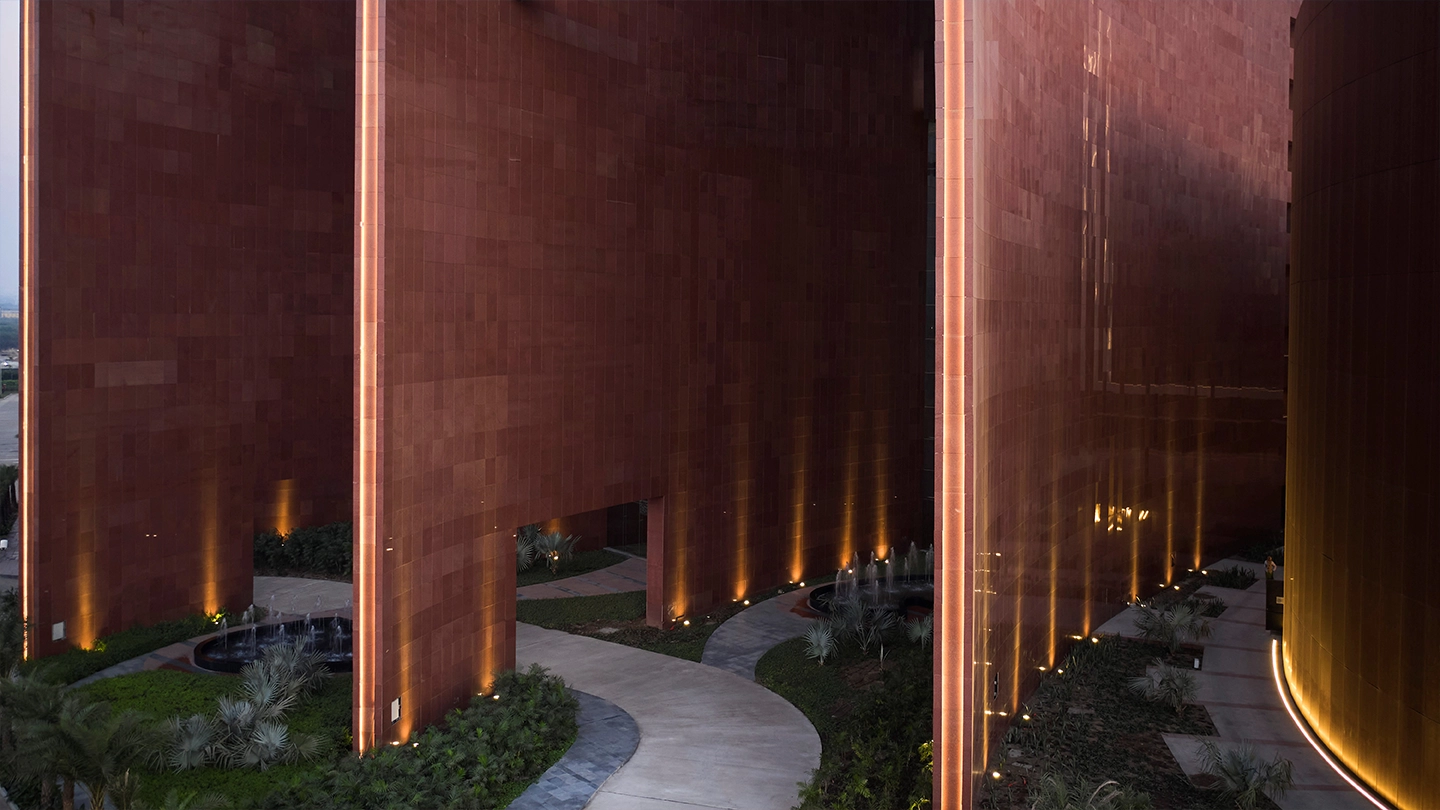
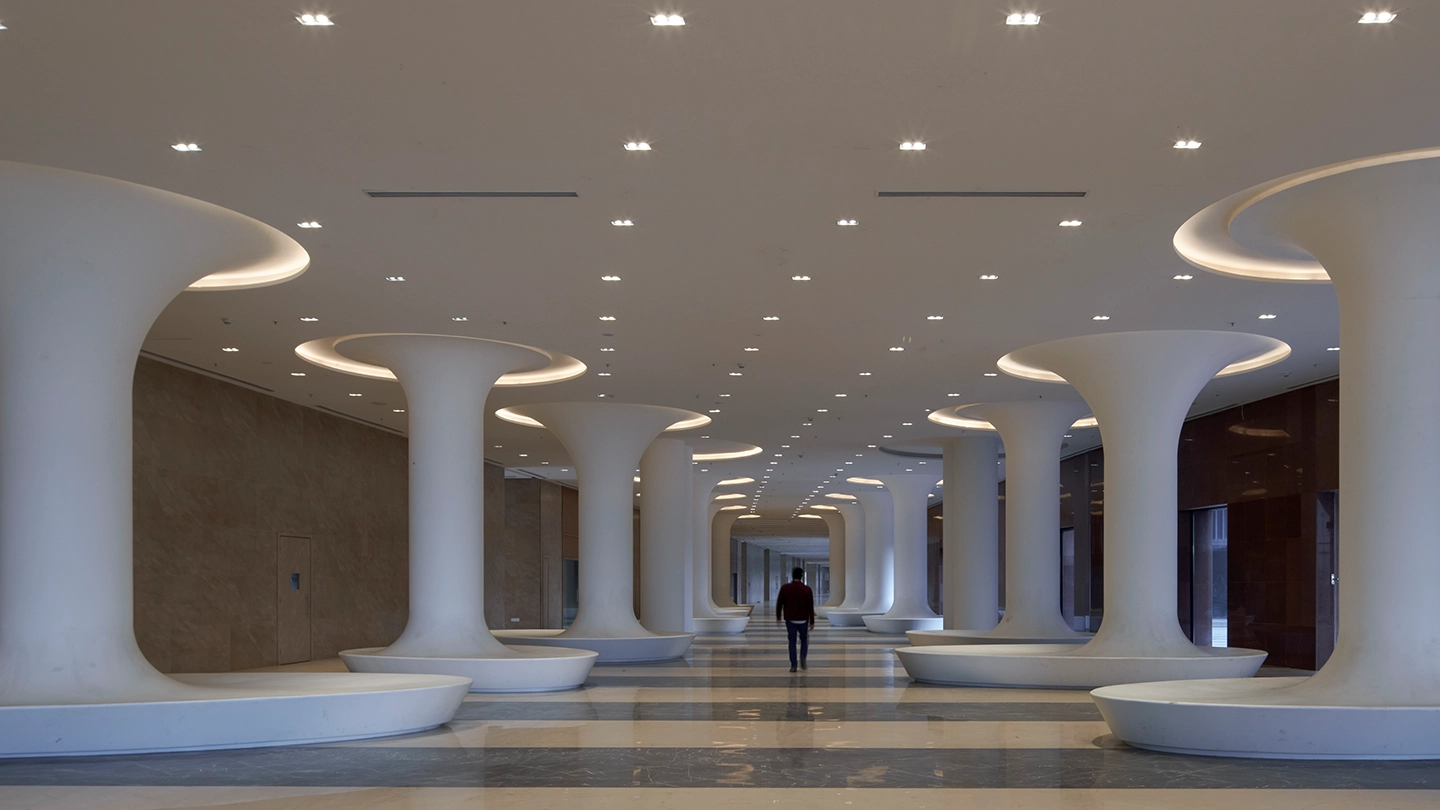
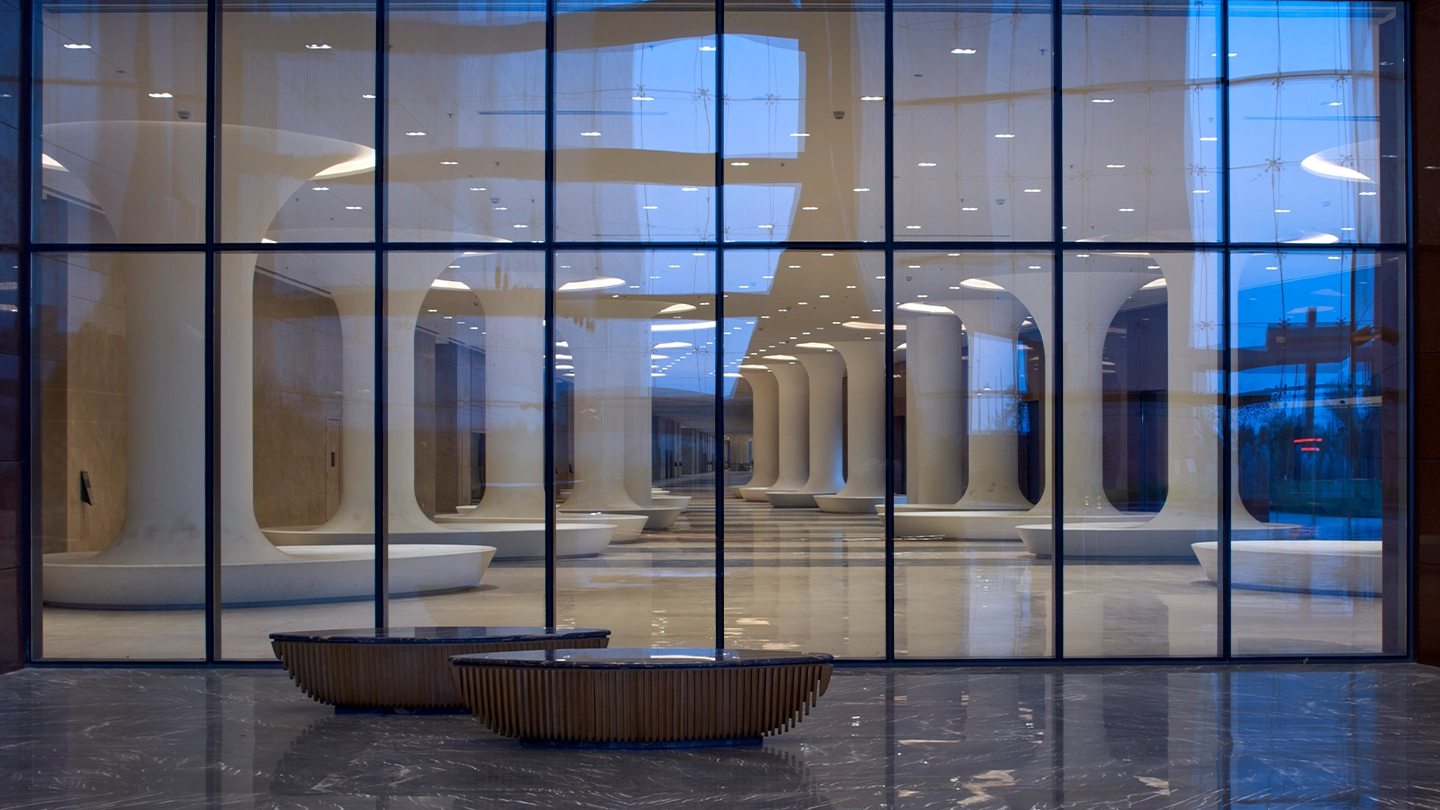
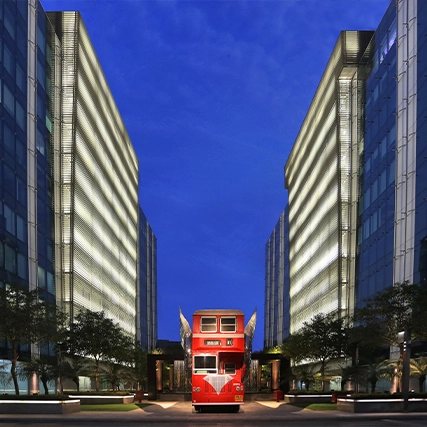
Every movement, from arrival to workstation, was mapped to minimise travel distances within the complex. Decentralised vertical cores, shaded courtyards, and a linear circulation spine ensure that no internal commute exceeds seven minutes, transforming one of the world’s largest workplaces into a highly walkable environment.
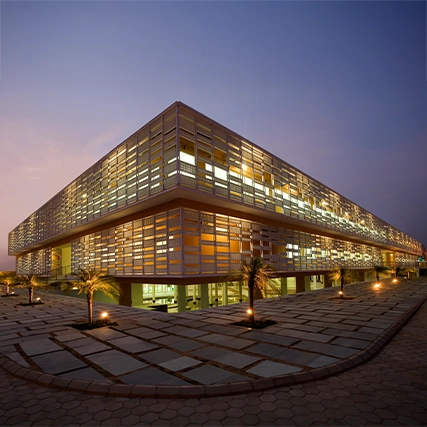
The nine office blocks are oriented north-south, allowing seventy-five percent of workspaces to receive natural daylight, while thirty percent of the built area is naturally ventilated and passively cooled. A radiant cooling system, combined with passive shading and biophilic design strategies, reduces overall energy consumption by fifty percent and contributes to the project’s IGBC Platinum certification.
Constructed using locally sourced materials including Lakha red granite and Gwalior white sandstone, the Bourse supports regional craft economies while minimising waste. The result is a workplace of unprecedented scale that demonstrates how density, efficiency, and community can coexist, creating a model where the world’s largest office building is also designed around the shortest commute.