Sushant School of Design and Architecture
Gurugram
- Site Area: 8 acres
- Built Up: 3,50,000 sq. ft.
A walkable design school crafted around streets, courtyards, and collaboration
A learning environment where shaded streets, courtyards, and terraces create a democratic model of design education
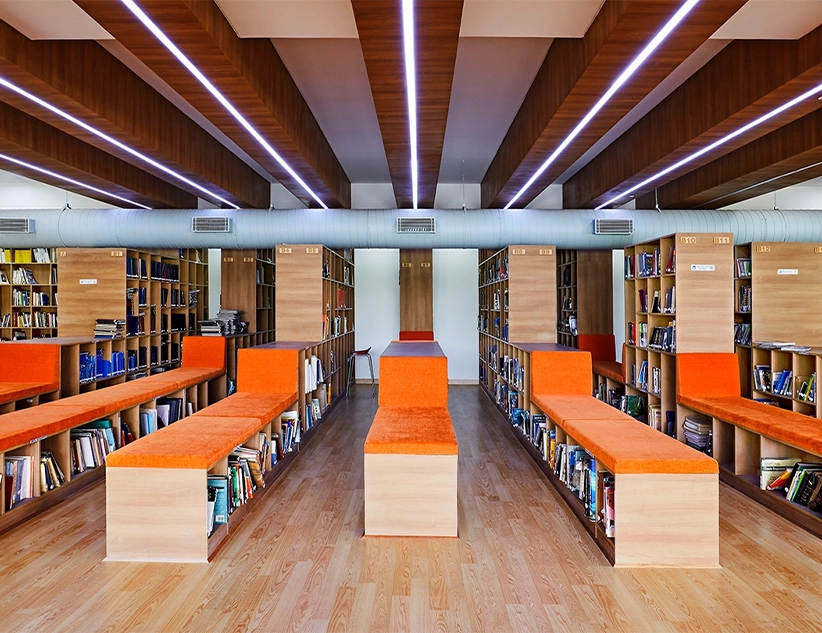
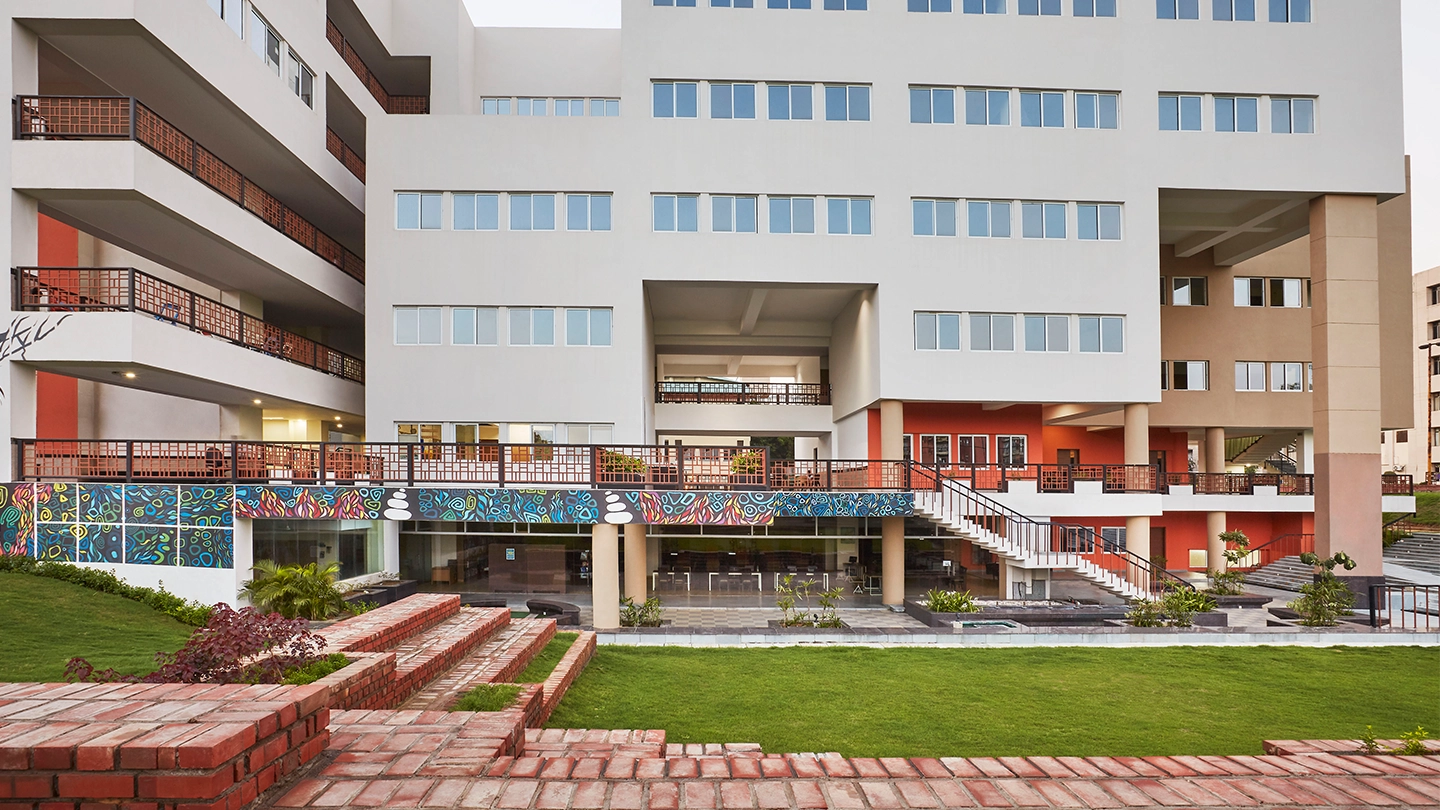
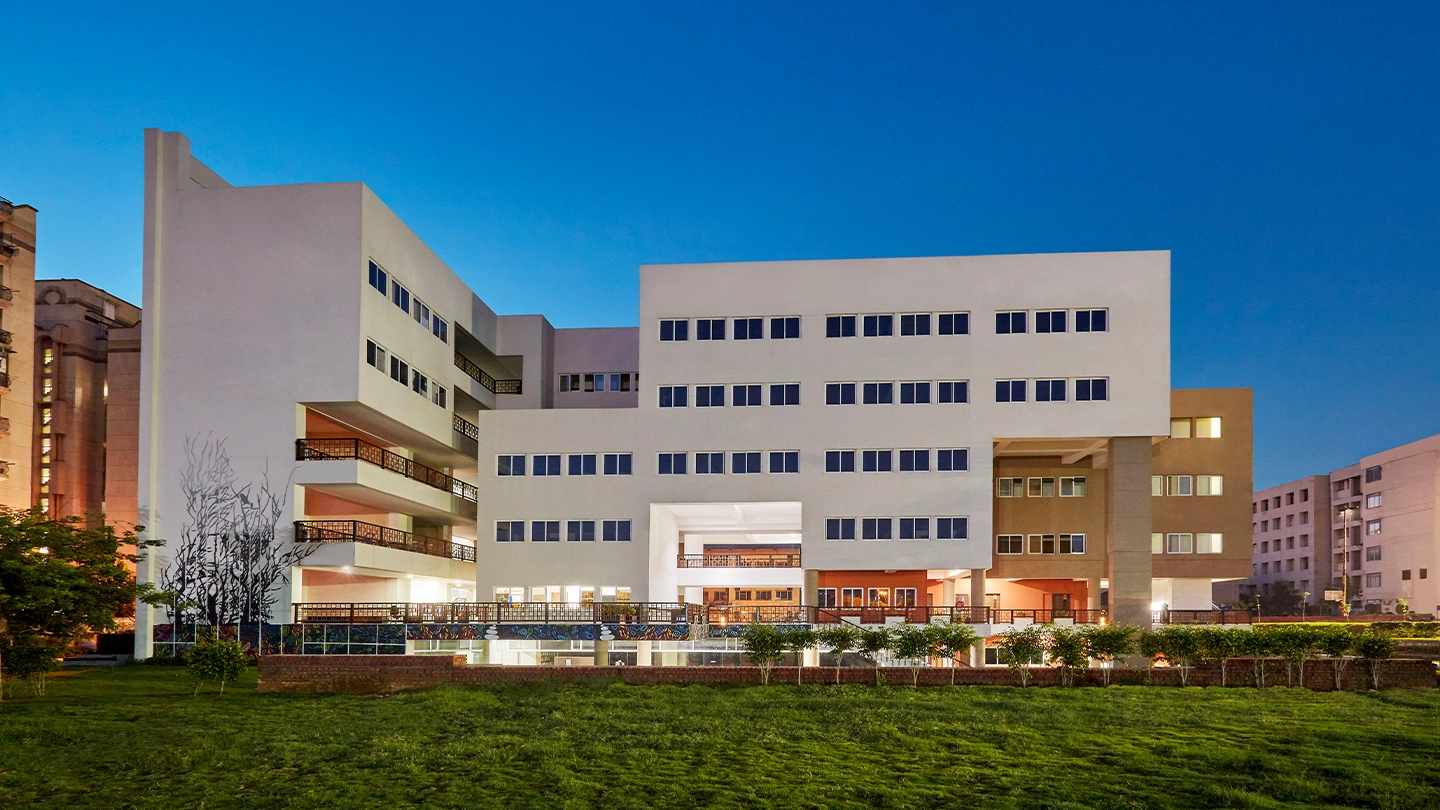
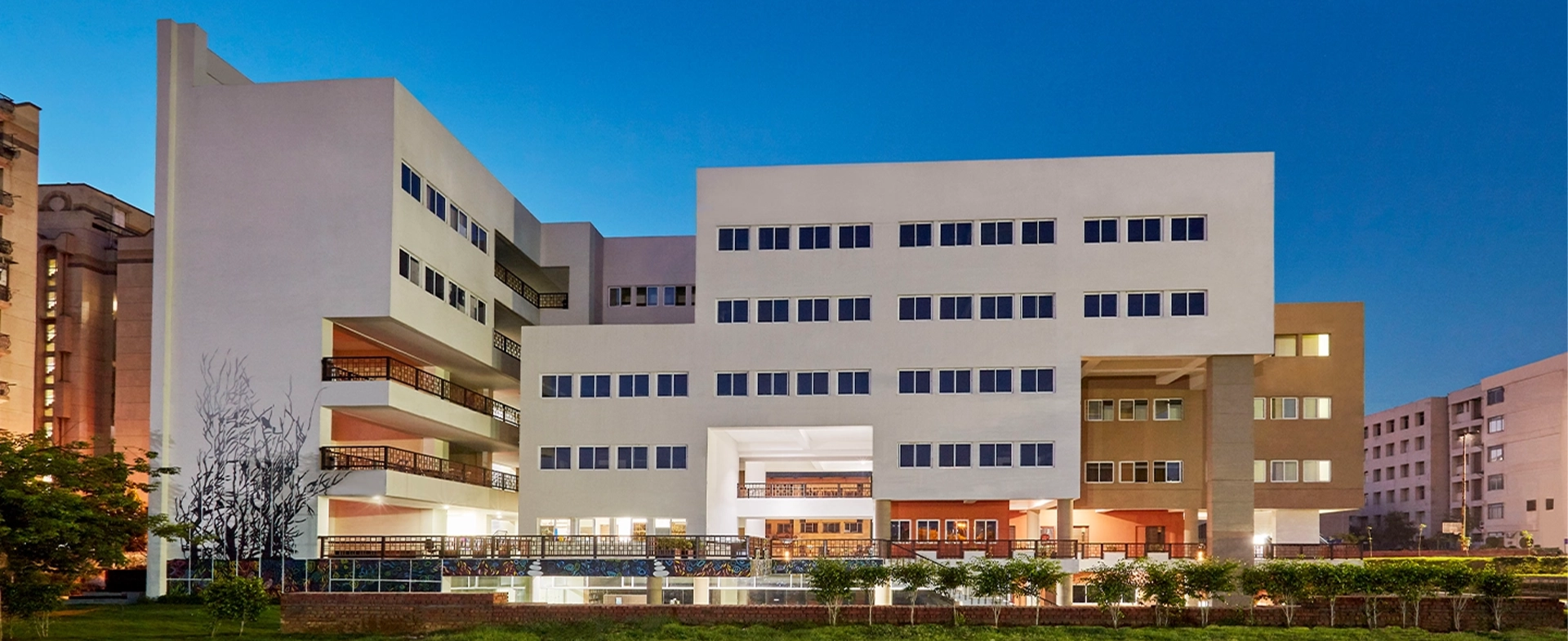
The Sushant School of Design and Architecture in Gurugram responds to the needs of an emerging urban India and is set within a green campus framed by views of the Aravalli hills. Conceived as a collaborative hub, the school brings multiple design disciplines under one roof to support integrated learning and partnerships. Its planning draws from the compact, pedestrian-oriented street networks of Shahjahanabad, emphasising social interaction and walkability.
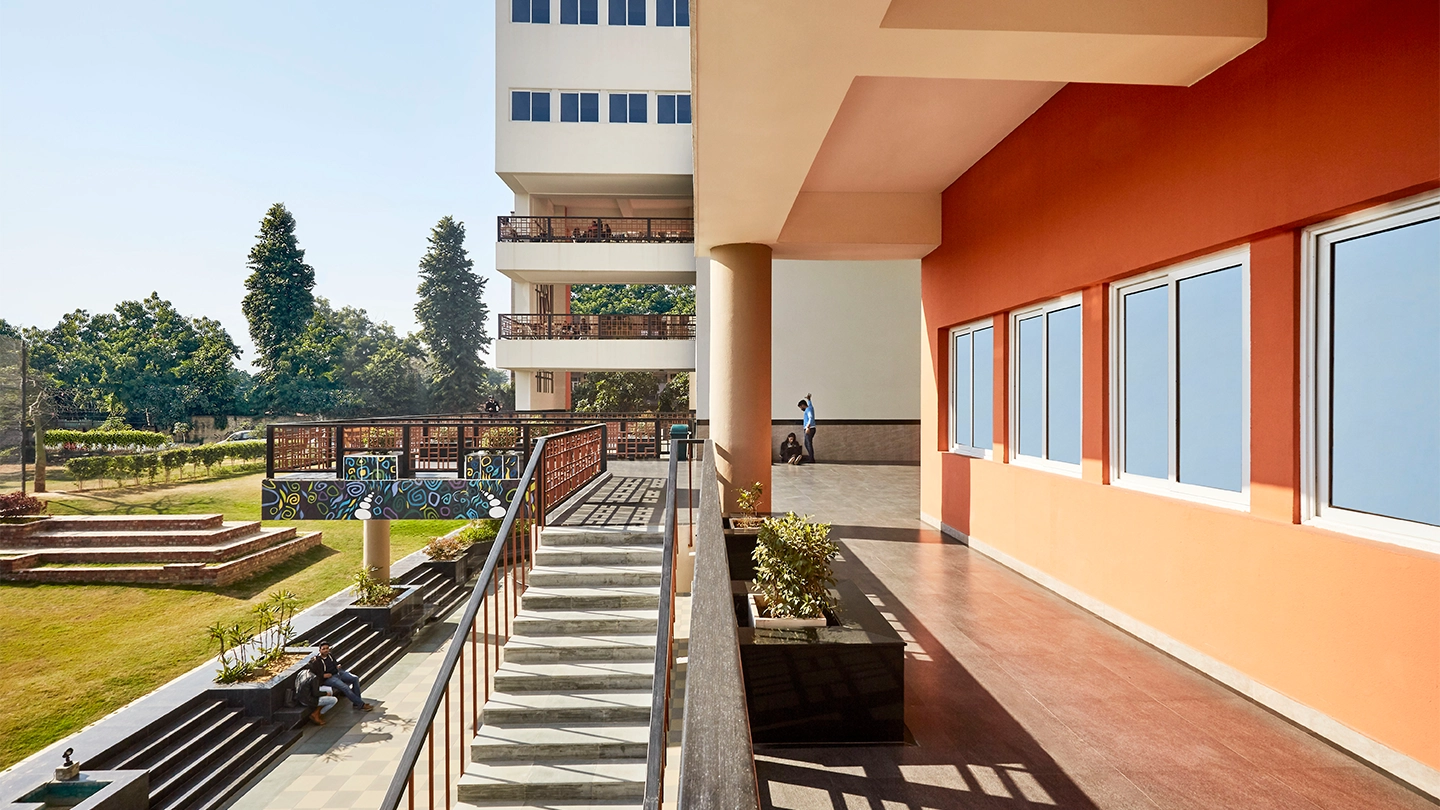
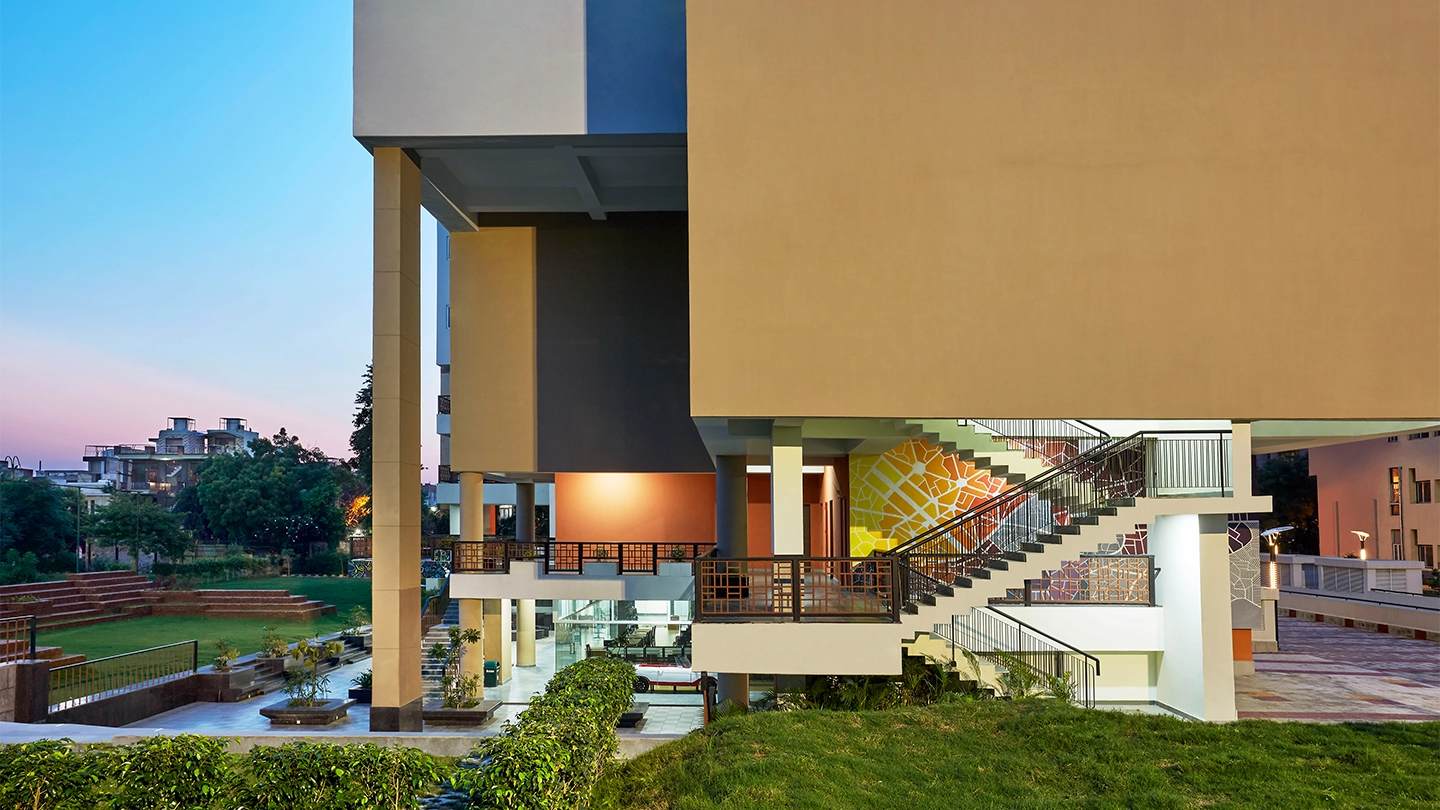
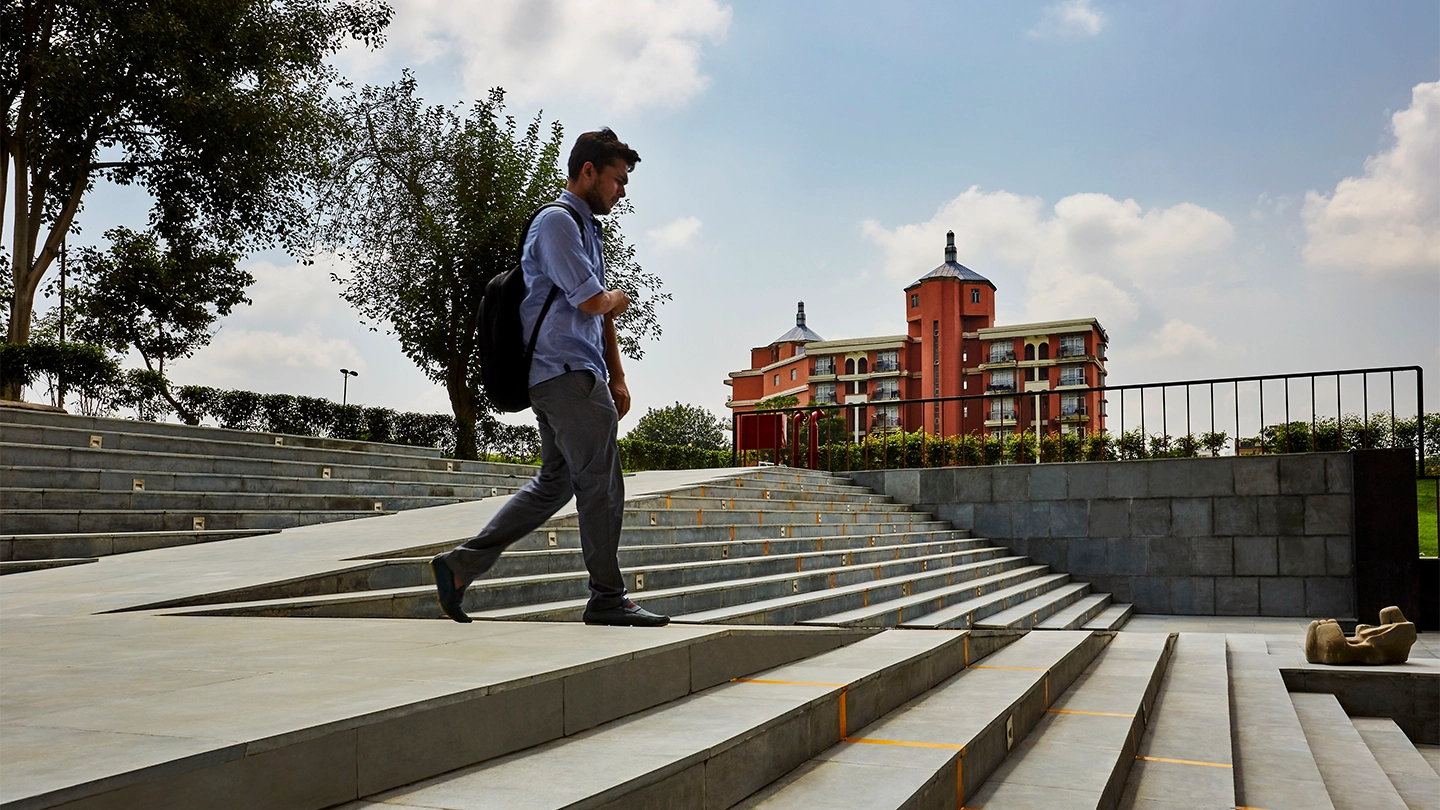
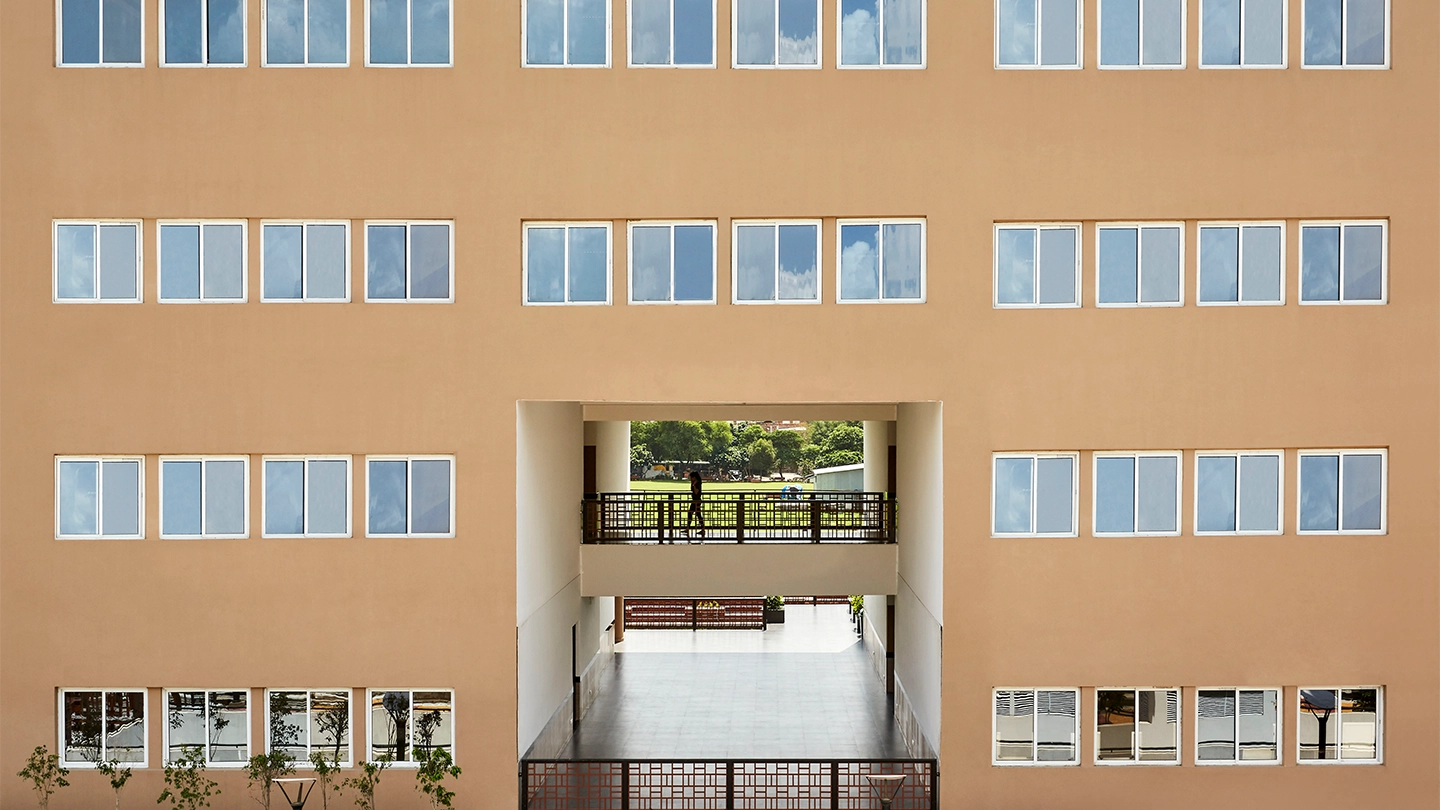
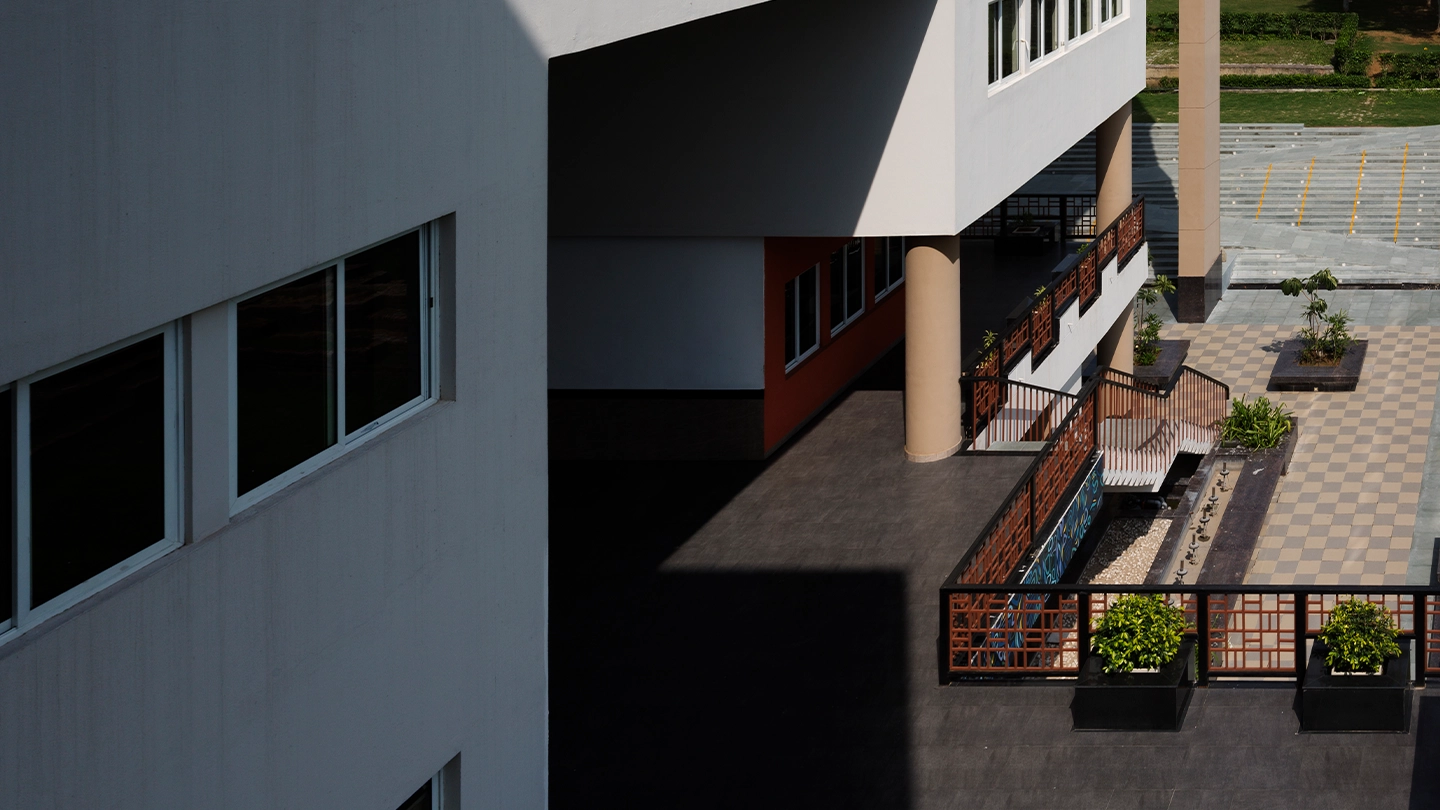
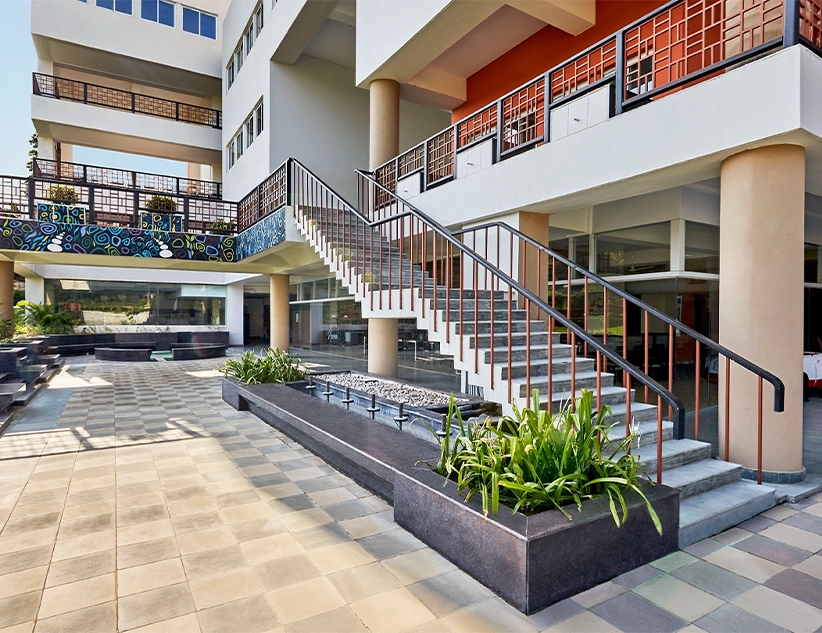
Vehicular movement is restricted to the site periphery, creating a fully pedestrian campus organised through three interconnected circulation layers. A primary shaded spine runs along the length of the building, supported by covered corridors. Secondary pathways move through landscaped courts and stilted zones, while elevated walkways connect different levels, creating a continuous and fluid campus experience. The building is composed of linear strips aligned north–south to ensure shaded, naturally ventilated spaces throughout the day. Service cores and staircases are consolidated along the western edge to buffer heat gain, while an auditorium on the southern side creates a cooler zone for learning spaces.
Climate responsiveness shapes both form and experience. Concrete jaalis, angled louvers and solid panels protect interiors from heat while enabling year-round use of courtyards, verandahs and terraces. Lower-level courtyards are programmatically distinct, while upper terraces function as outdoor classrooms. An earth-banked underbelly reduces heat island effect and supports evaporative cooling, maintaining internal temperatures around 27 degrees Celsius even during peak summers. This underbelly also acts as the campus social core, housing exhibitions, food courts, bookstores and informal learning zones.
The five-level structure accommodates academic programs, administration, conferences and collaborative spaces. Flexible planning, cavity walls and controlled glazing ensure daylight suitable for teaching while improving thermal performance. The campus presents a climate-intelligent, pedestrian-first model for inclusive and interconnected design education.