YWCA
New Delhi
- Site Area: 1.3 acres
- Built Up: 75,000 sq. ft.
A beacon for women’s empowerment through sustainable design
Merging community, culture, and climate responsiveness into a secure, vibrant campus.


The YWCA campus in New Delhi, combines two interrelated functions: residential facilities for working women and academic spaces for vocational training. More than just infrastructure, the project is conceived as a living-learning environment that enhances collaboration, fosters security, and optimizes shared resources for women’s empowerment.
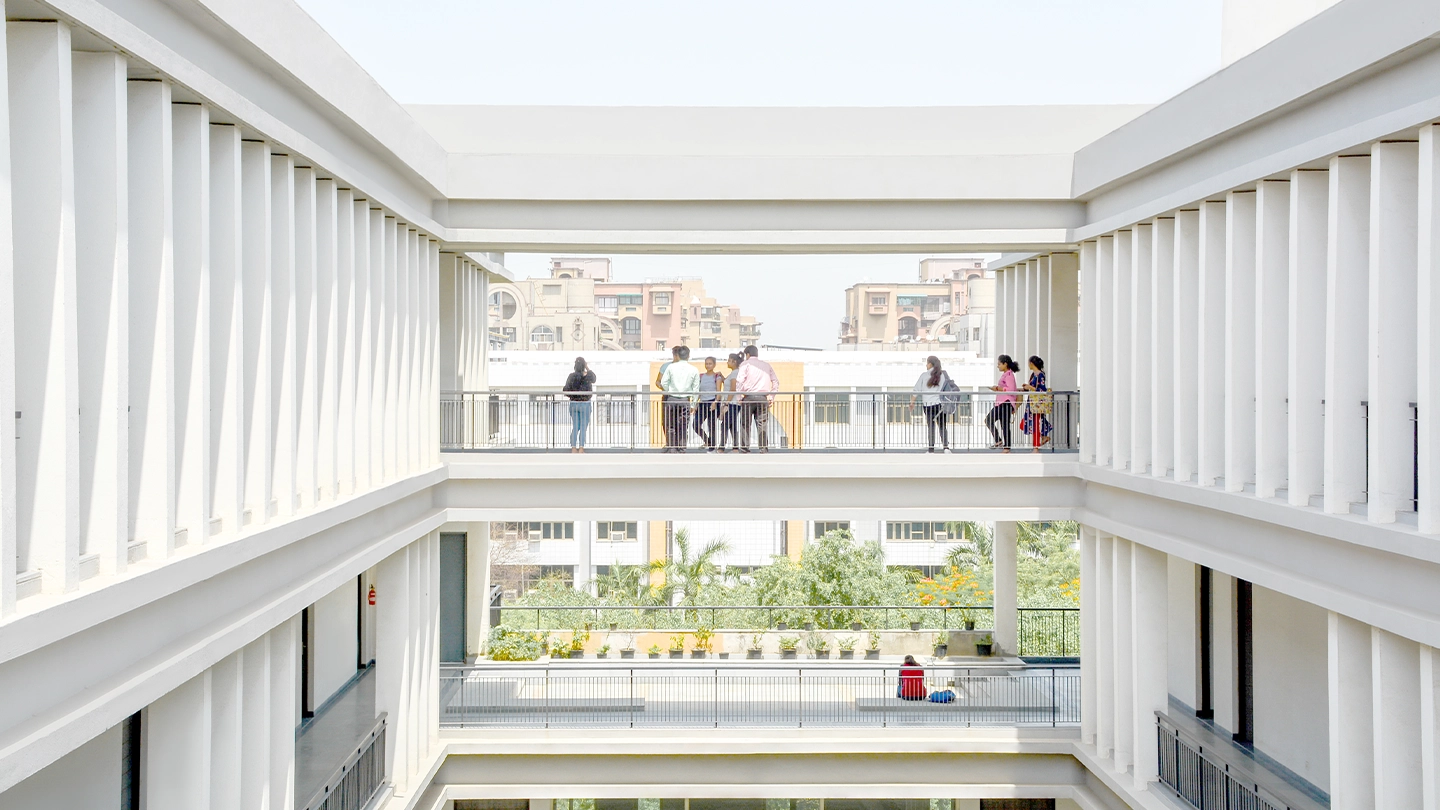
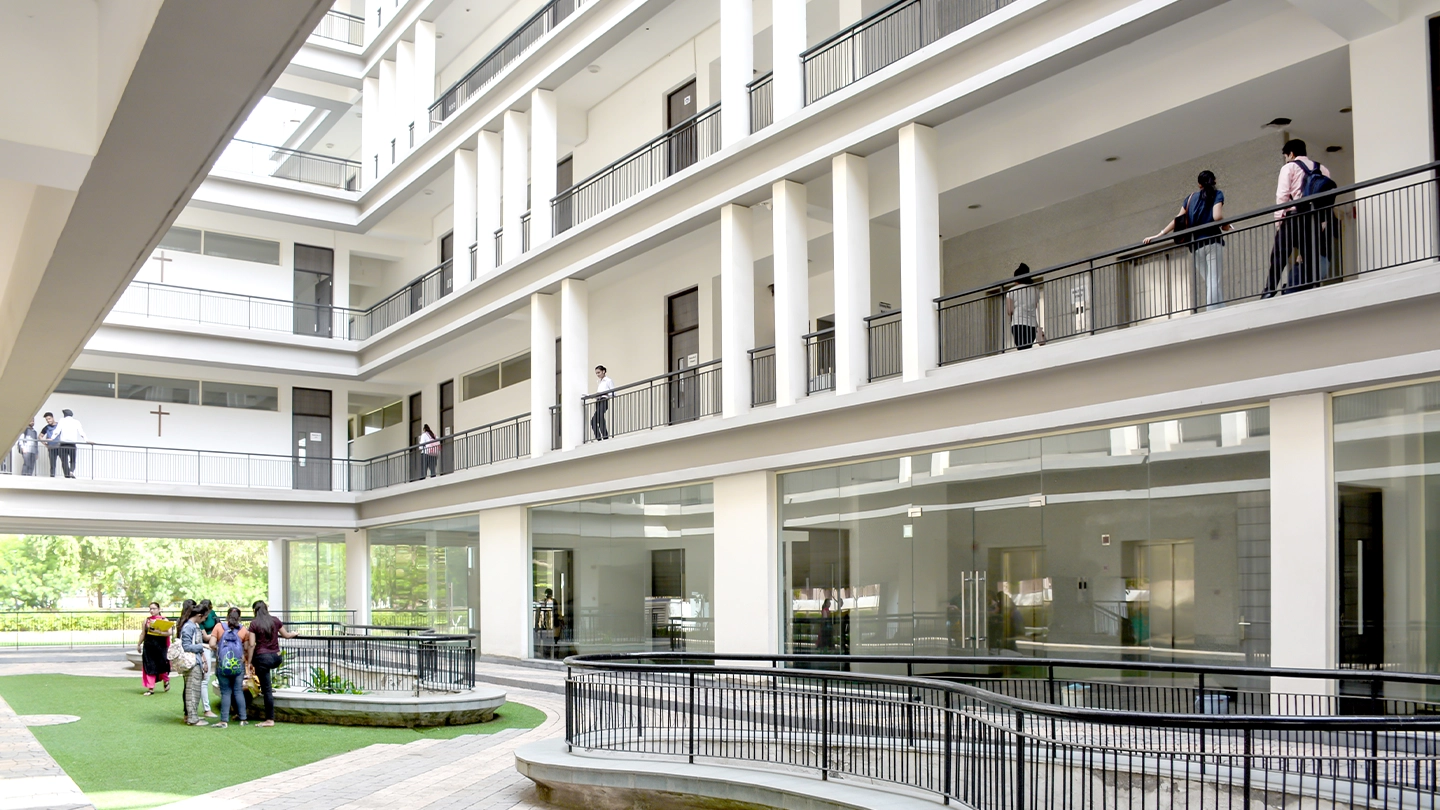
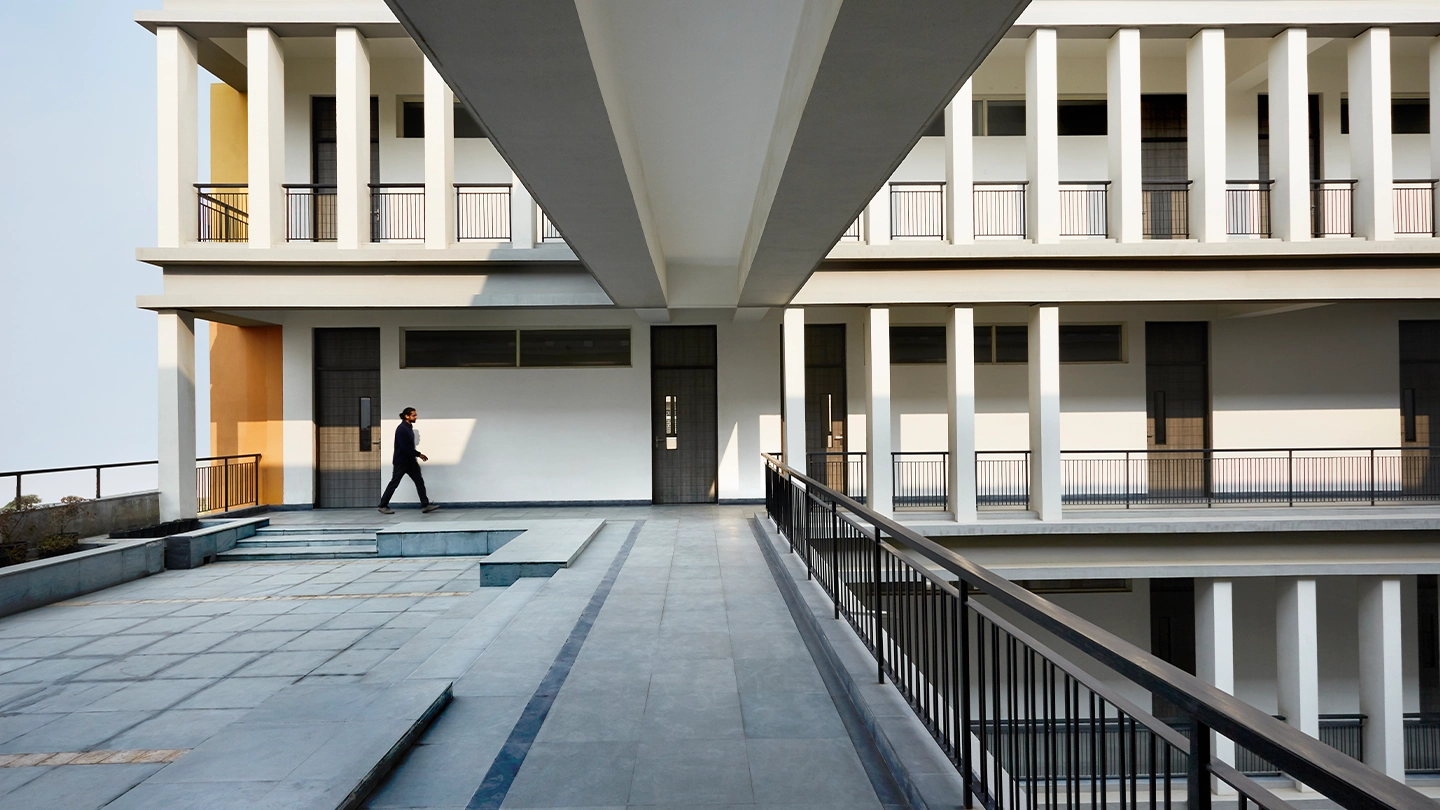
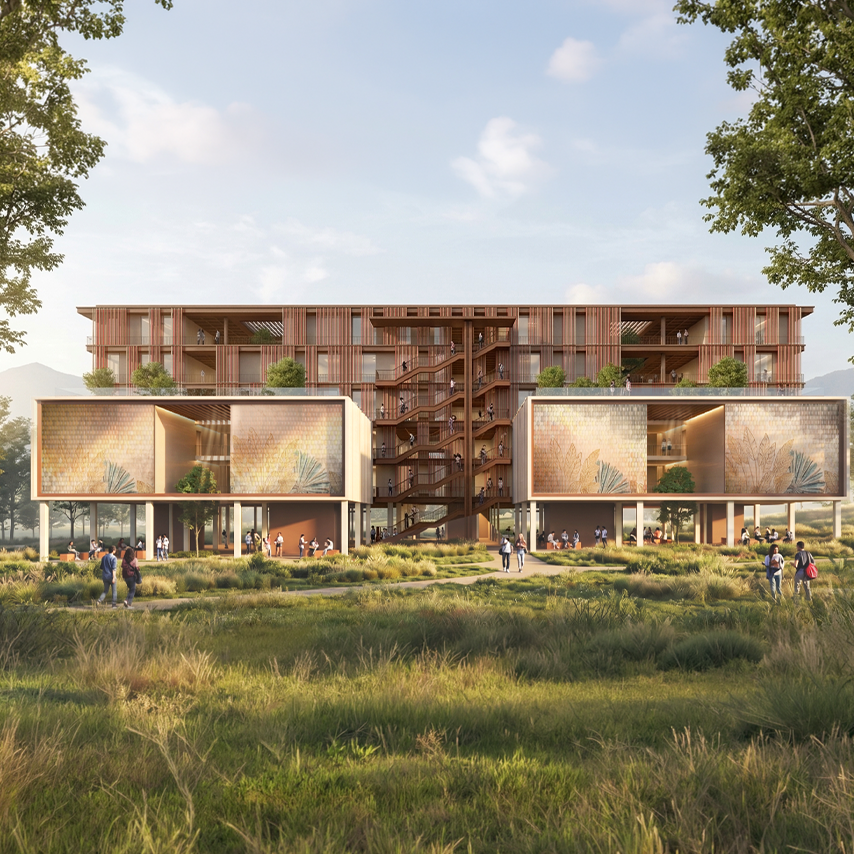
Located amid group housing societies, the campus adopts an introverted planning approach to ensure privacy while enabling community congregation. The building mass is arranged around a central courtyard, with offices, classrooms, dormitories, and a library integrated into a cohesive whole. Larger volumes along the south shield the inner courtyards from harsh sun, while verandahs and terraces create permeability, serving as shaded outdoor learning and social spaces.
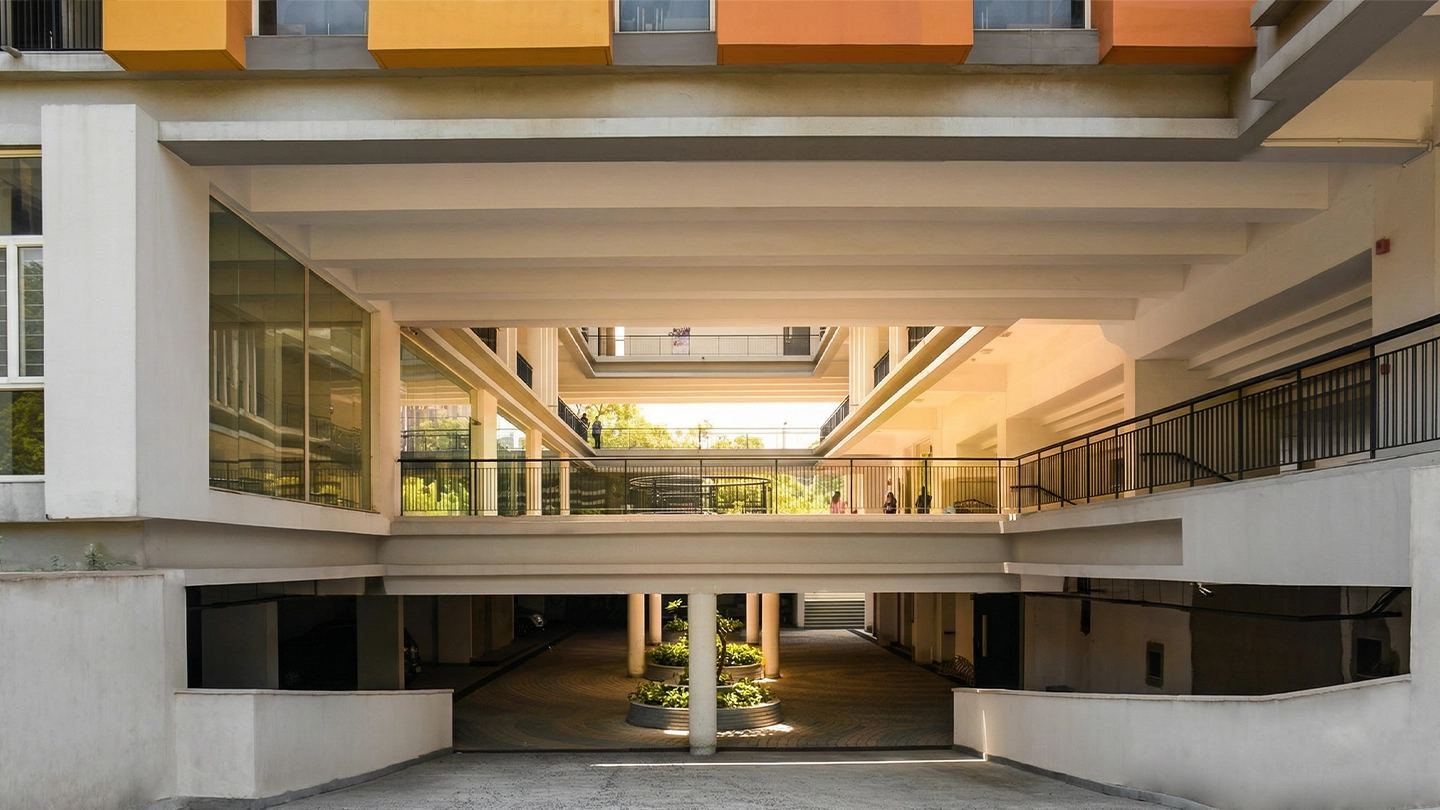
Responding to Delhi’s hot-dry climate, the design draws deeply on vernacular passive cooling strategies. A central void harnesses the stack effect to improve airflow, while multi-level green terraces function as thermal buffers. At its heart lies an underbelly inspired by the traditional baoli. This subterranean zone employs earth sheltering, thermal banking, and evaporative cooling to maintain comfortable temperatures without mechanical air-conditioning. Designed as a secure, intimate commons, it accommodates recreation, performances, and student activities in a naturally cooled environment.
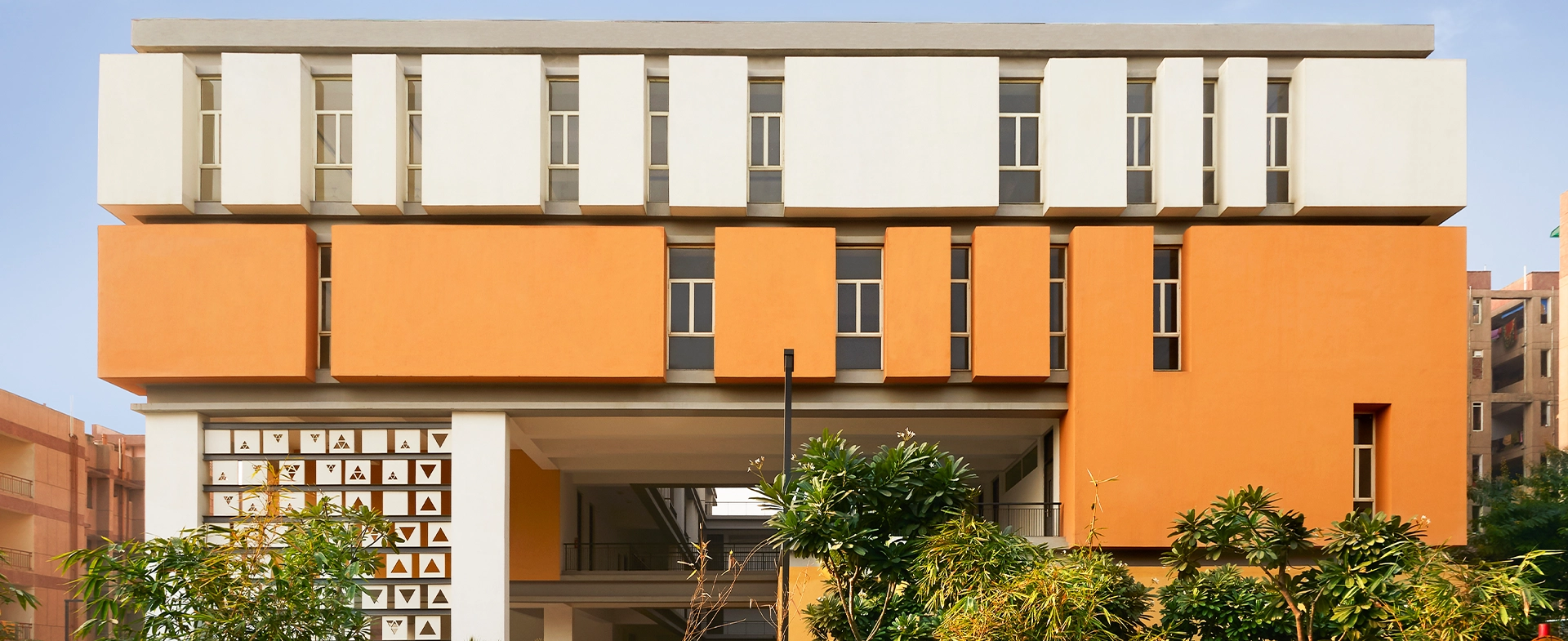
Aligned with the ethos of the charitable institution, the architectural response emphasizes cost-effective sustainability. Simple construction techniques are paired with building physics to reduce operational costs, while ornamentation emerges from traditional craft and a modest color palette of orange, yellow, and white, enhancing the institution’s identity.
On its inauguration, the campus was hailed as a “glowing beacon of light in the path to empower underprivileged women”: a recognition of its role as both an institutional anchor and a community catalyst. The YWCA campus demonstrates how architecture can merge sustainability with social purpose, creating spaces that nurture pride, security, and opportunity.