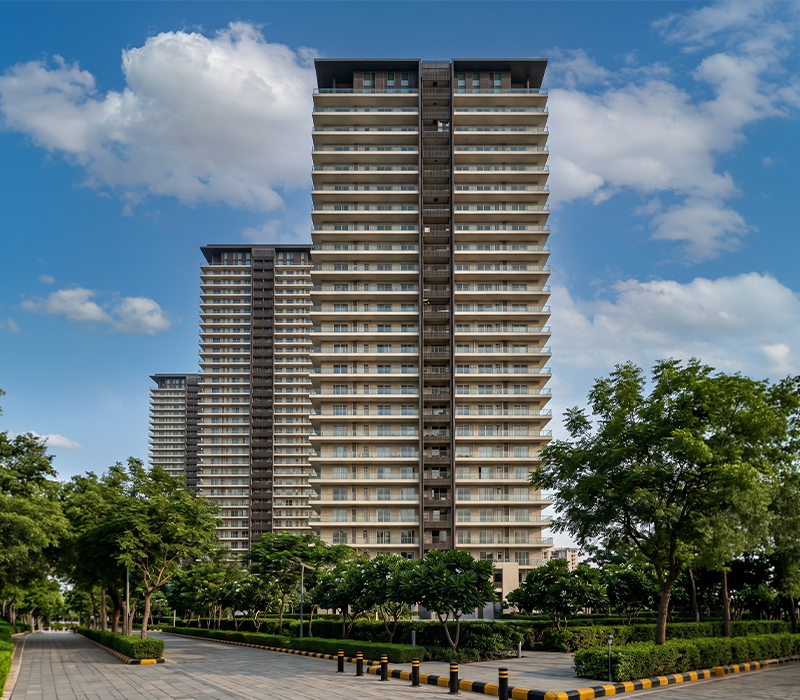

GMR T3
New Delhi
- Site Area: 8 acres
- Built Up: 44,000 sq. ft.
A passenger experience centre shaped by the architectural memory of Delhi

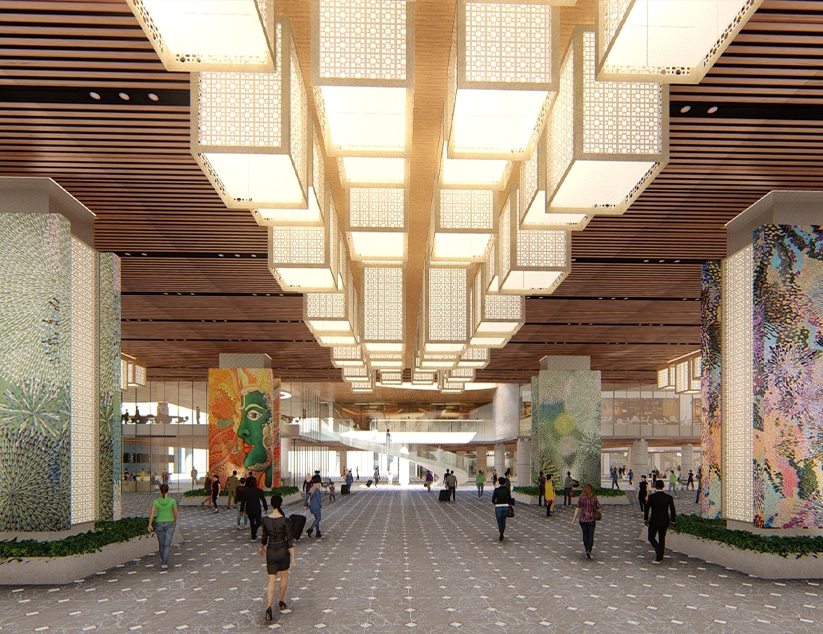
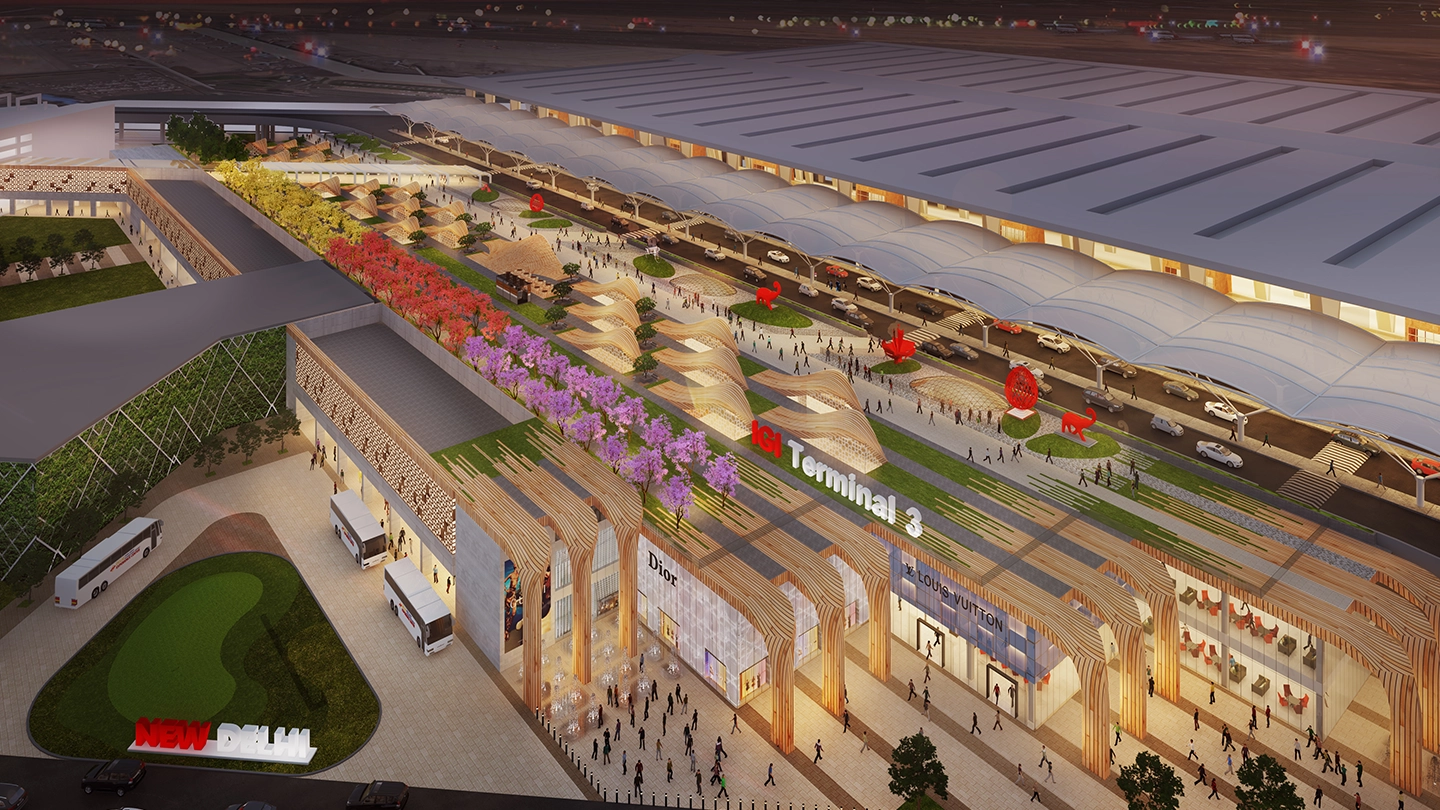
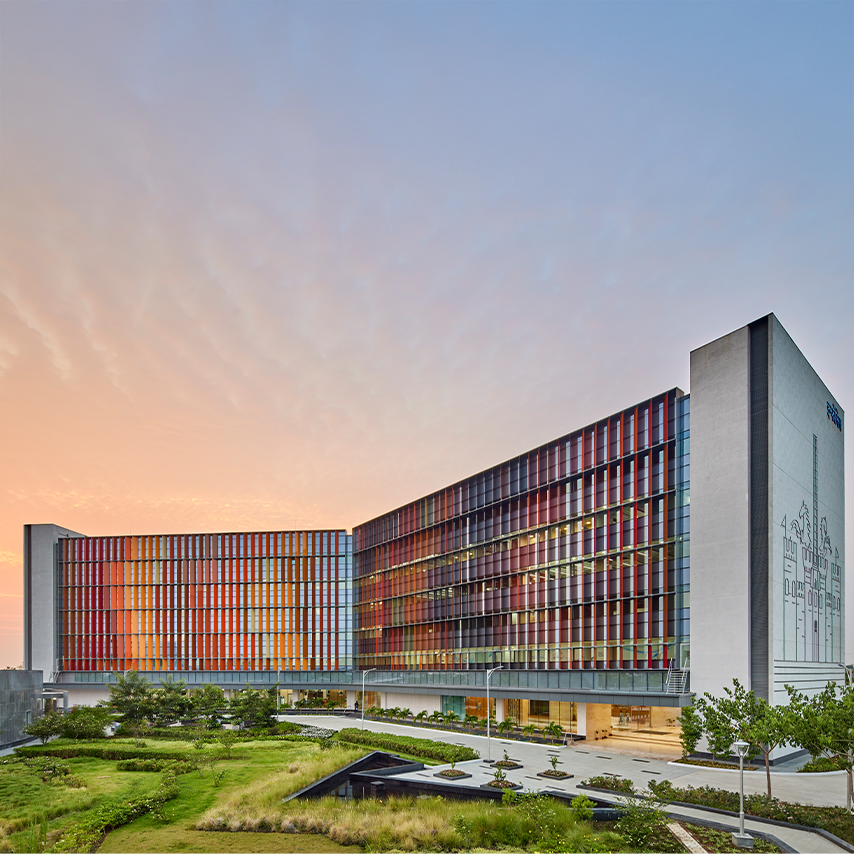
The IGI Terminal 3 Passenger Experience Centre is conceived as an extension of the existing arrival and departure concourses, transforming a utilitarian forecourt into a more layered civic environment within Delhi’s primary airport precinct. Set across an 8-acre site, the project seeks to elevate the experience of transit from pure throughput to something more hospitable, legible, and distinctly rooted in place. The broader vision, developed in close collaboration with GMR, imagines Delhi Airport as the city’s “ninth city”, giving the terminal a stronger urban and cultural identity rather than treating it as a generic infrastructure envelope.
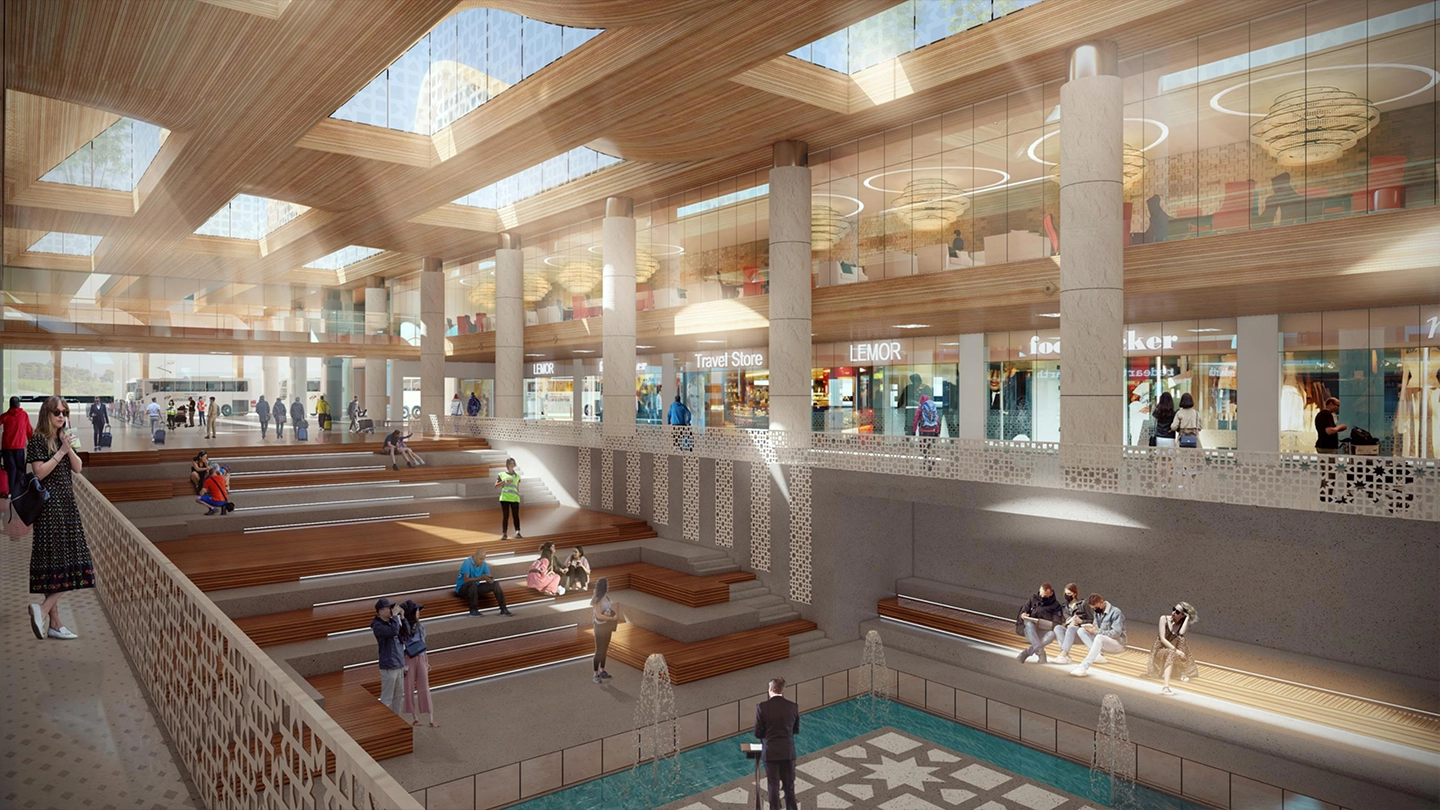
The design draws on Delhi’s architectural heritage, organising the centre around a sequence of spatial anchors derived from the baradari, charbagh, baoli, and ghats. These are not applied motifs, but ordering devices that shape congregation, orientation, and pause within a complex intermodal environment. Retail, dining, lounges, check-in, waiting areas, and passenger amenities are woven into this framework, while direct connections to the terminal, the multi-level car park, the metro connect building, the future hotel plot, and Terminal 4 give the project an unusually integrated urban role. Travel times are carefully compressed, with pedestrianised movement and multimodal clarity allowing passengers to move from arrival gates to ground transportation in under three minutes for domestic travellers and under seven for international passengers.
Equally central is the project’s environmental intelligence. North-facing light scoops and skylights bring daylight deep into the interiors, achieving approximately 75 percent daylit spaces, while passive design measures target more than a 50 percent reduction in energy performance index. A 4-acre landscaped public art park at departure level, together with shading, vegetation, and evaporative cooling, reduces perceptible outdoor temperatures by 5 to 7 degrees Celsius. The result is an airport precinct shaped with unusual ambition, where movement, climate, commerce, and the memory of Delhi are brought into a single architectural proposition.