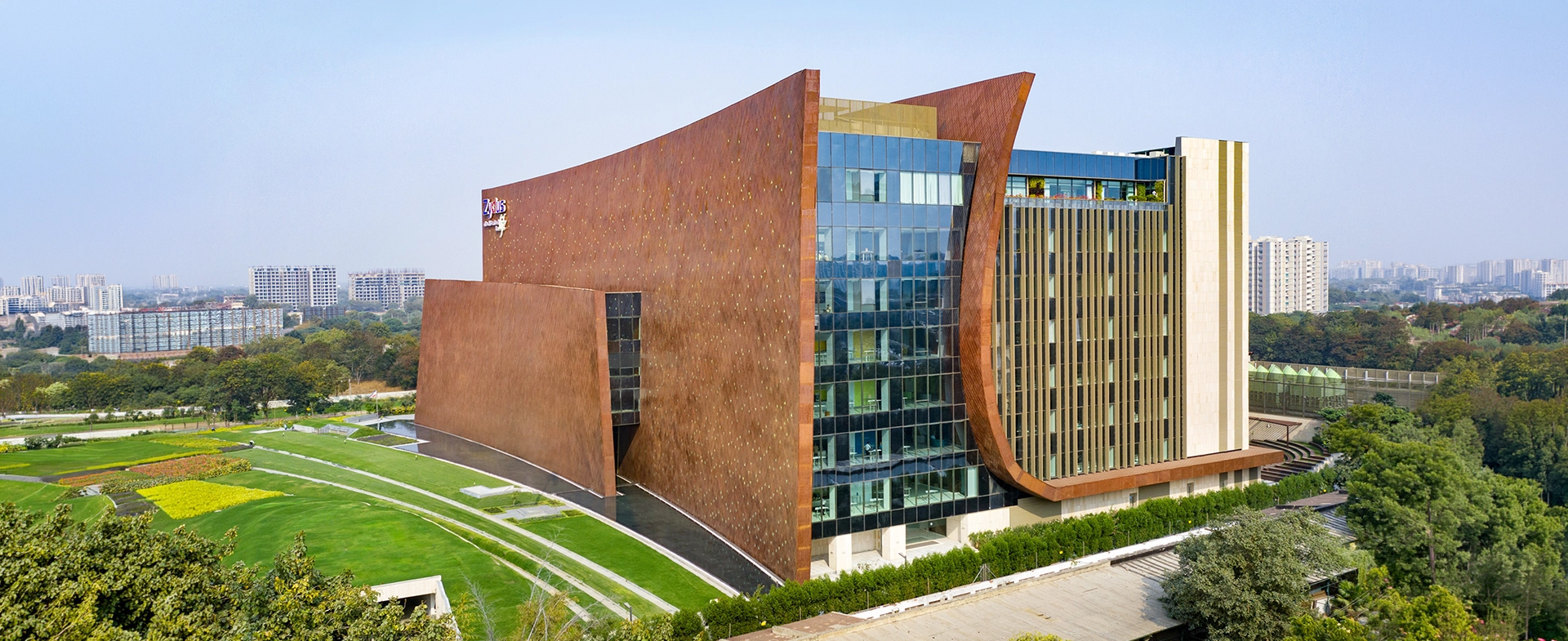
Zydus Headquarters
Ahmedabad
- Site Area: 6.4 acres
- Built Up: 8,40,000 sq. ft.
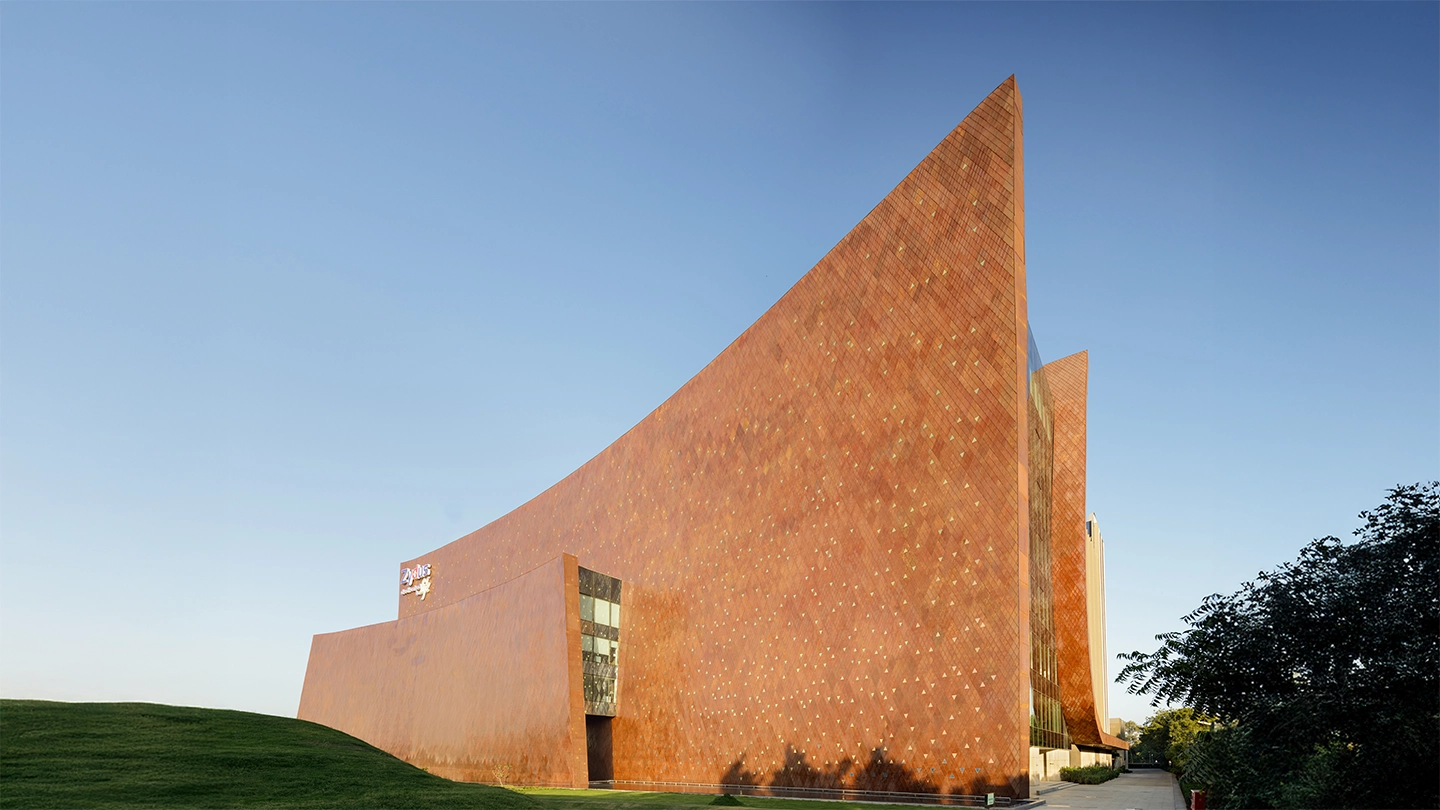
World’s largest doubly curving corten steel facade
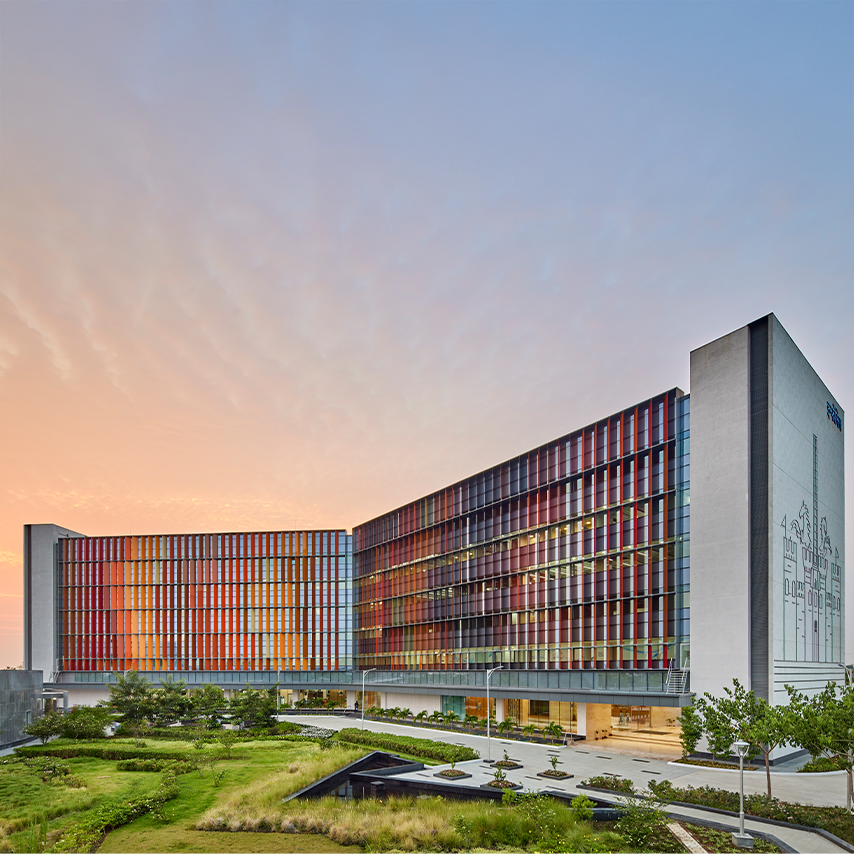
The Zydus Corporate Office, headquarters of one of India’s leading pharmaceutical organizations, is set along the Sarkhej–Gandhinagar Highway on Ahmedabad’s suburban edge. The project was envisioned as an iconic workplace that combines functionality, sustainability, and contextual significance while drawing from Gujarat’s layered craft and architectural traditions.
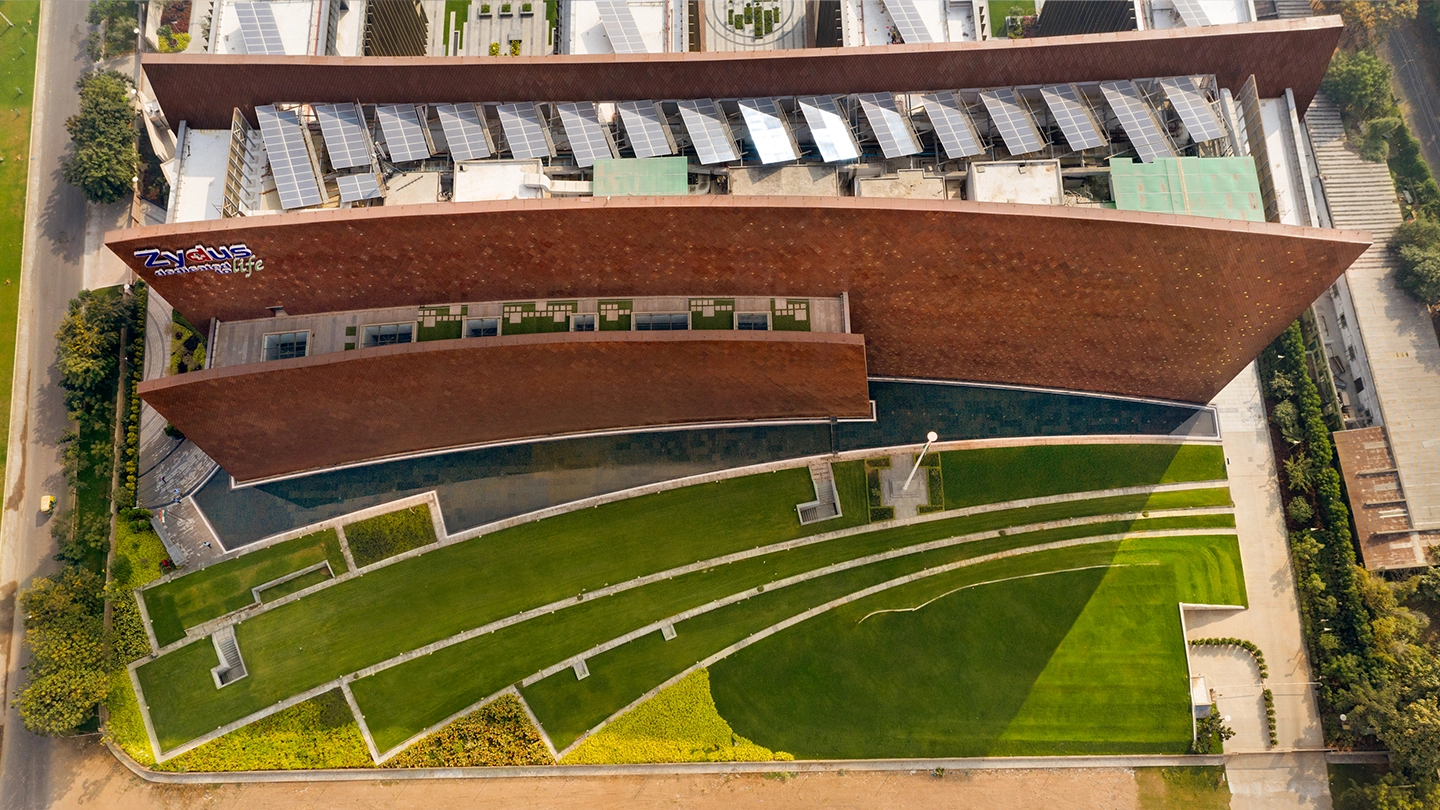
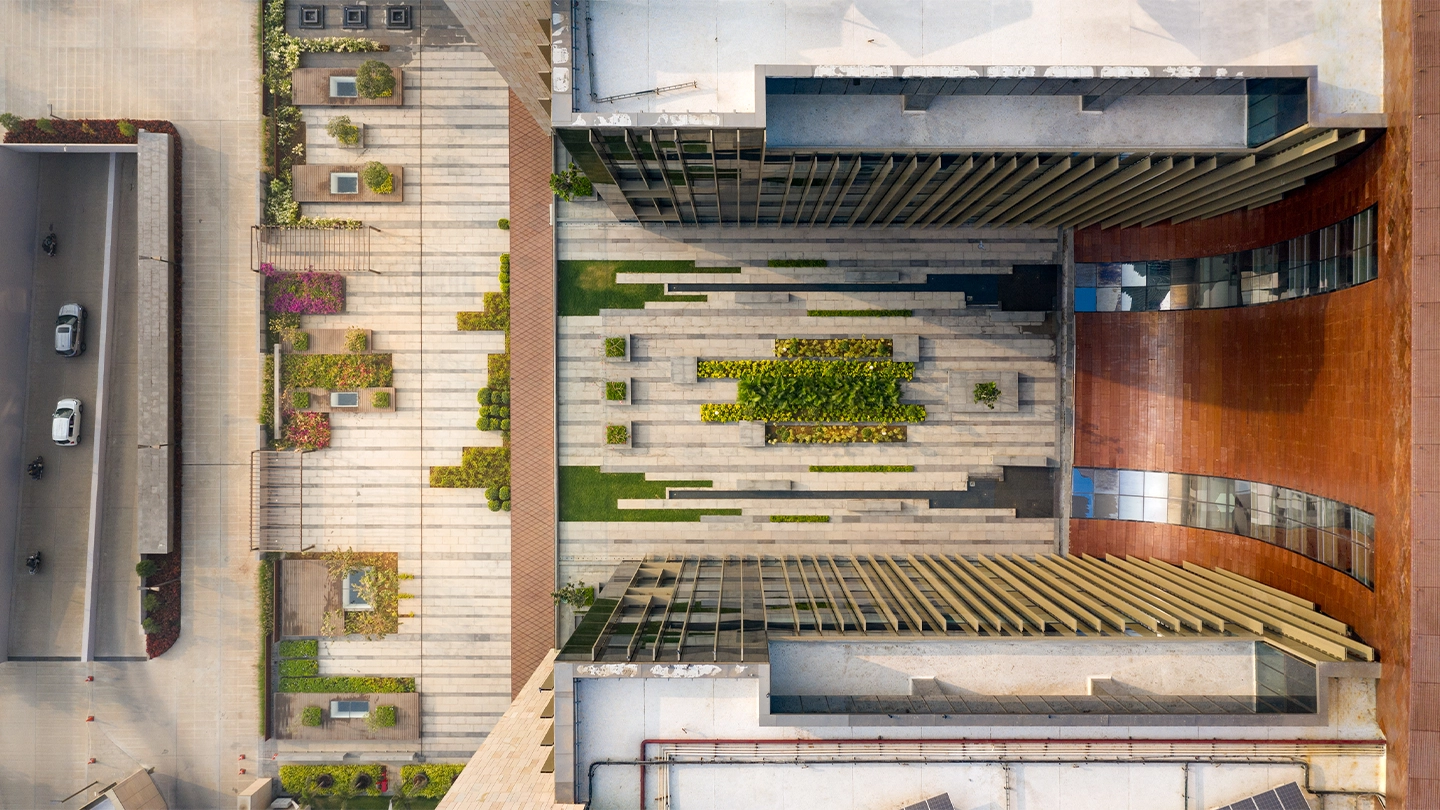
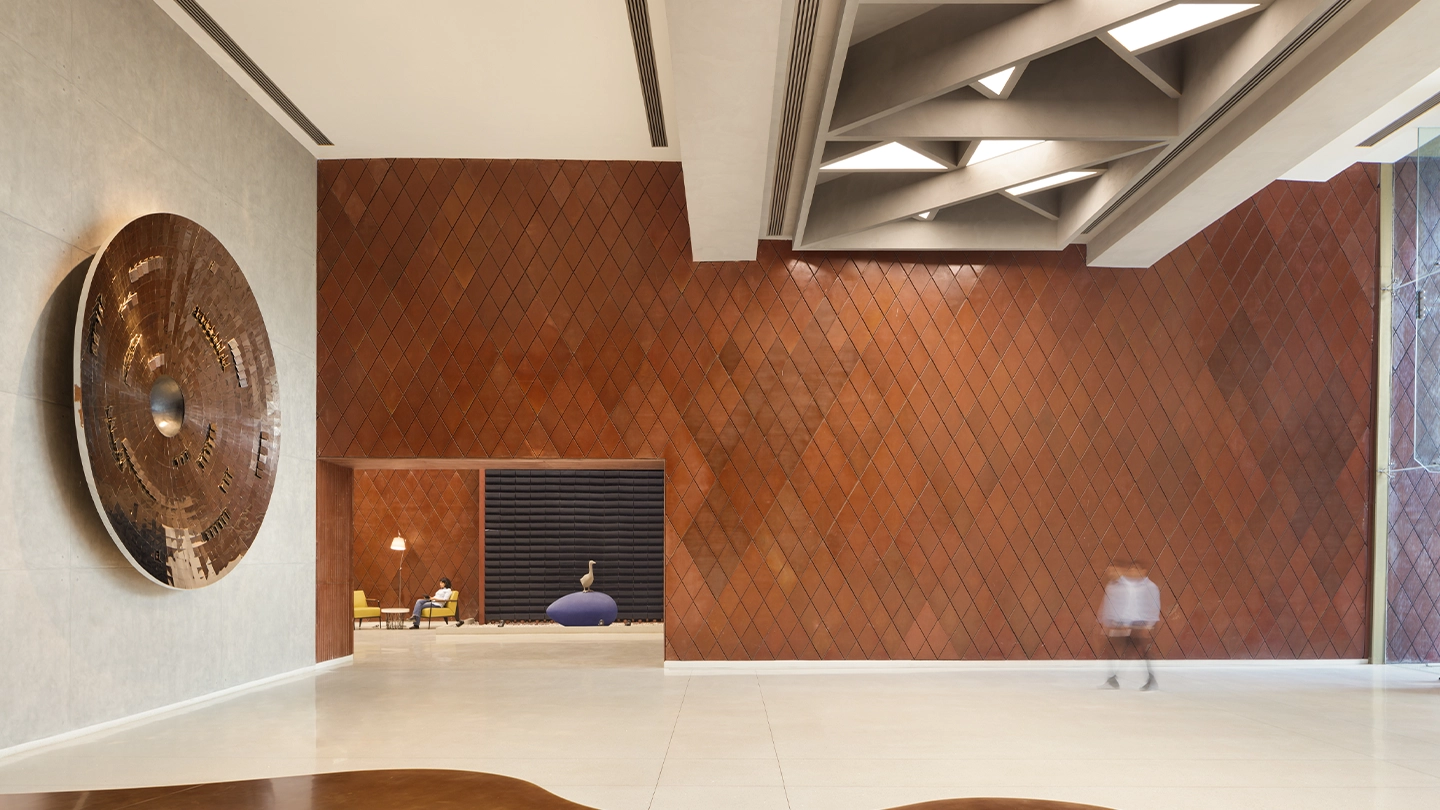
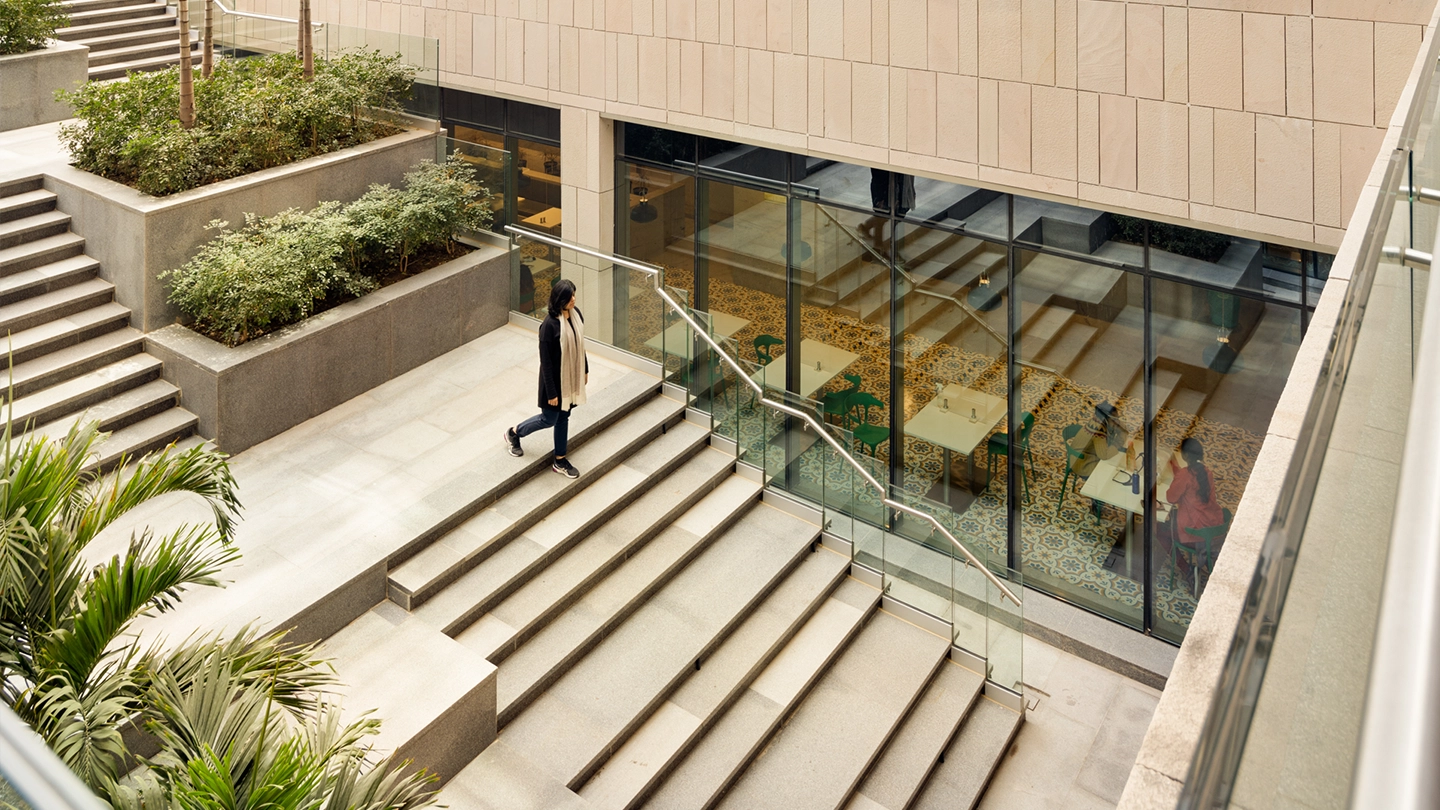
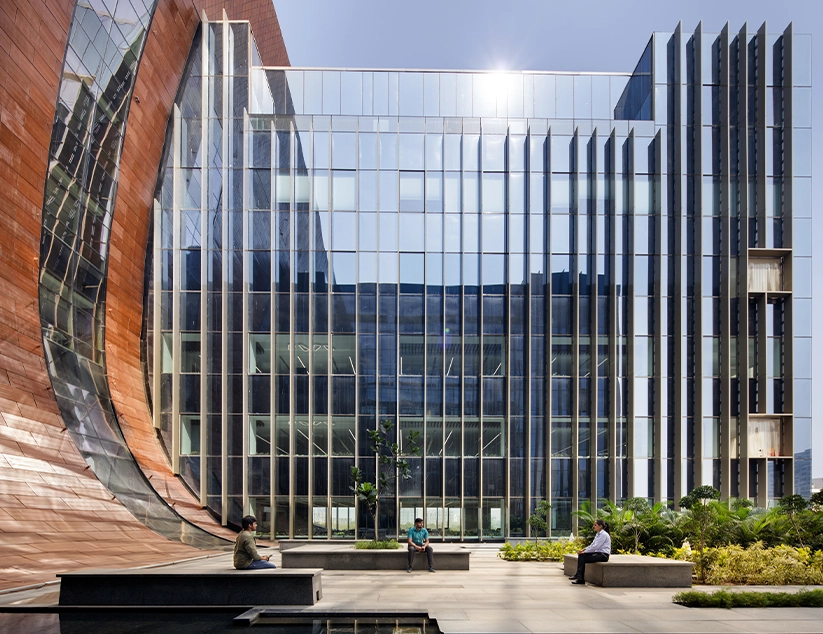
The design takes cues from Gujarat’s fortified settlements and pol planning principles, where entries are narrow, controlled, and protected. The iconic sculptural form sits within an undulating landscape inspired by regional landforms, articulated with outdoor courts and step-well (Adalaj) forms that enhance the public realm and regulate the site microclimate.
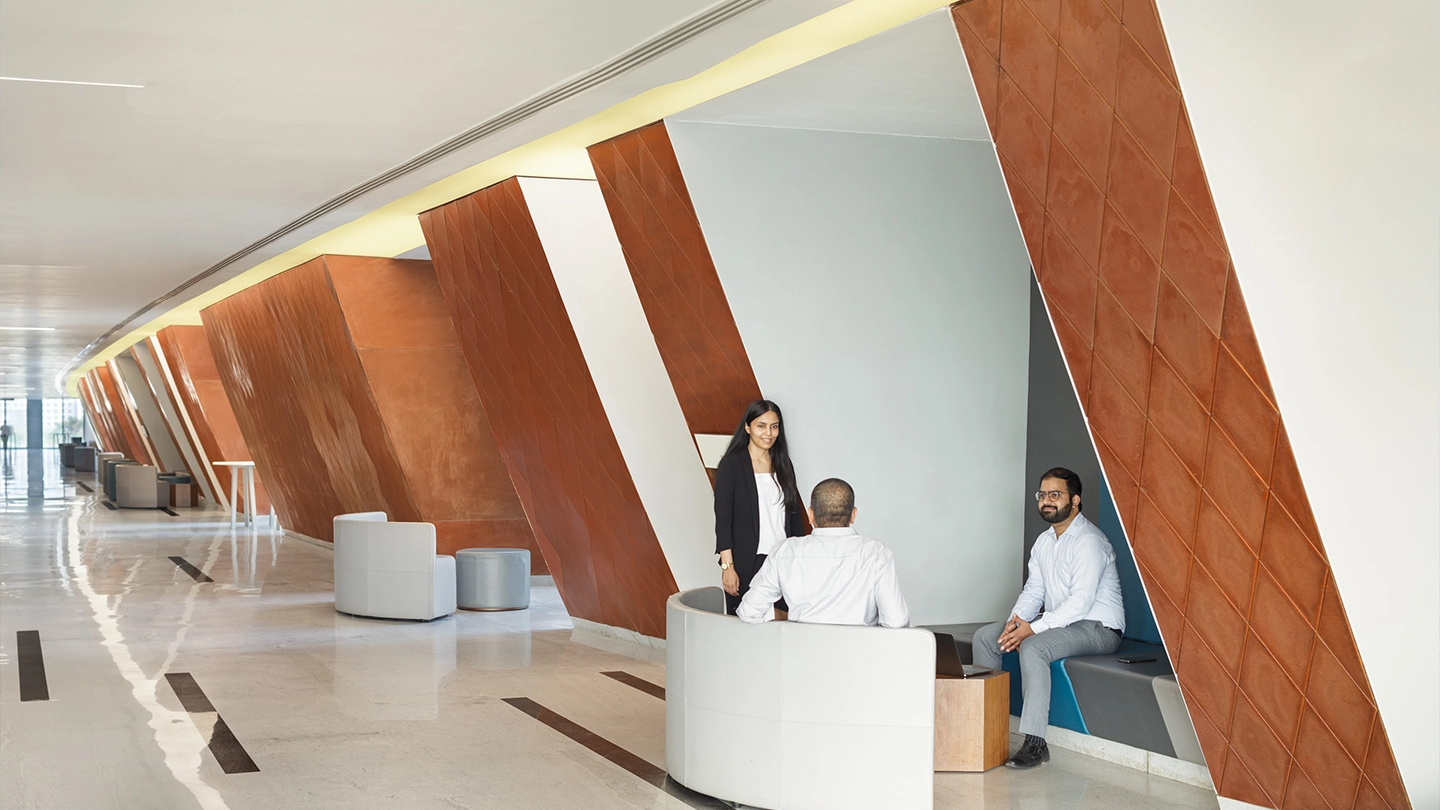
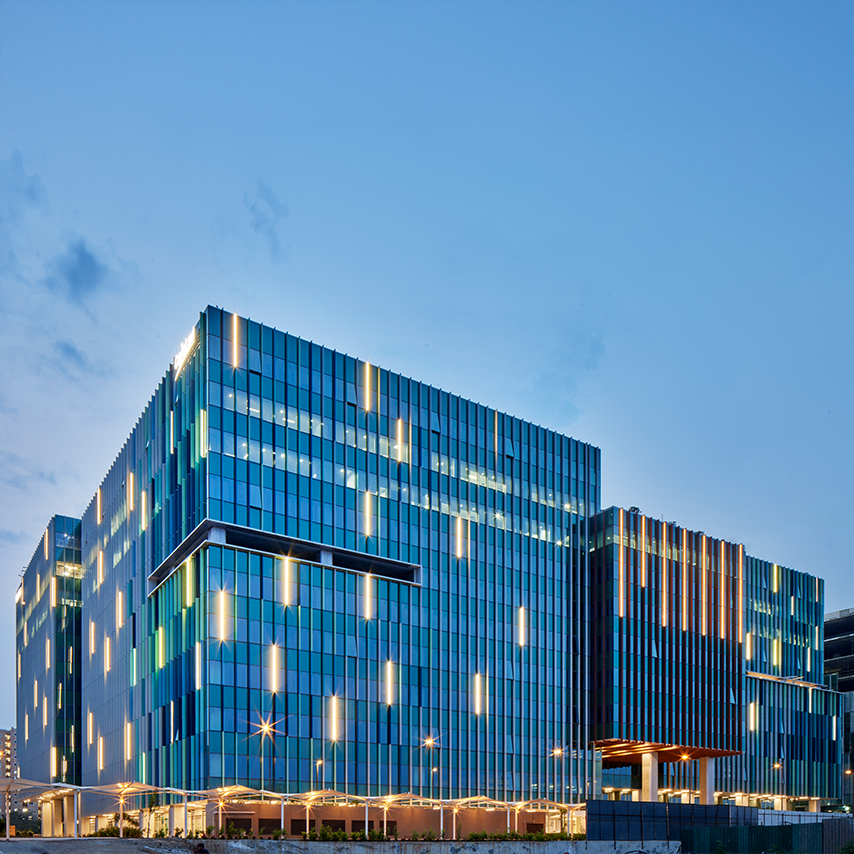
The three massive rampart-like walls on the west define the building’s identity. At 47 metres tall and The concrete casting was executed with exceptional precision, allowing the flexible formwork to be perfectly aligned and secured. The Corten steel diagrid panels and dichroic glass inserts were fabricated from the same digital references, ensuring seamless integration across materials. This approach demonstrates how digital design and fabrication techniques can transform complex geometries into reality, reducing errors, saving time, and achieving a visually striking, meticulously coordinated façade Referencing Kansara metal craftsmanship and the glass-inlaid walls of Bhunga houses in Kutch, the façade fuses two art forms into a contemporary architectural expression. Its fine perforations control glare while celebrating craft legacies, making the façade both cultural and performative.
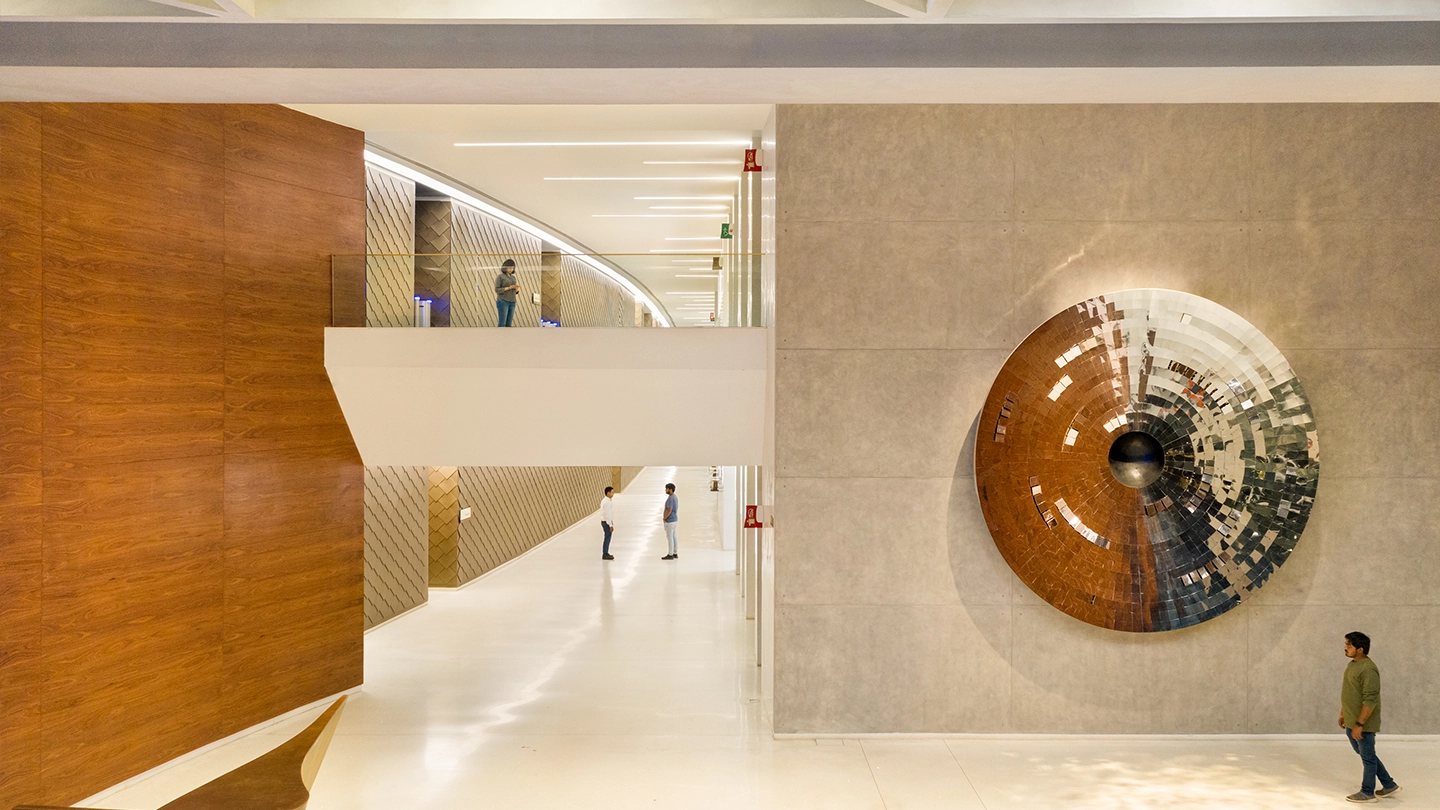
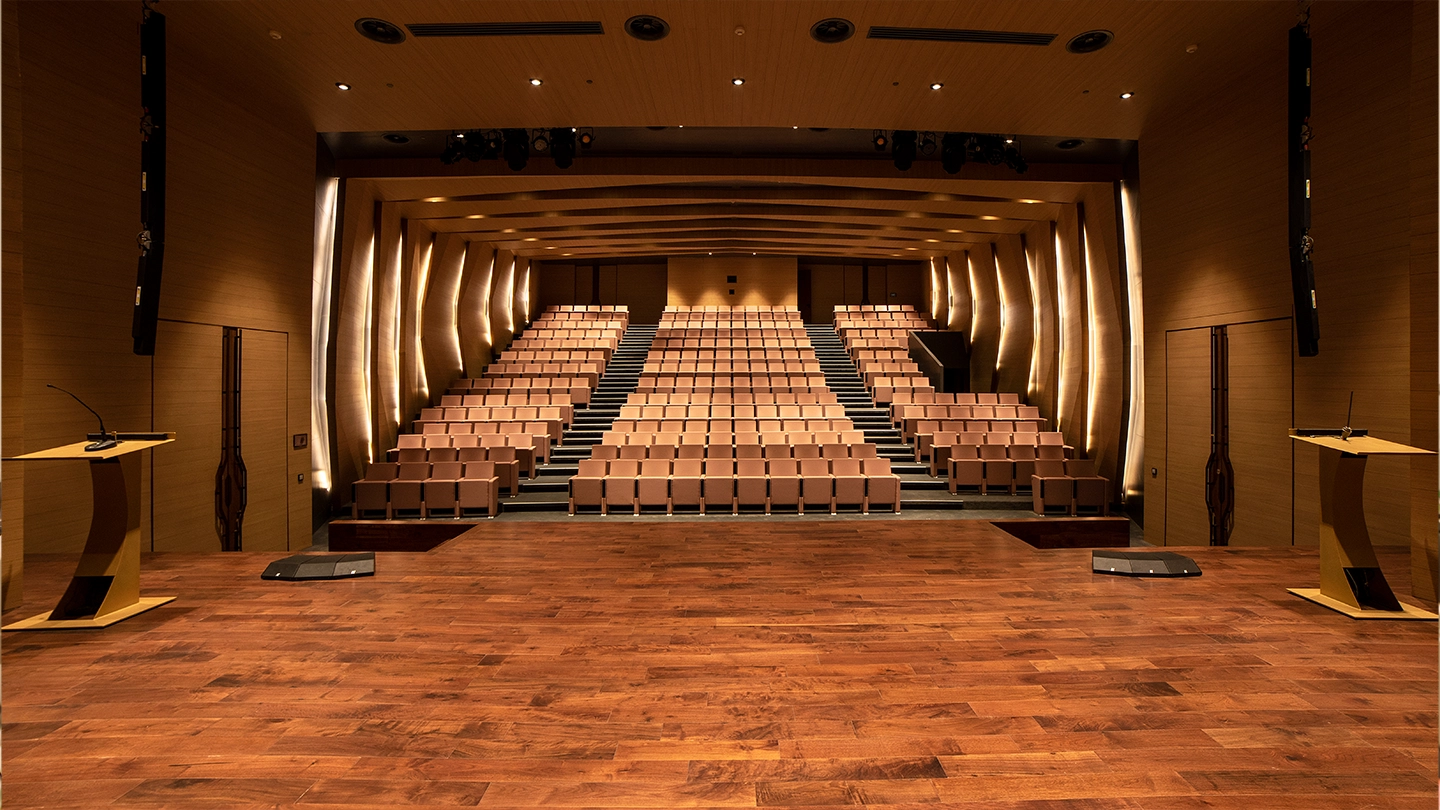
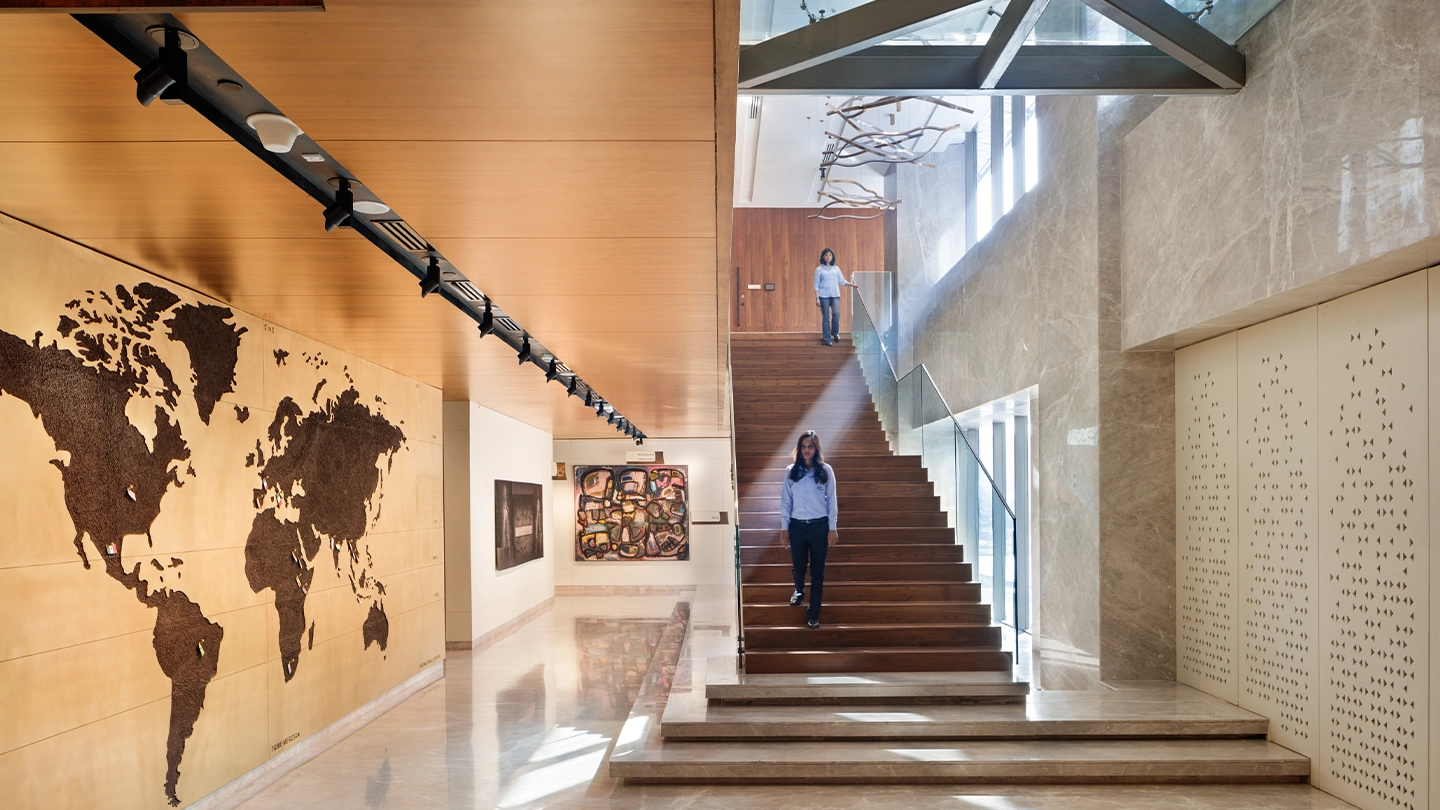
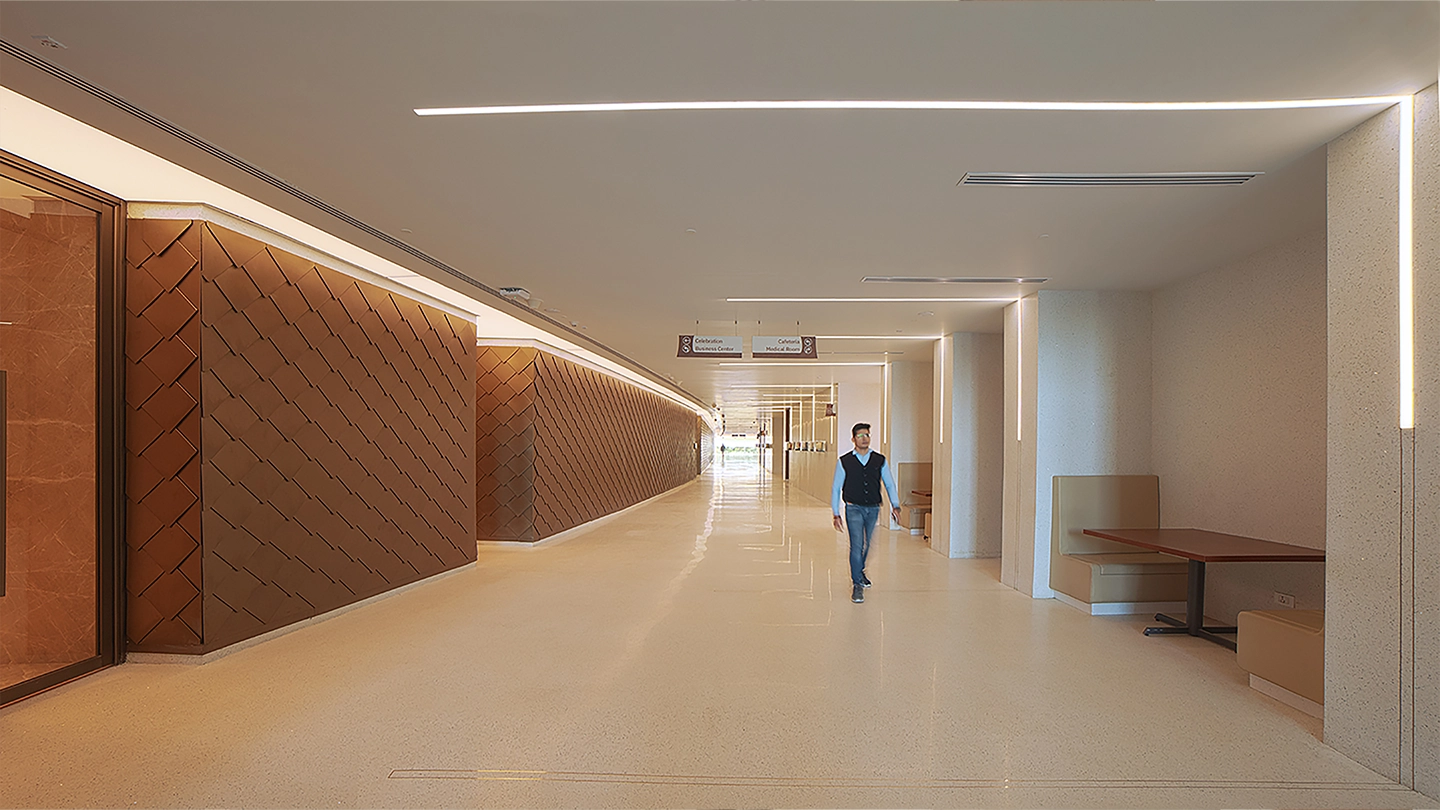
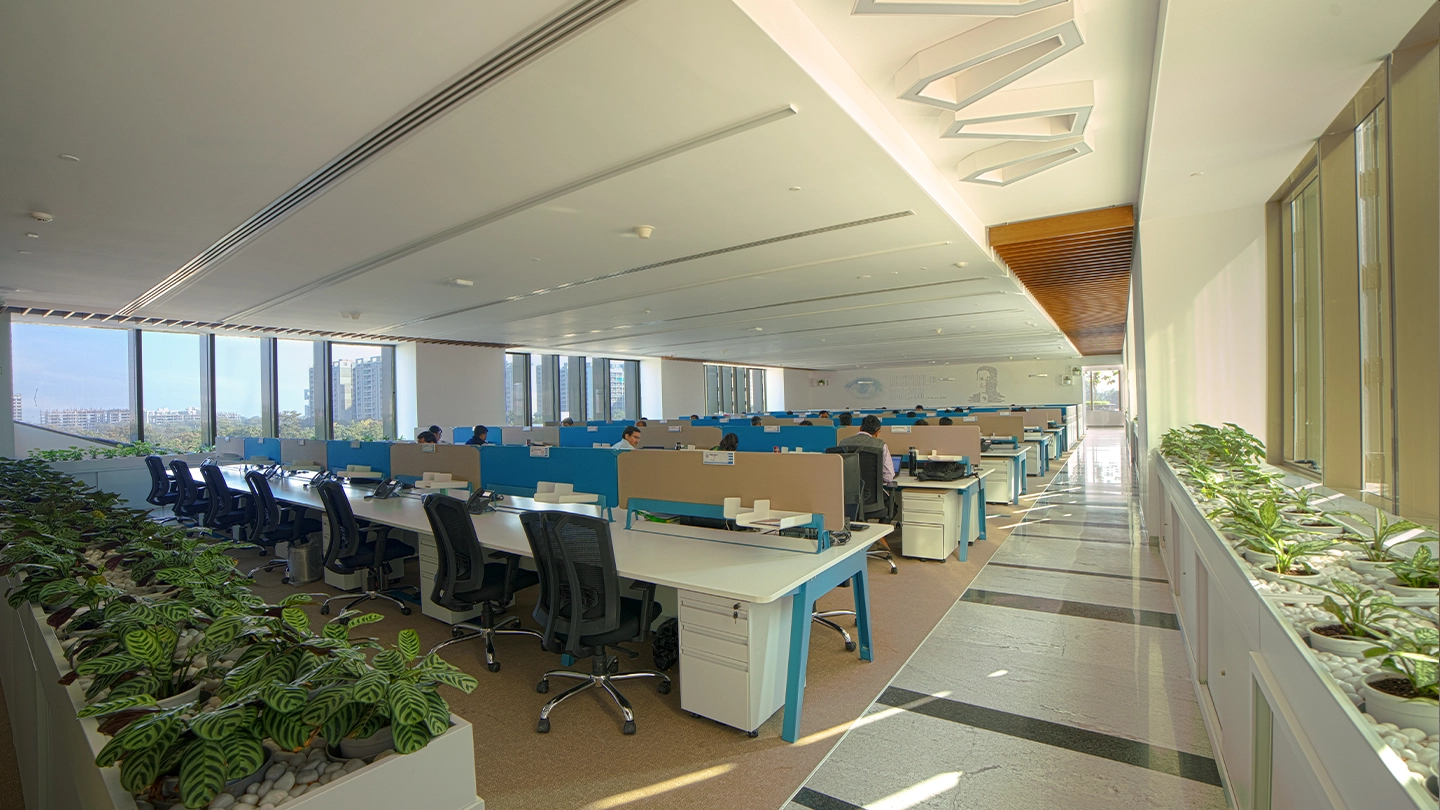
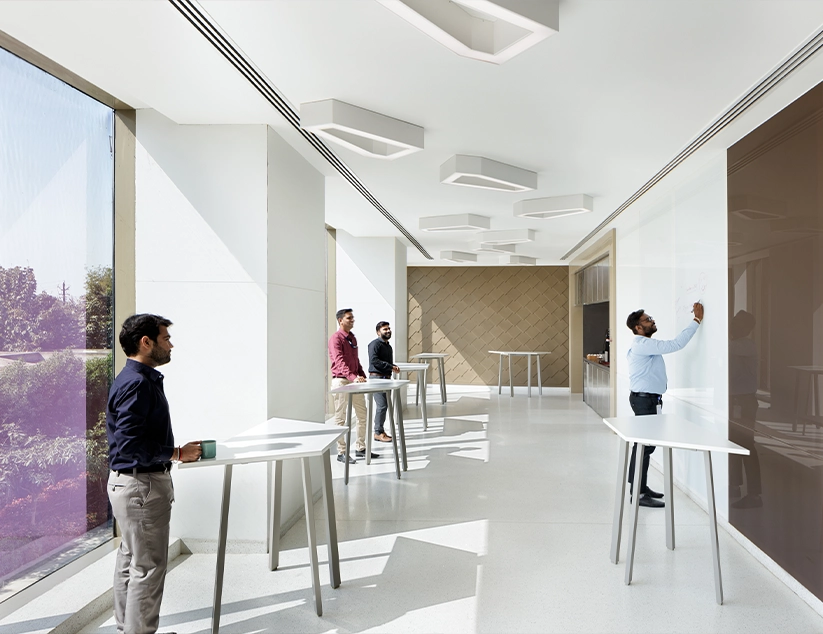
Behind the protective steel walls, north–south oriented office towers provide open work halls with 100% daylight penetration. The “high street” formed within these walls accommodates all community spaces for 2,000 people, reinforcing equity, transparency, and collaboration in the workplace.
By shielding interiors from the harsh western sun, noise, and dry winds, while creating iconic imagery rooted in local memory, the headquarters achieves both resilience and symbolic presence. It exemplifies how contemporary corporate design can embed heritage, climate response, and innovation into a unified vision.