DS Group
Noida
- Site Area: 16 acres
- Built Up: 4,28,000 sq. ft.
A workplace where building and landscape merge into one continuous terrain
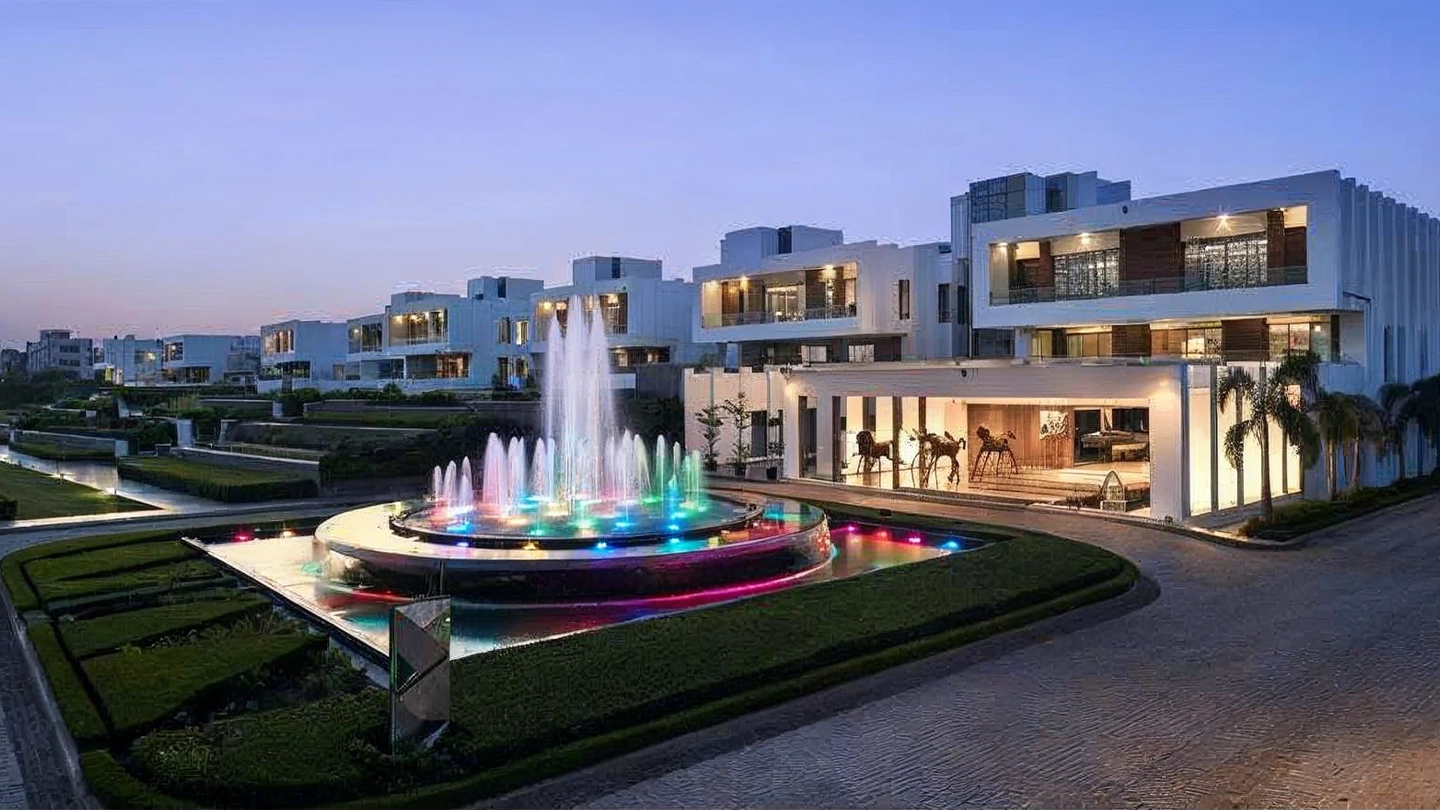
A combined office and manufacturing campus that dissolves traditional boundaries between architecture, environment, and people through a landscape-led design approach.
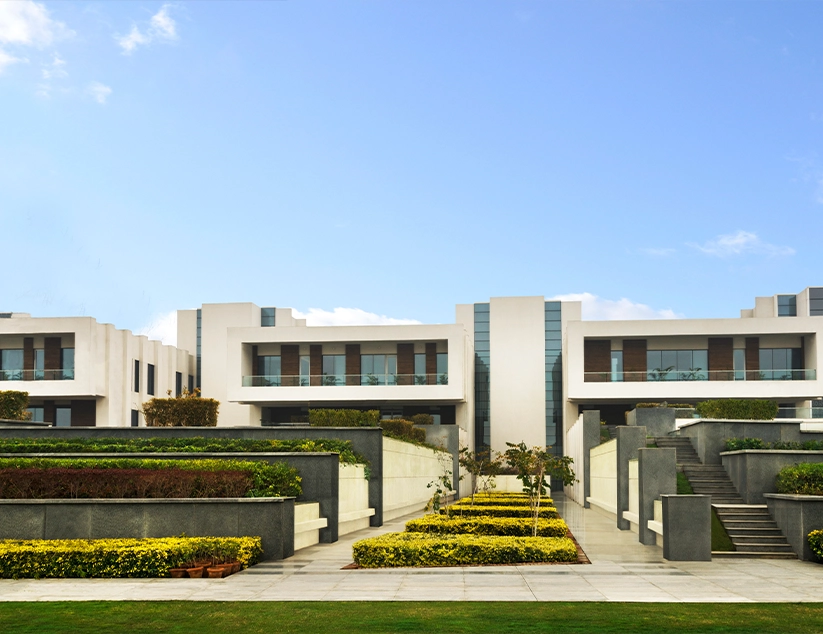
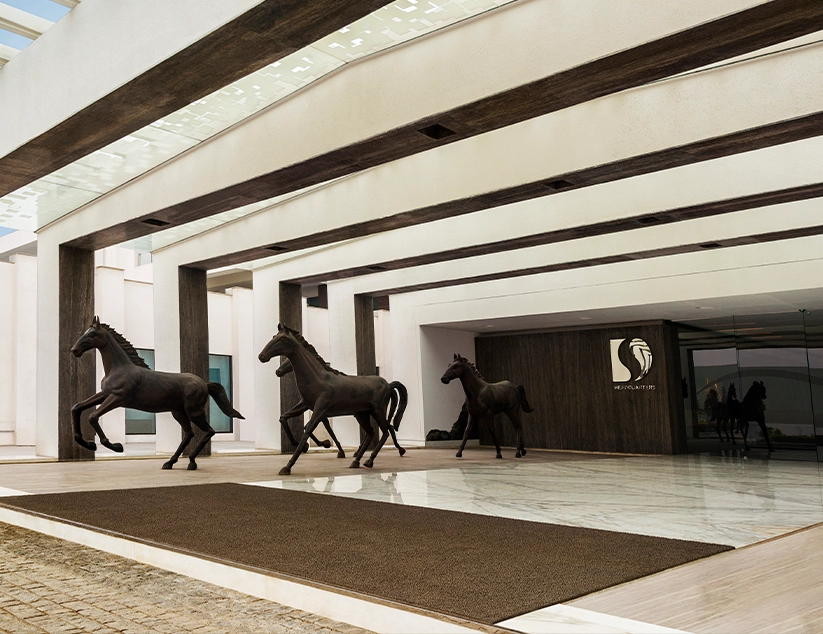
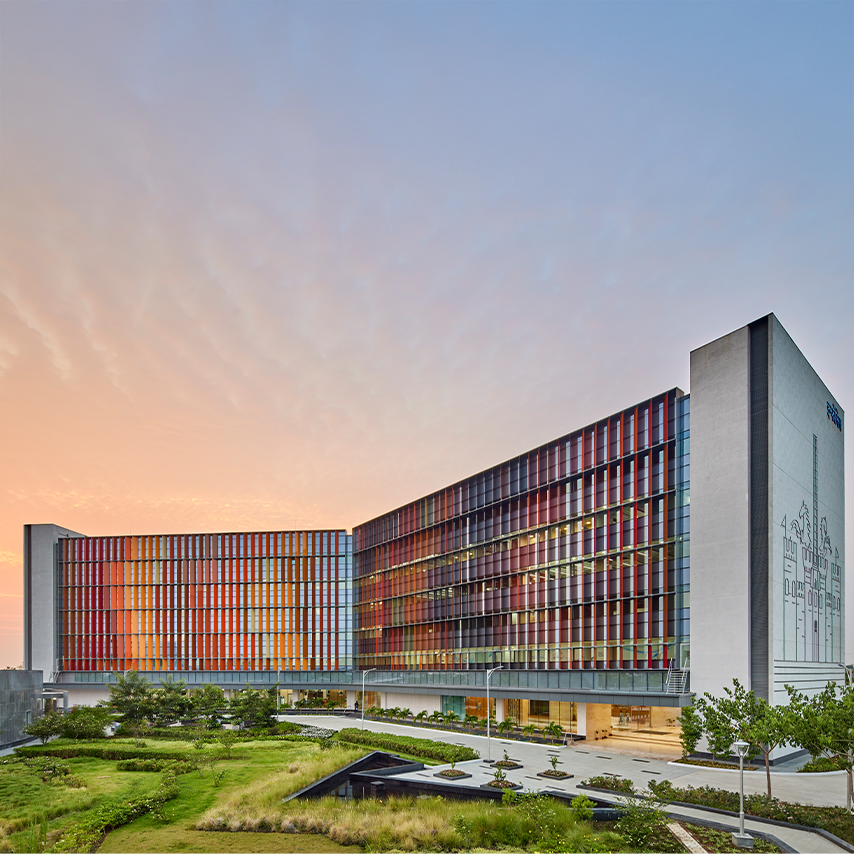
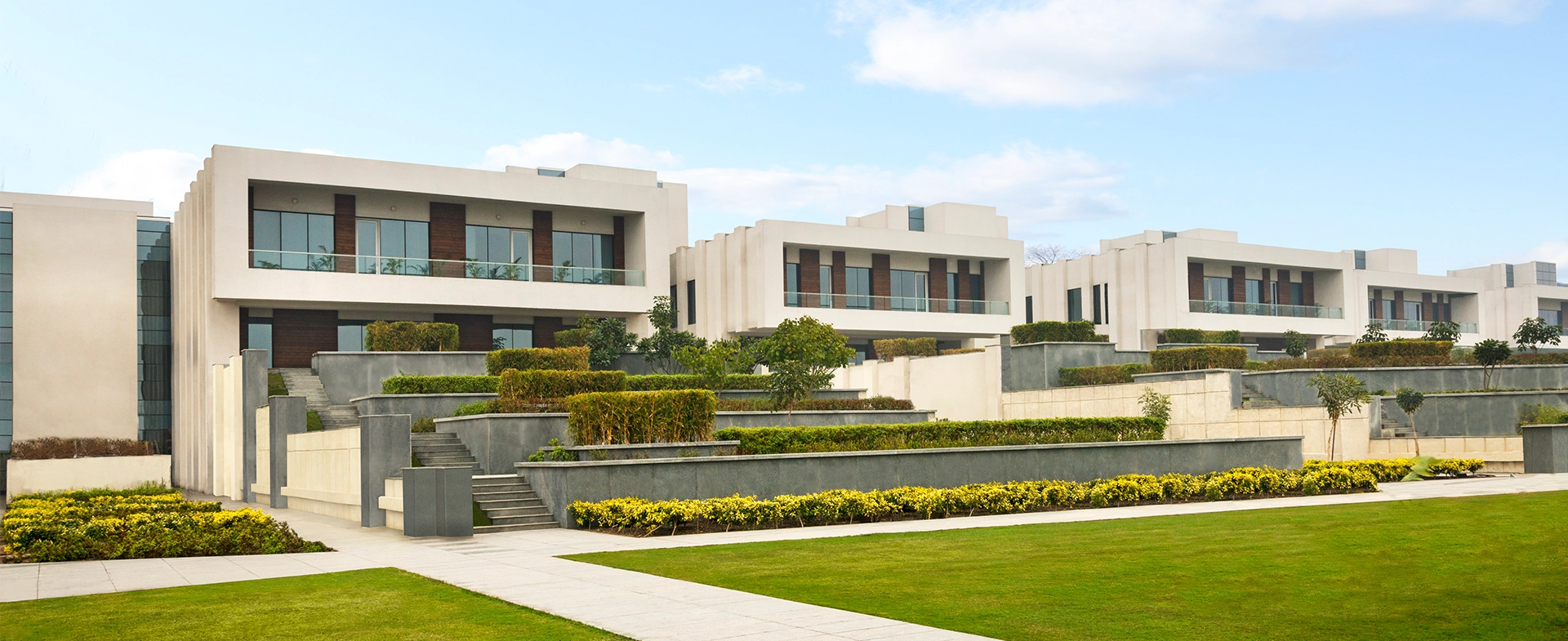
Located in Noida within a harsh composite climate, the DS Corporate Office and Factory rethinks the conventional industrial campus by embedding the built form into the land itself. Conceived for Dharampal Satyapal Ltd. during a phase of business transition, the project accommodates both corporate offices and manufacturing functions within a unified environment that reflects a shift toward a more progressive and diversified identity.
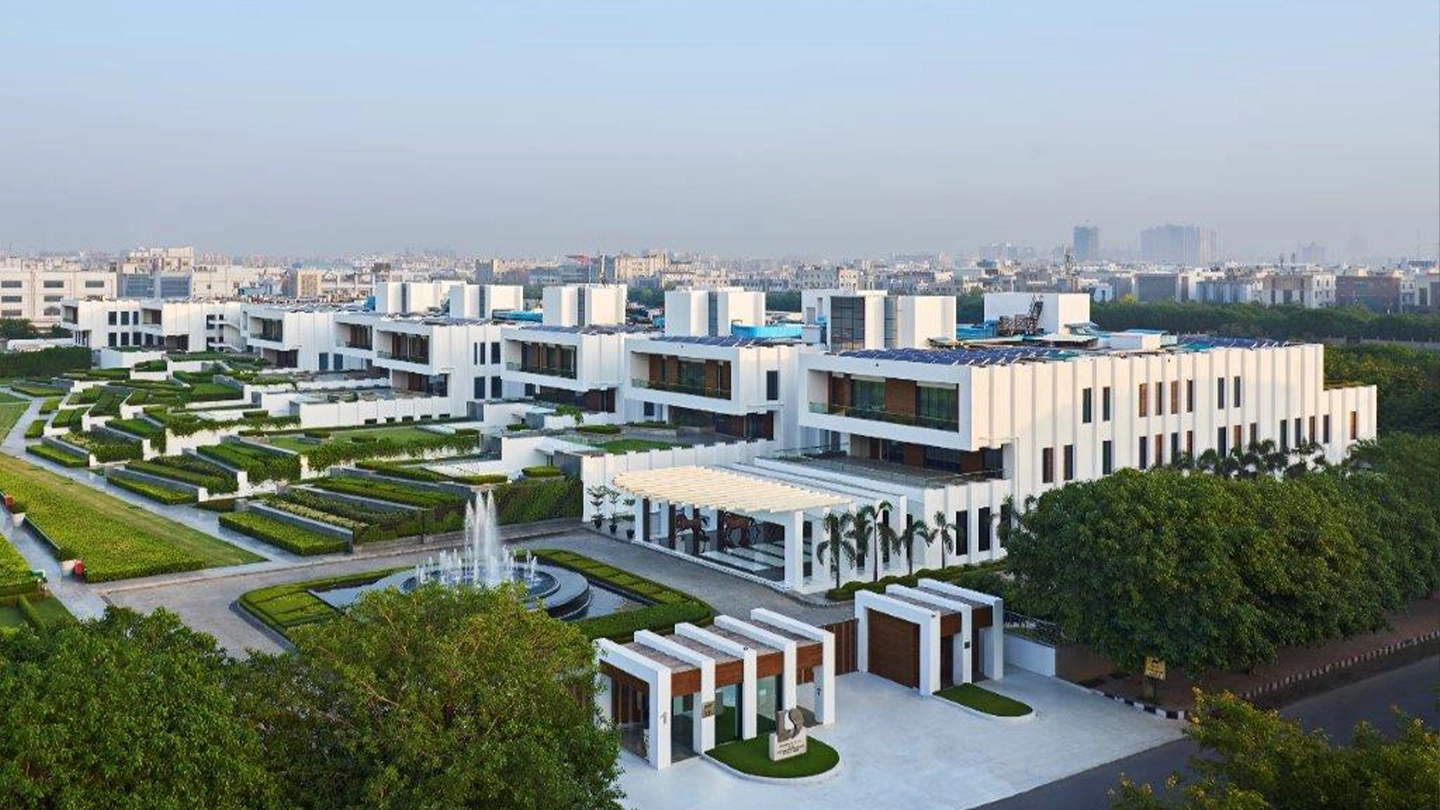
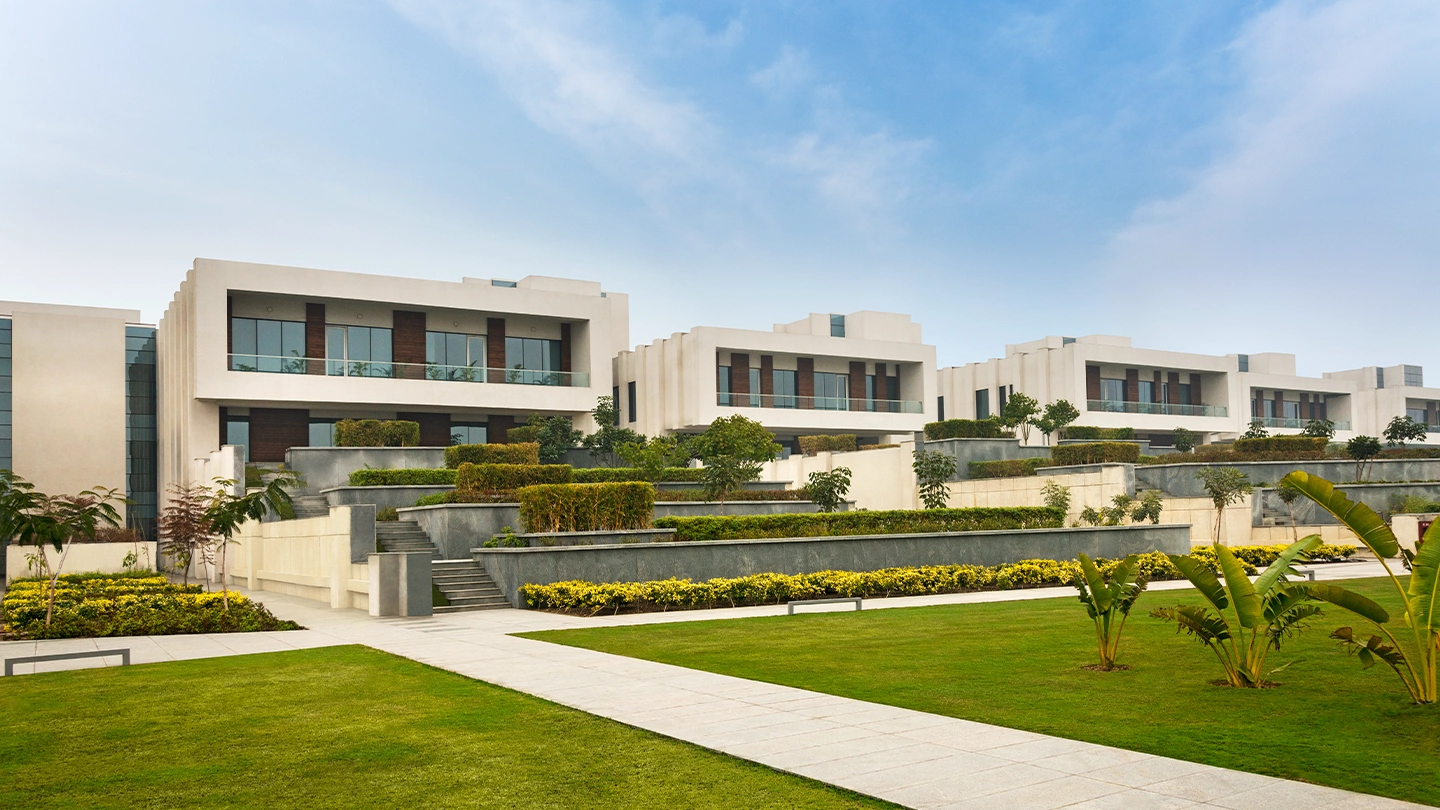
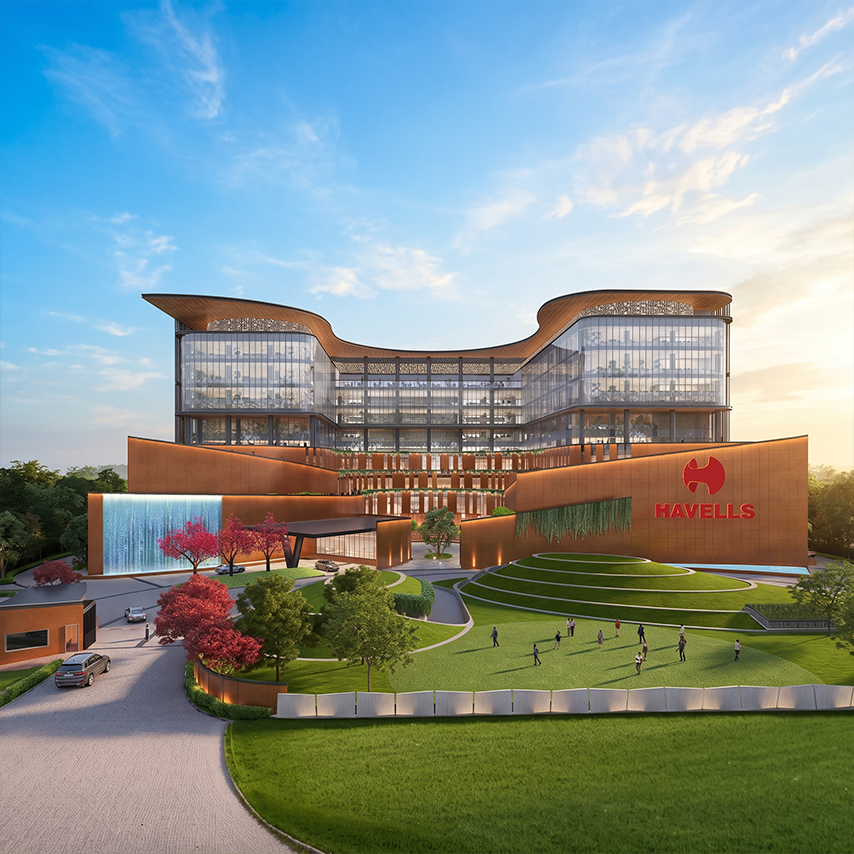
The design departs from the idea of isolated buildings placed on a site and instead treats the entire campus as a continuous landscape. Using landform as a primary design tool, the built volumes are earth-bermed and integrated into a series of undulating green roofs, allowing the architecture to visually recede while enhancing thermal performance. This approach creates naturally tempered interiors while recovering usable landscape across the site, ensuring that the ground plane remains accessible, shaded, and ecologically productive.
Planning is driven by climate and human interaction. Buildings are oriented along the north-south axis to maximise daylight and reduce heat gain, while courtyards, wind movement, and self-shading strategies further improve comfort. The campus eliminates rigid distinctions between office and factory environments, using shared landscape spaces as neutral zones that bring together different user groups. This integration supports a more inclusive workplace culture, where movement, interaction, and daily experience are shaped by the continuity of built and unbuilt spaces.
Material and environmental strategies combine traditional techniques such as berming and courtyards with contemporary systems including bio-walls, shaded envelopes, and passive cooling measures. The result is a campus that reduces reliance on mechanical systems while improving long-term operational efficiency.
The outcome is a workplace that challenges conventional industrial architecture by merging production, office, and landscape into a single, cohesive, and environmentally responsive built form.