
Artisan House
New Delhi
- Site Area: 2.75 acres
- Built Up: 29,800 sq. ft.
A home conceived as a sequence of crafted worlds
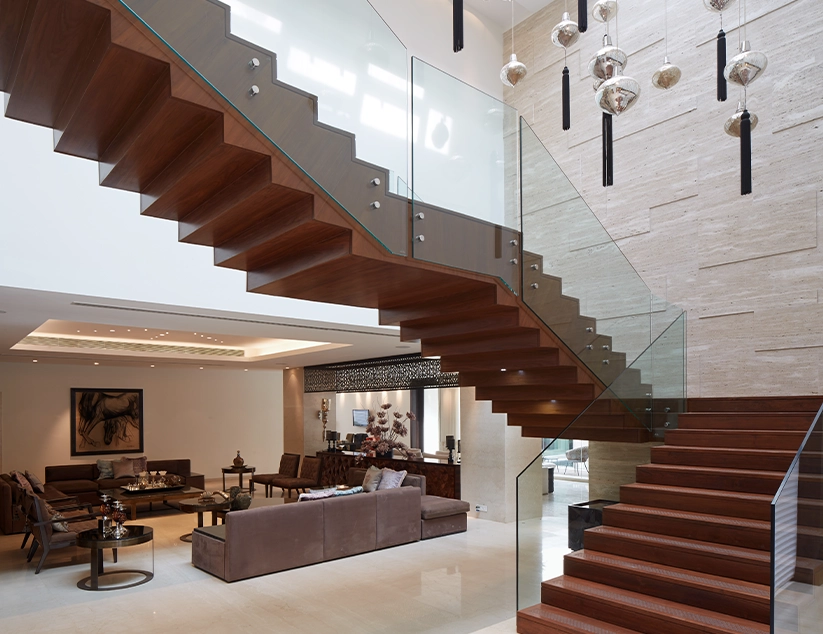
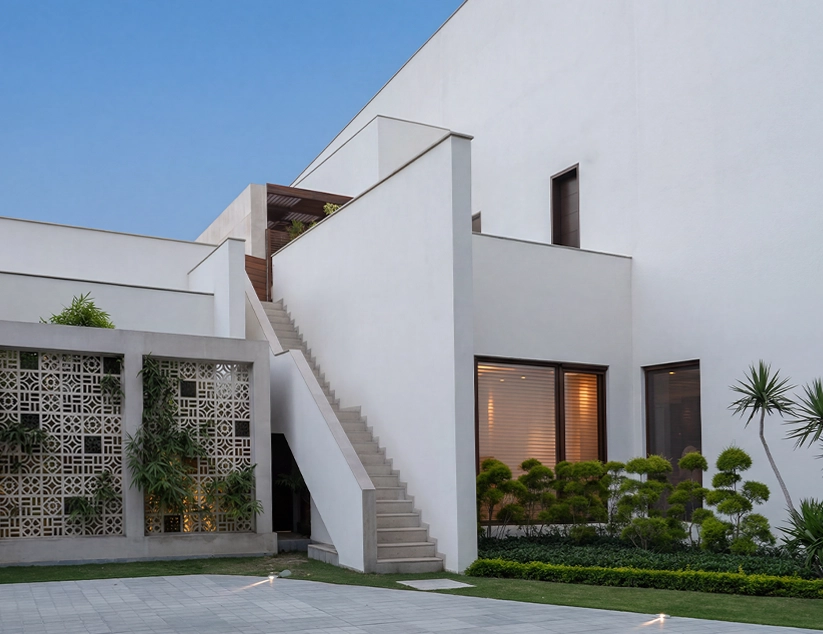
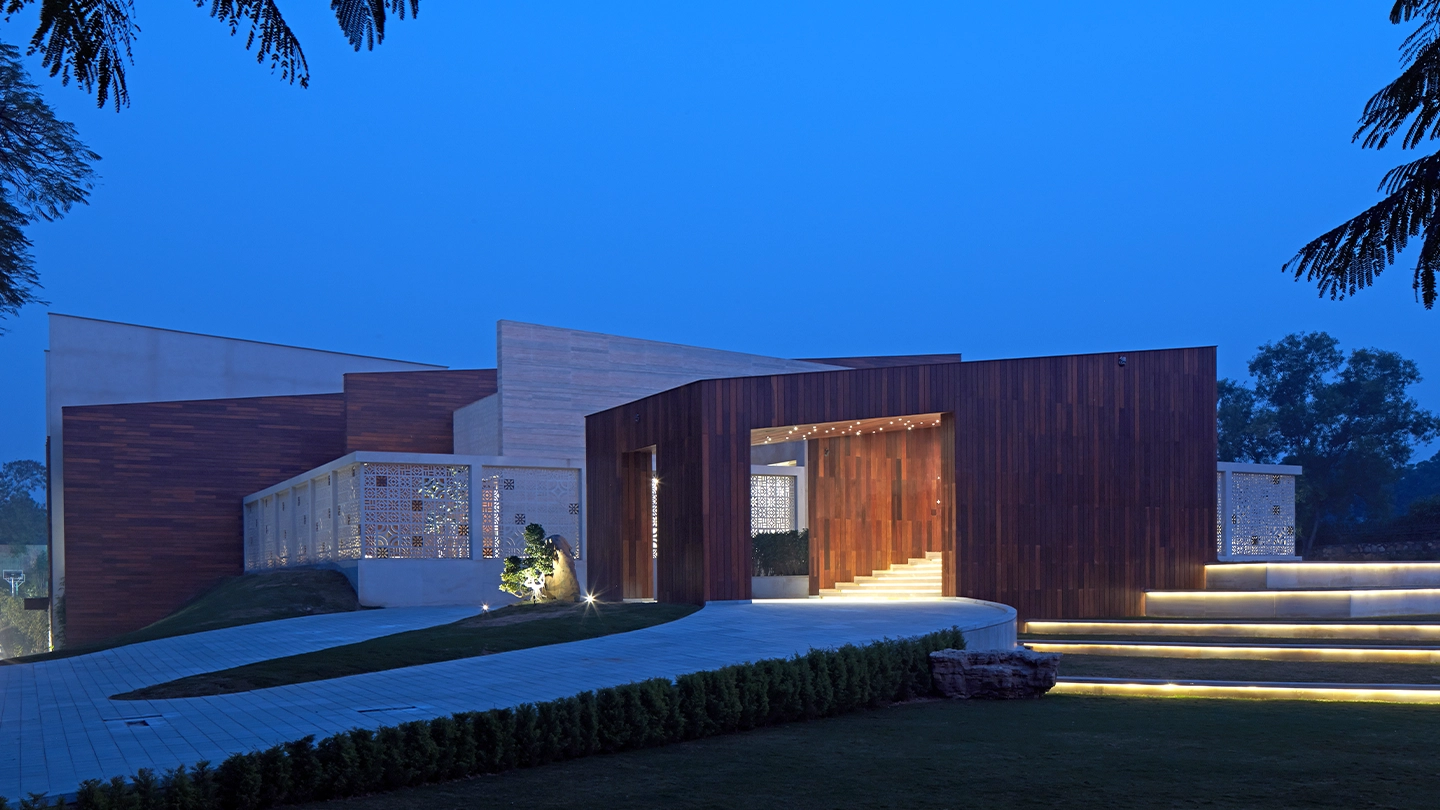
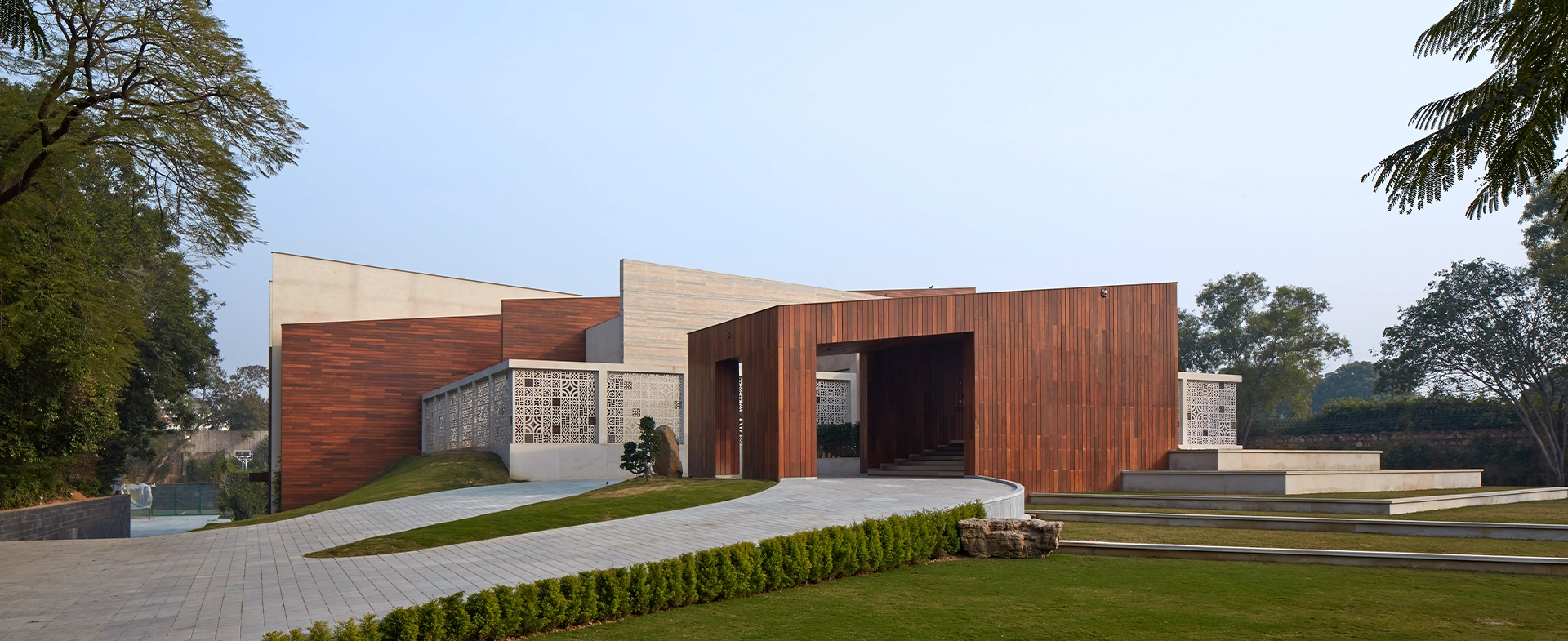
Set on the outskirts of Delhi, Artisan House was designed for a close-knit Indian family whose idea of home extends well beyond the nuclear unit. The brief called not only for a residence for grandparents, parents, and children, but for a place capable of receiving the wider family with ease during festivals, gatherings, and extended stays. The design responds by treating the house less as a singular object and more as a carefully orchestrated domestic landscape, one that accommodates intimacy and togetherness without allowing either to overwhelm the other.
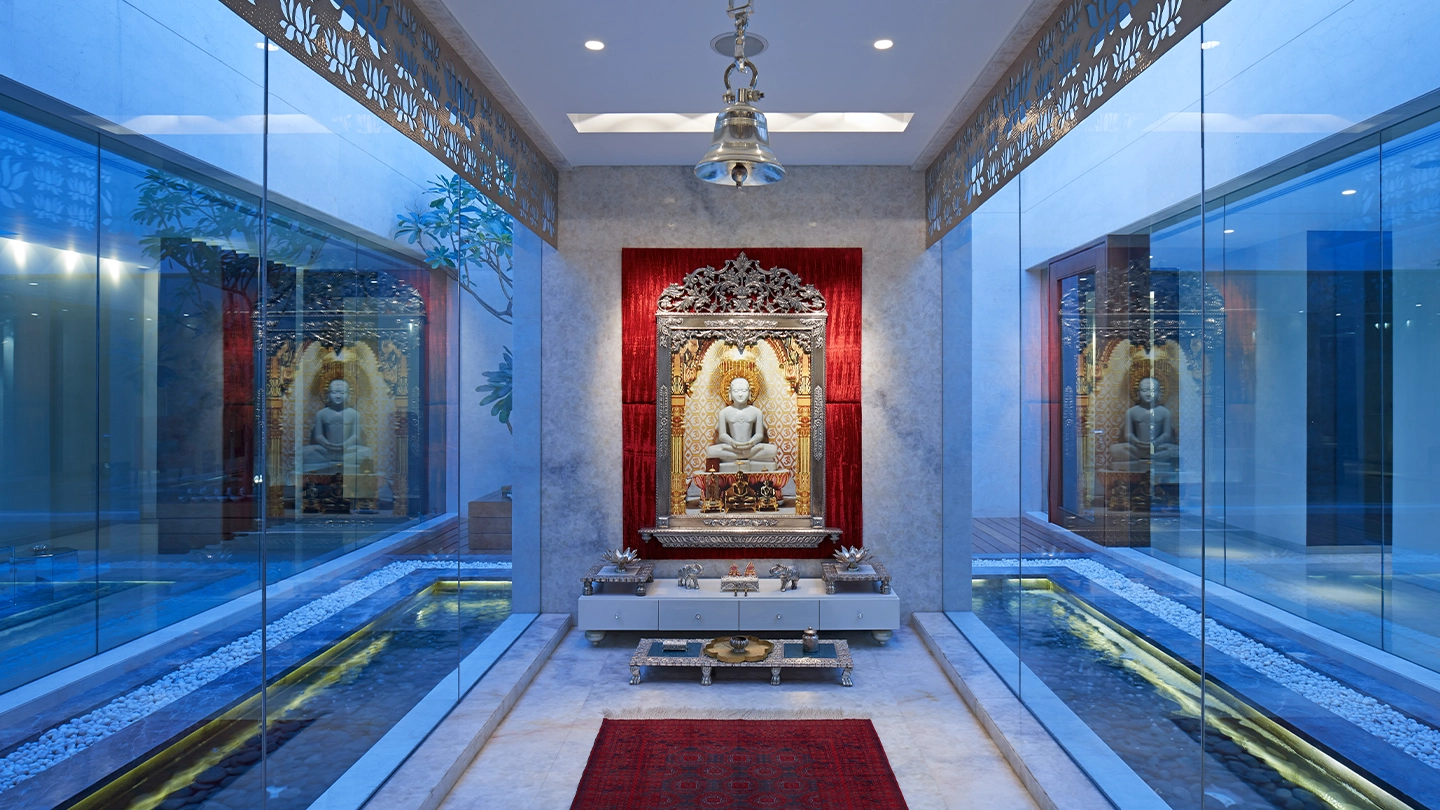
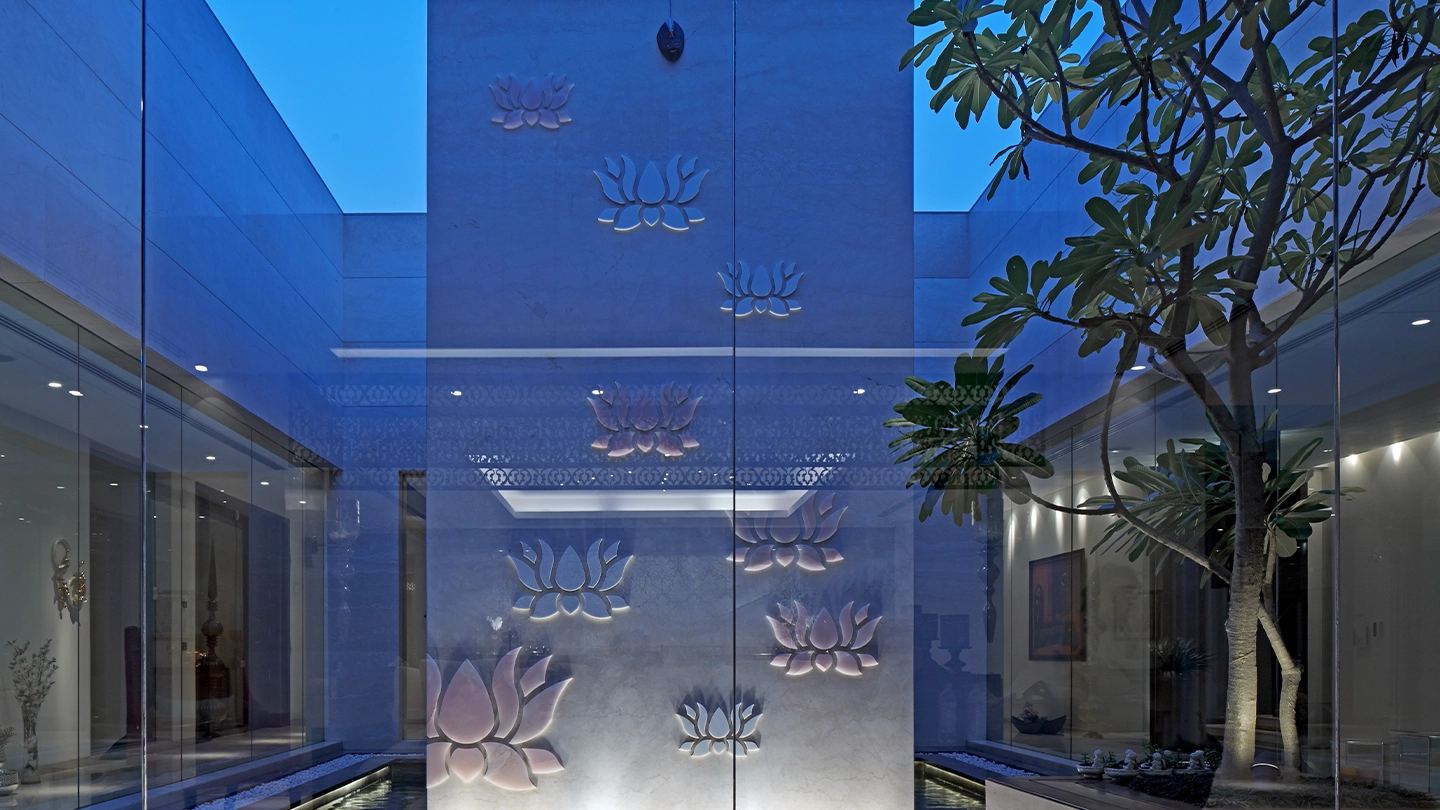
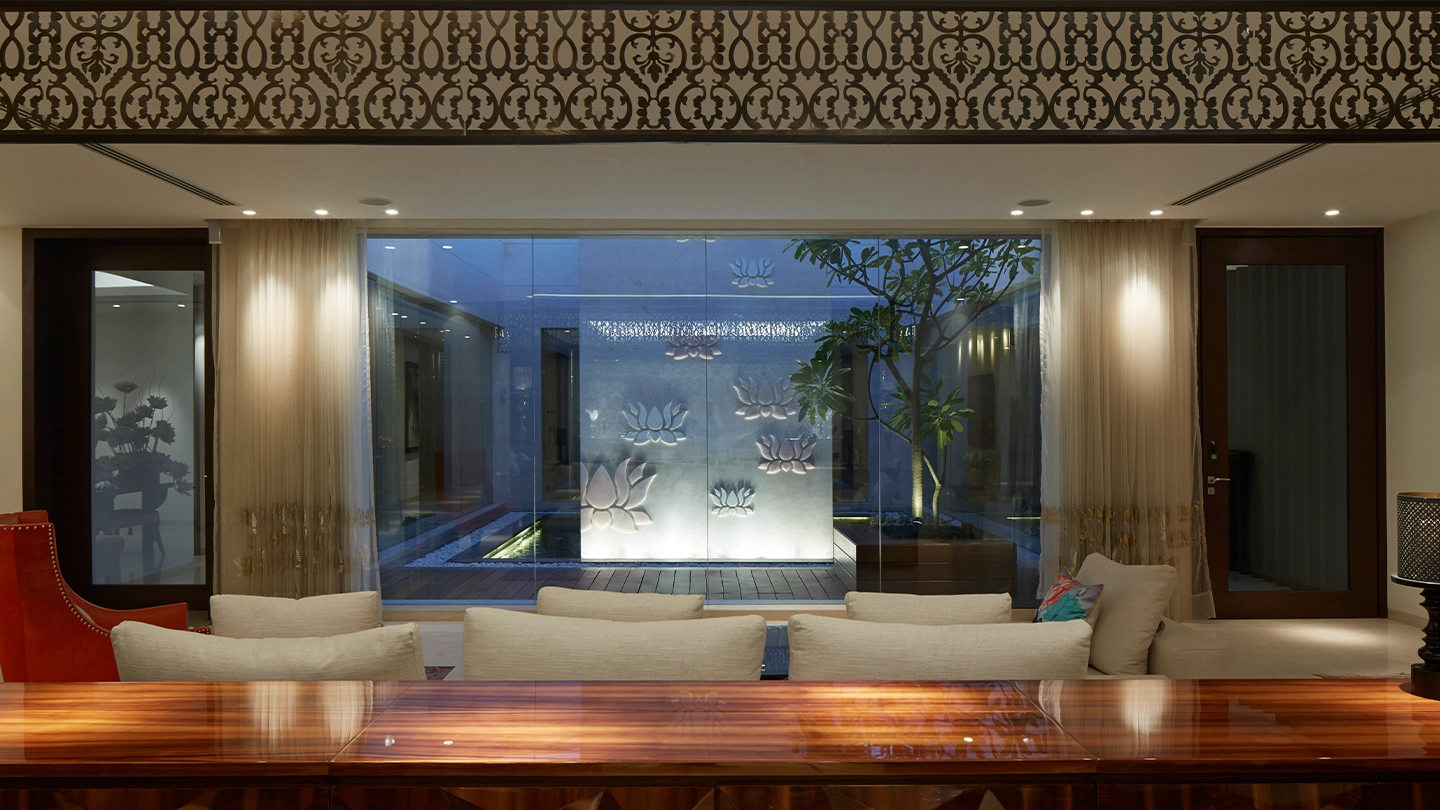
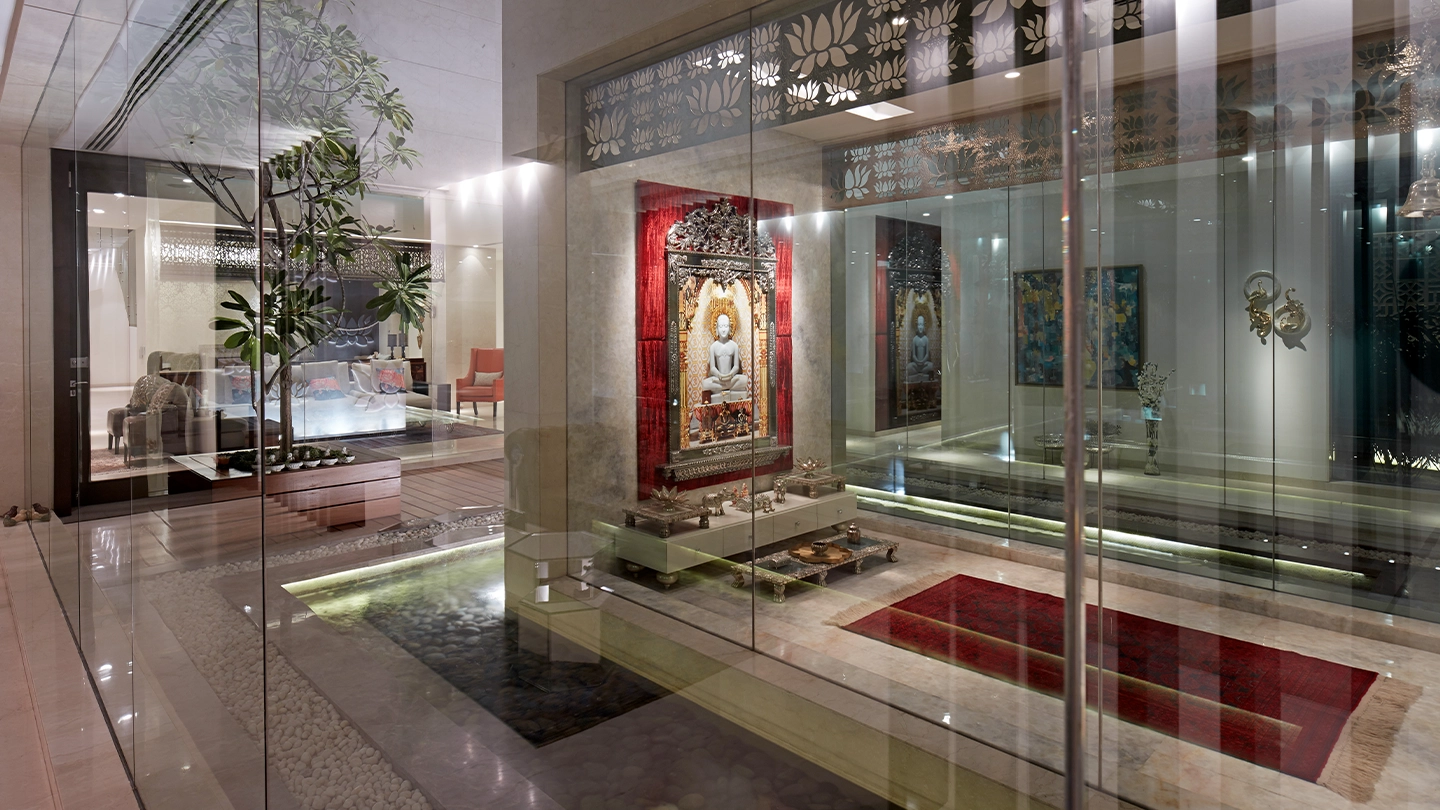
The project draws considerable strength from its site. Unlike Delhi’s typically flat terrain, this plot offered a natural gradient, which is used to create split levels within the house. This sectional strategy allows more private functions to remain anchored in the lower, earth-banked portions of the residence, while larger, more public spaces occupy the upper levels. A central courtyard, with a temple placed at its heart, lends the house both spatial focus and a quiet spiritual centre.
What distinguishes the project most clearly is its organising idea of striation. A banding pattern runs across the site and the built form, generating a series of vertical planes that shape movement, enclosure, and perception. As one passes from one band to the next, the house unfolds not room by room, but atmosphere by atmosphere. Stone craft, metal work, textiles, planting, water, and relief surfaces are each given their own spatial register, allowing the house to hold multiple material worlds within a singular architectural discipline. Its luxury lies precisely here, in the rarity of the handmade, the richness of sequential experience, and the assurance with which contemporary architecture and inherited craft are brought into conversation.