Apollo Tyres
Gurugram
- Site Area: 2 acres
- Built Up: 1,00,000 sq. ft.
A courtyard workplace reimagined for a new Indian corporate era
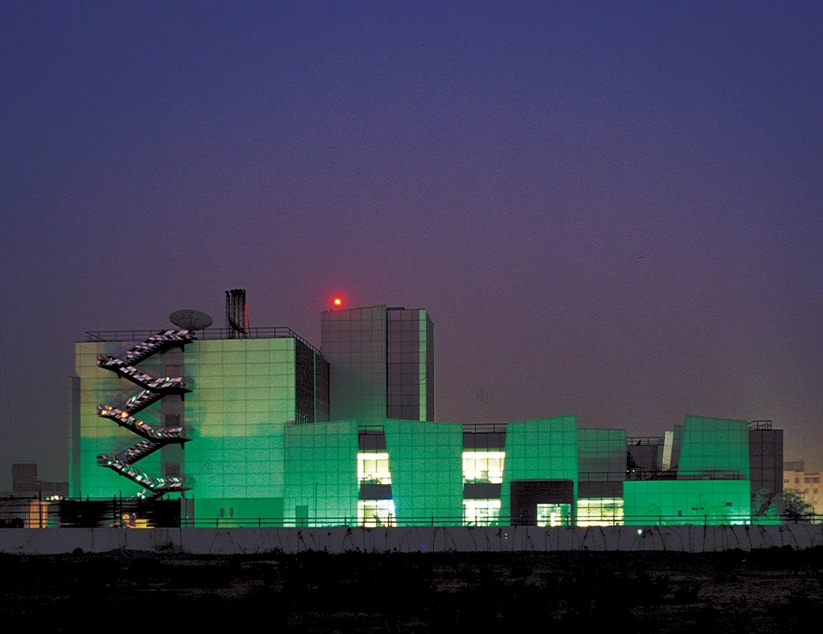
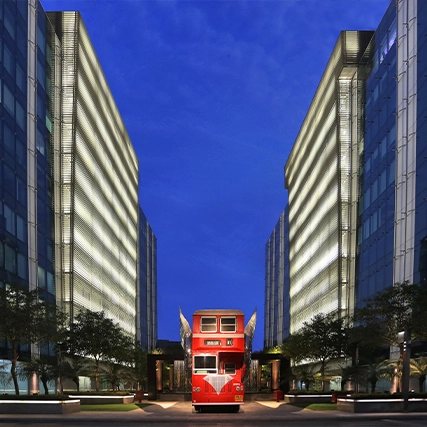
Apollo Headquarters was conceived at a pivotal moment in India’s economic transition, when liberalisation was reshaping corporate ambition and Indian companies were beginning to project a more global identity. Located in Gurgaon at a time when the city was still rapidly urbanising and offered little immediate urban context, the project set out to define a new kind of workplace, one that moved beyond prevailing office stereotypes while remaining rooted in regional planning intelligence and climatic response.
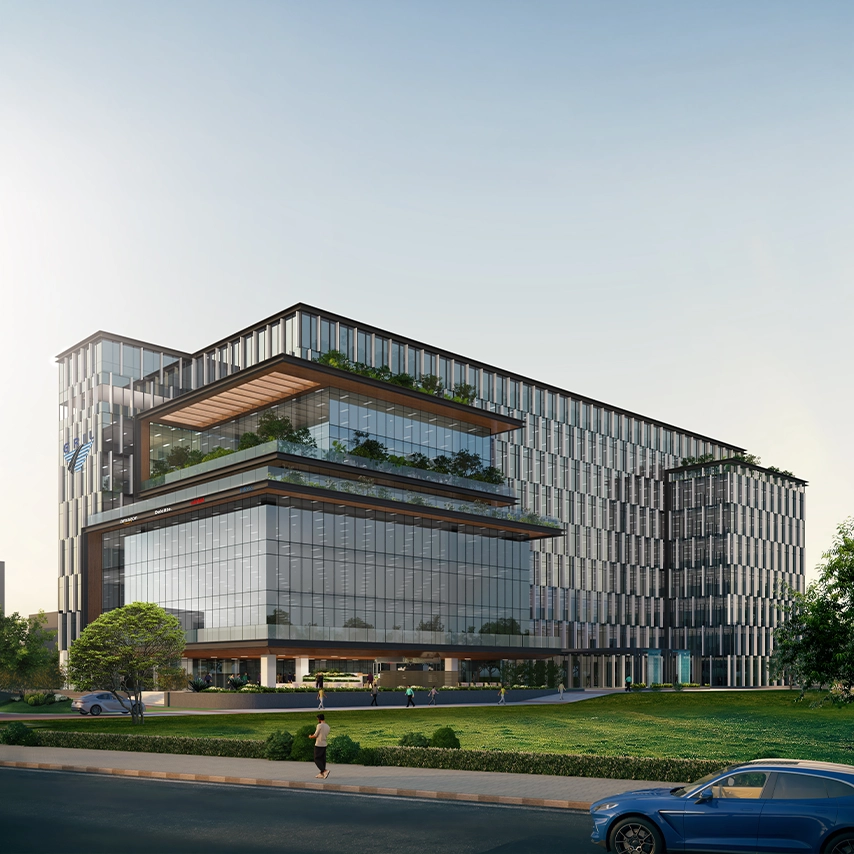
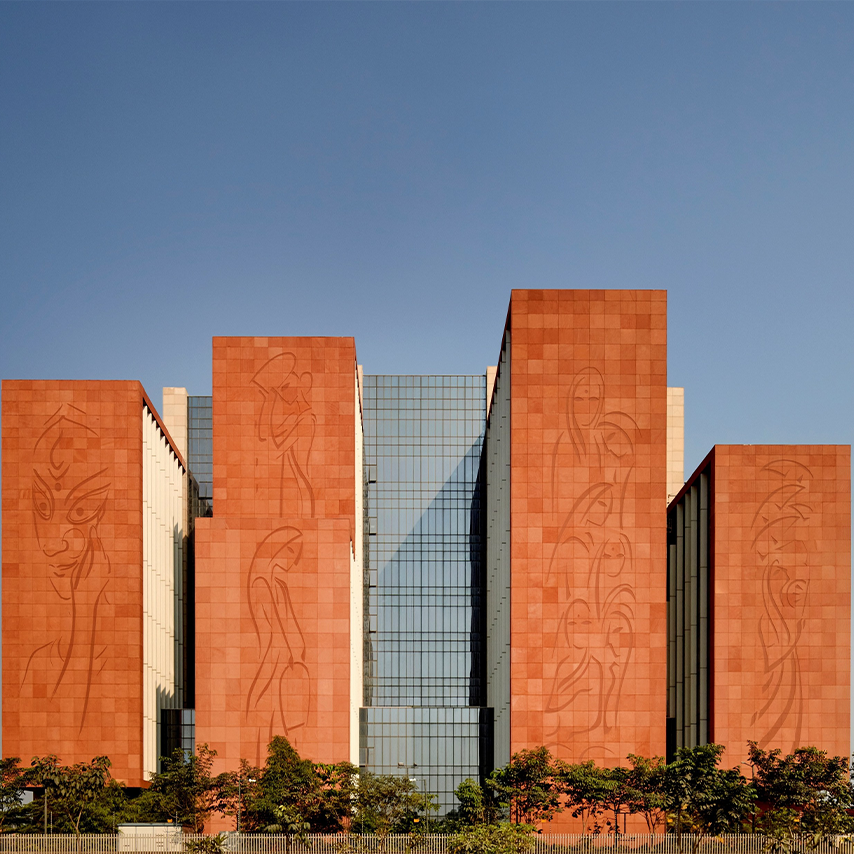
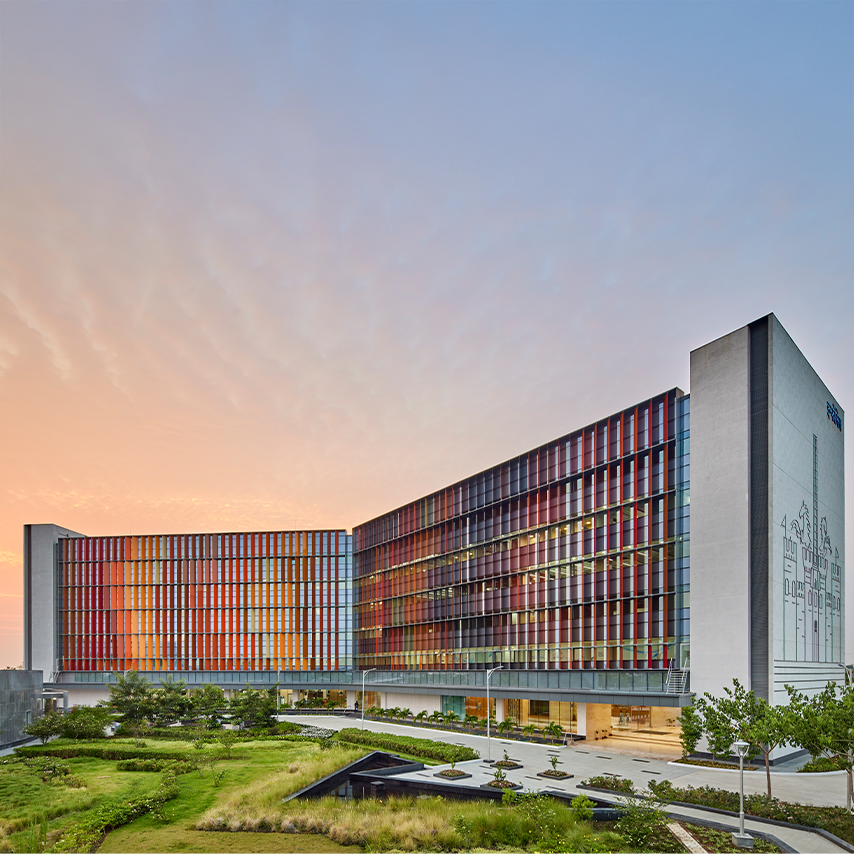
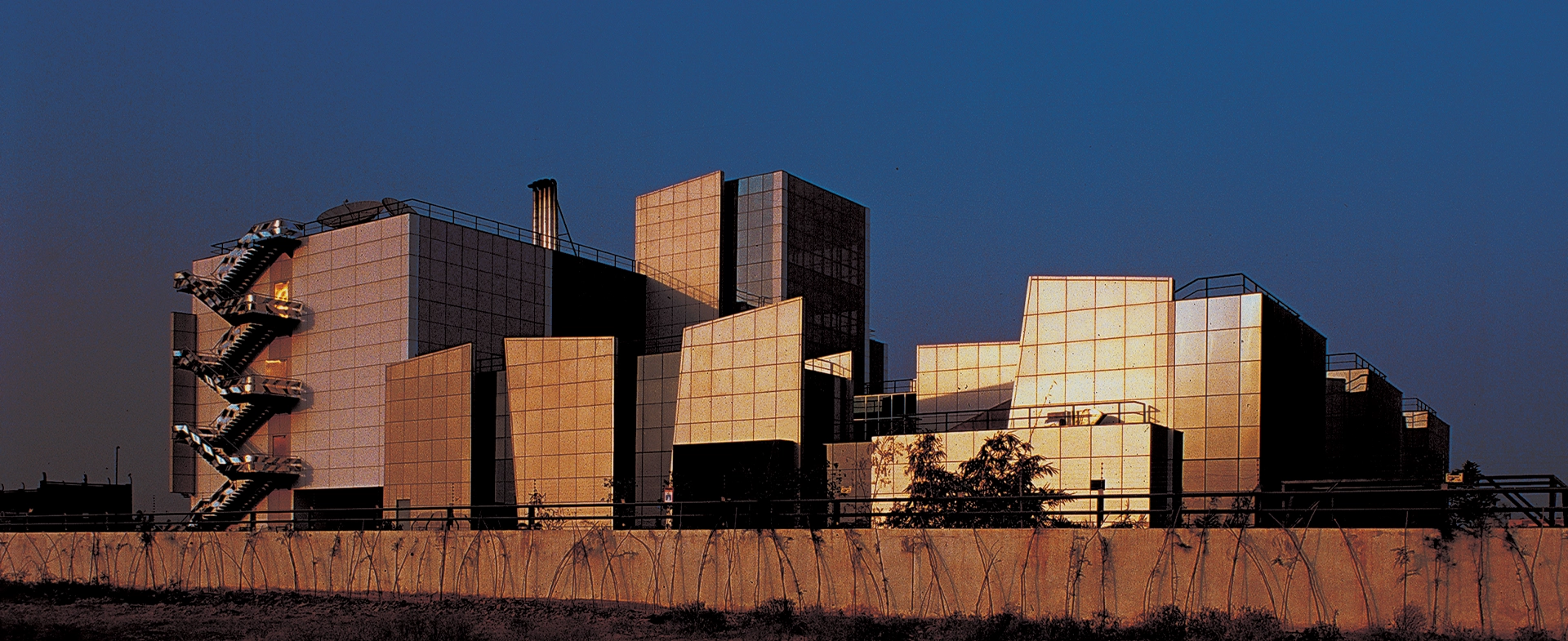
The design is organised as a composition of built volumes and voids derived from the logic of courtyard planning. Its striated morphology emerges from a series of 9-metre narrow floorplates designed to allow 100 percent daylight penetration, creating a brighter and more energy-conscious work environment across the office blocks. A diagonal circulation spine traverses the development and acts as the primary movement axis, linking the different blocks while creating opportunities for informal interaction, social exchange, and a stronger sense of collective workplace culture. Terrace gardens further enhance thermal performance and extend the building’s environmental strategy into the upper levels.
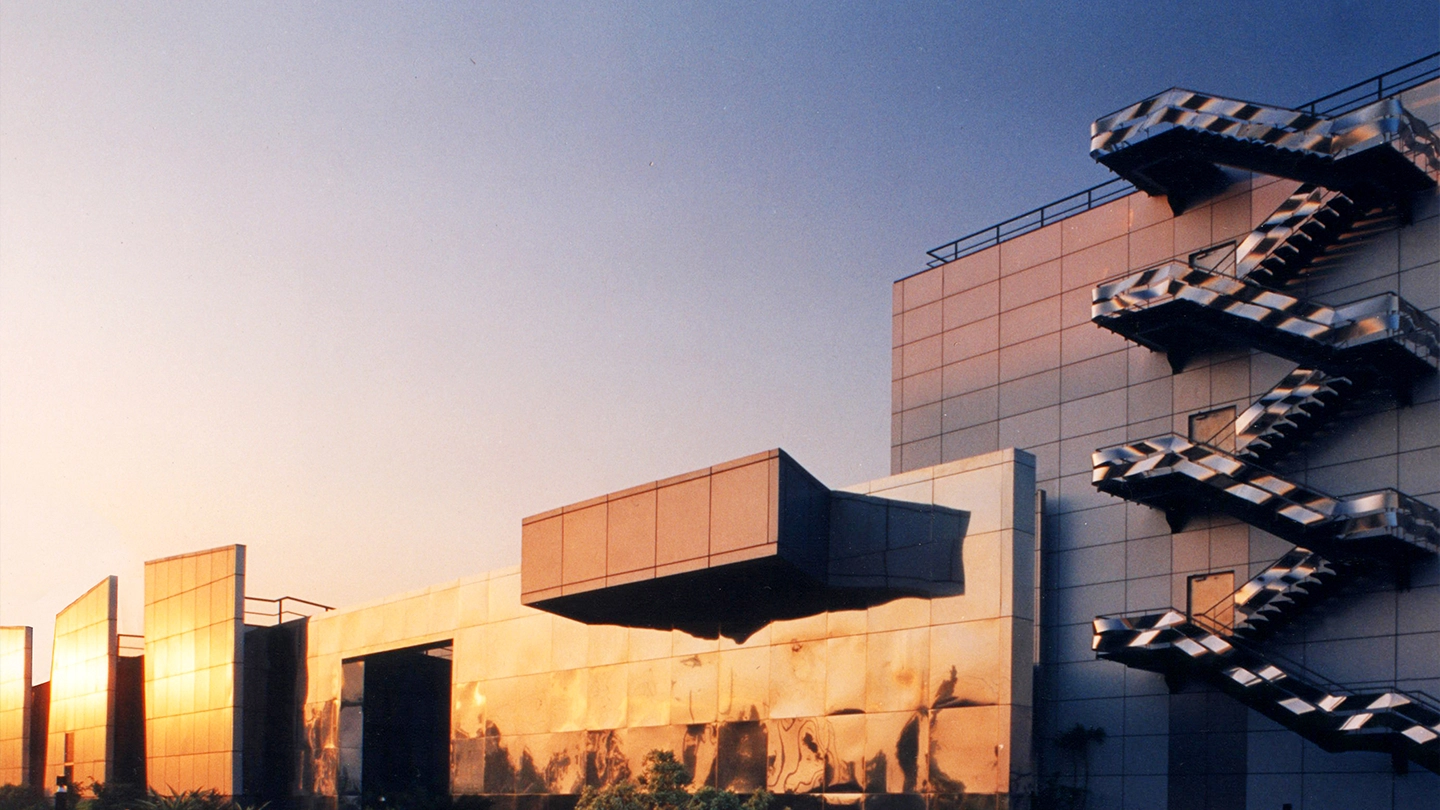
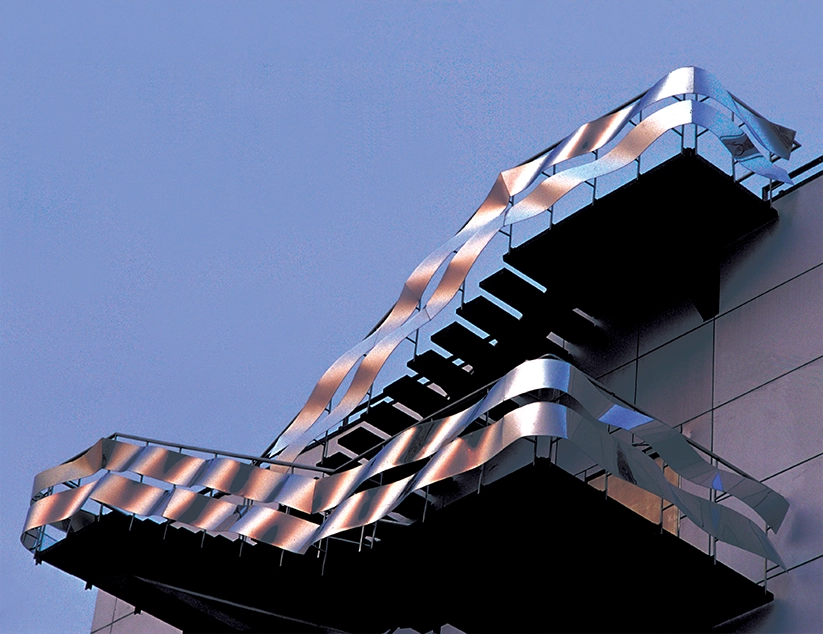
The architectural language is equally distinctive in its material expression. An arts-and-crafts approach informs the palette, bringing together business identity and local making traditions. Most notably, the sculptural external fire escape staircase in rippling stainless steel introduces a dramatic and memorable element to the composition. Developed in collaboration with local utensil makers, its fluid ribbon-like form reflects a crafted approach to construction that gives the headquarters a strong and indigenous architectural character.
The result is a corporate office that combines workplace innovation, climatic intelligence, and local craft to create a landmark early statement of contemporary Indian workplace design.