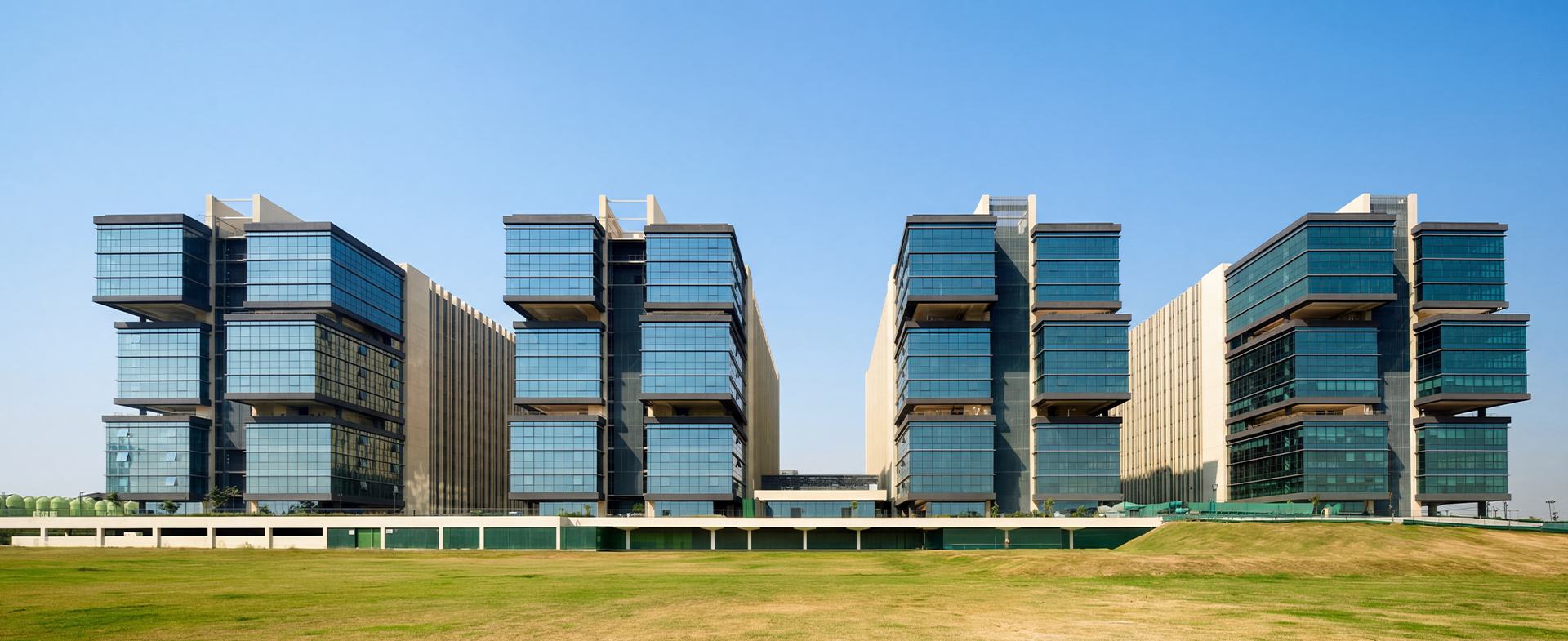
TRIL Intellion Park
Gurugram
- Site Area: 25 acres
- Built Up: 50,85,000 sq.ft.
A pedestrian-first SEZ campus planned for speed, scale, and environmental performance
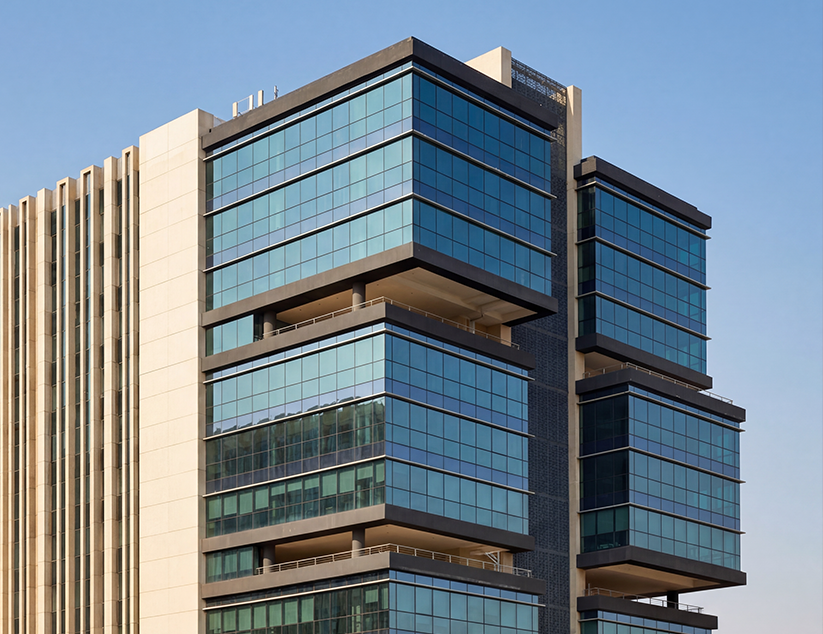
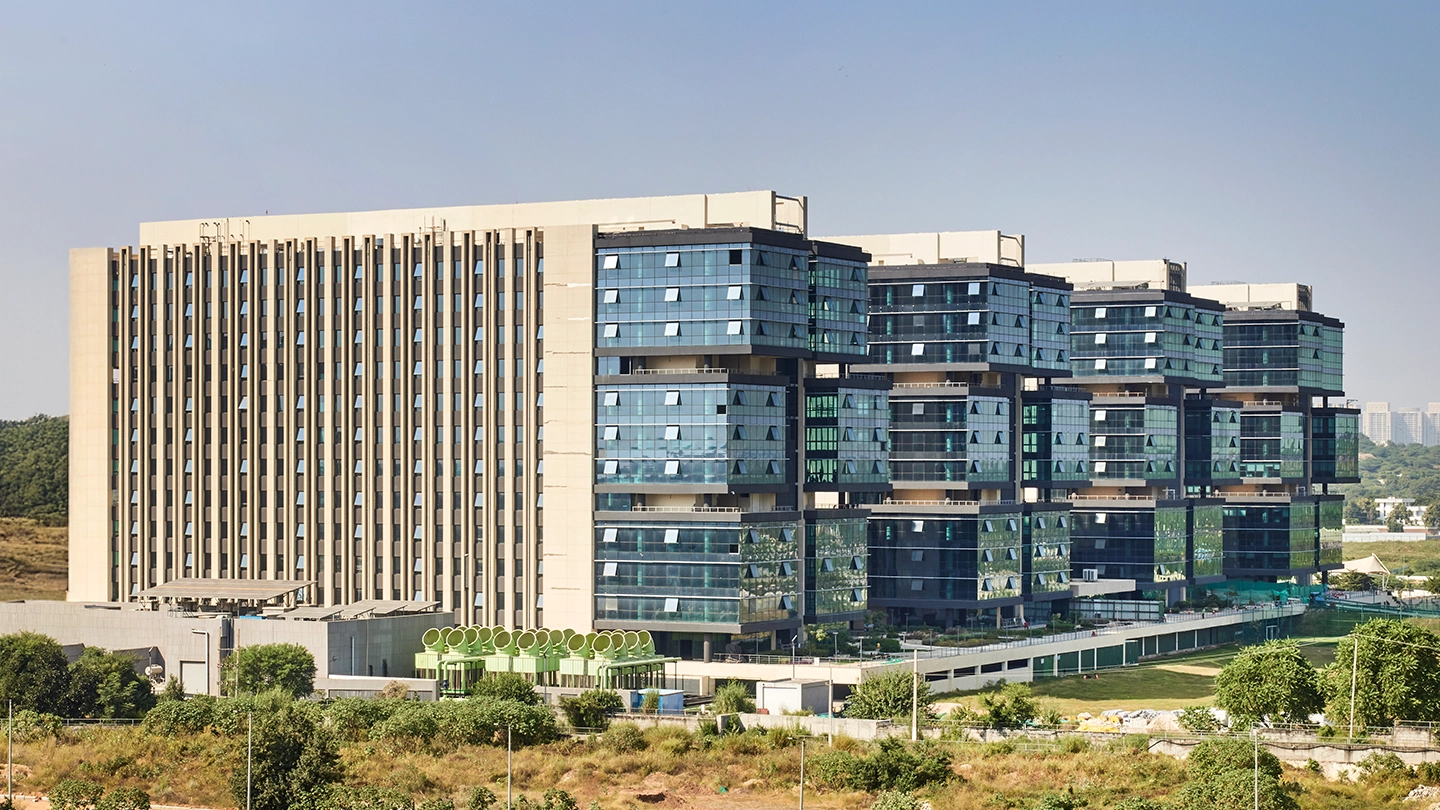
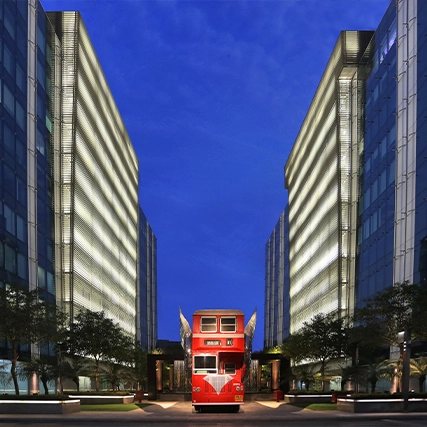
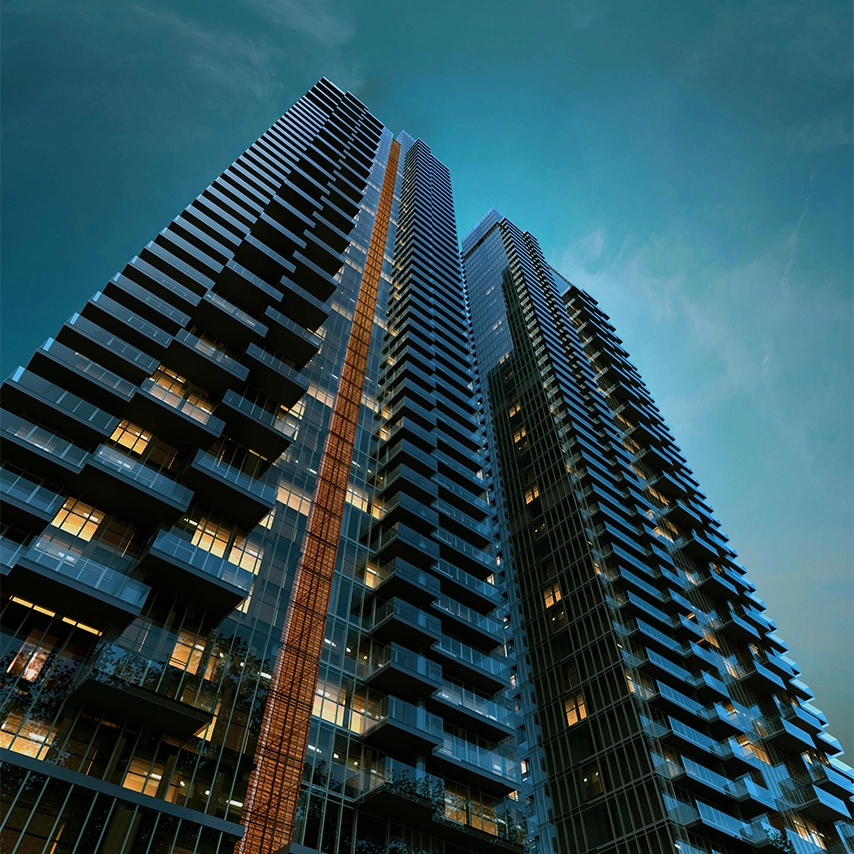
Located off Golf Course Extension Road in Gurugram, TRIL IT City is conceived as a large SEZ workplace campus within one of the city’s most consequential growth corridors. The project addresses the demands of scale, access, and operational performance through a masterplan that is both high-capacity and legible, accommodating a dense commercial programme within an environment calibrated for clarity of movement and daily ease. Its proximity to major road infrastructure and relative accessibility from the airport position it as a strategic address for large corporate occupiers, but the ambition of the campus extends beyond efficiency alone.
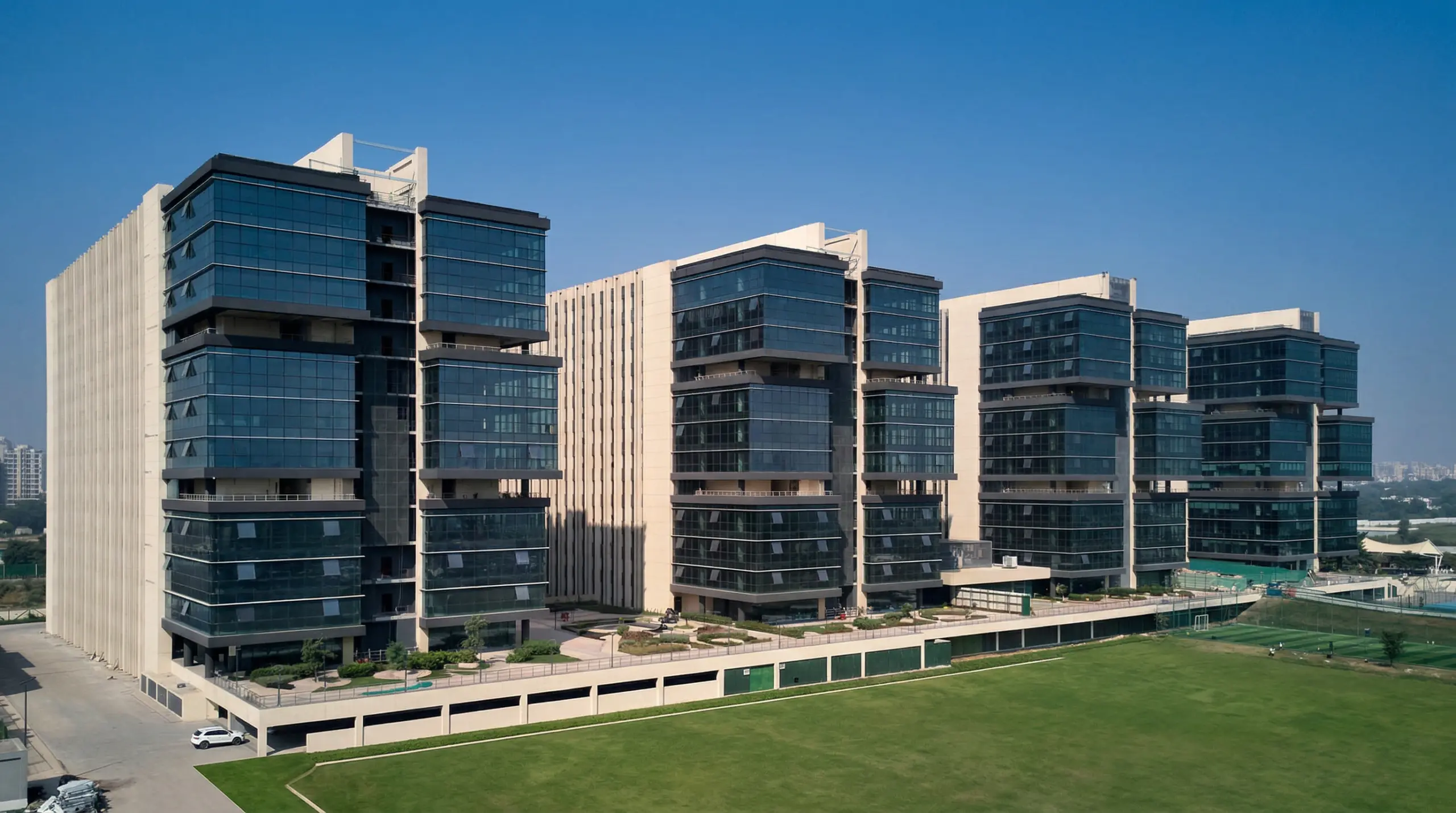
Movement is treated as a primary ordering device. Vehicular traffic, visitor holding, employee access, and high-occupancy vehicle circulation are carefully differentiated, reducing points of conflict and lending the campus a more controlled rhythm from arrival to workplace. A generous entry forecourt, ceremonial drop-off, and dedicated service zones establish a front-end that is both orderly and capacious, while parking distributed across surface, podium, and basement levels is integrated with direct access systems designed to shorten the journey from gate to workstation.
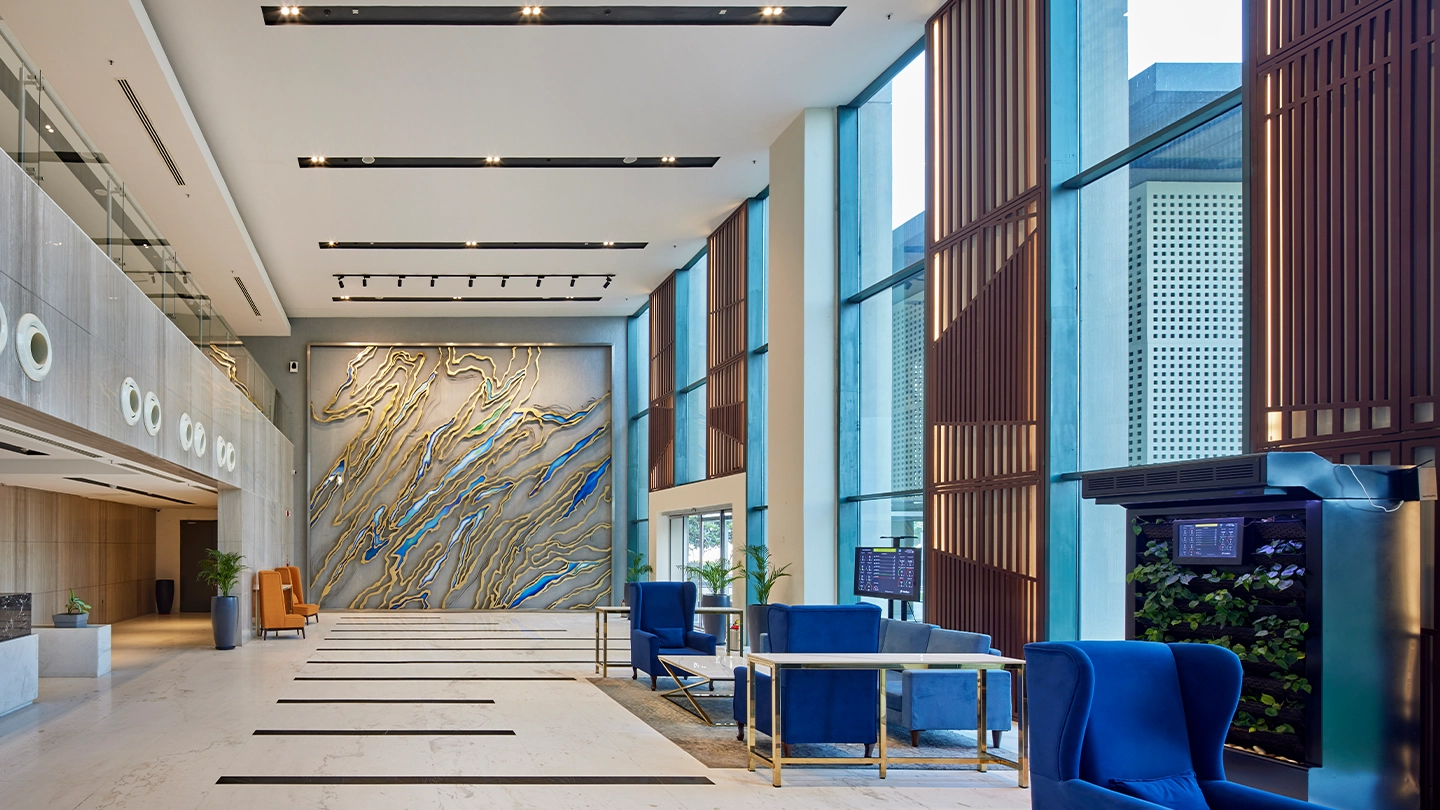
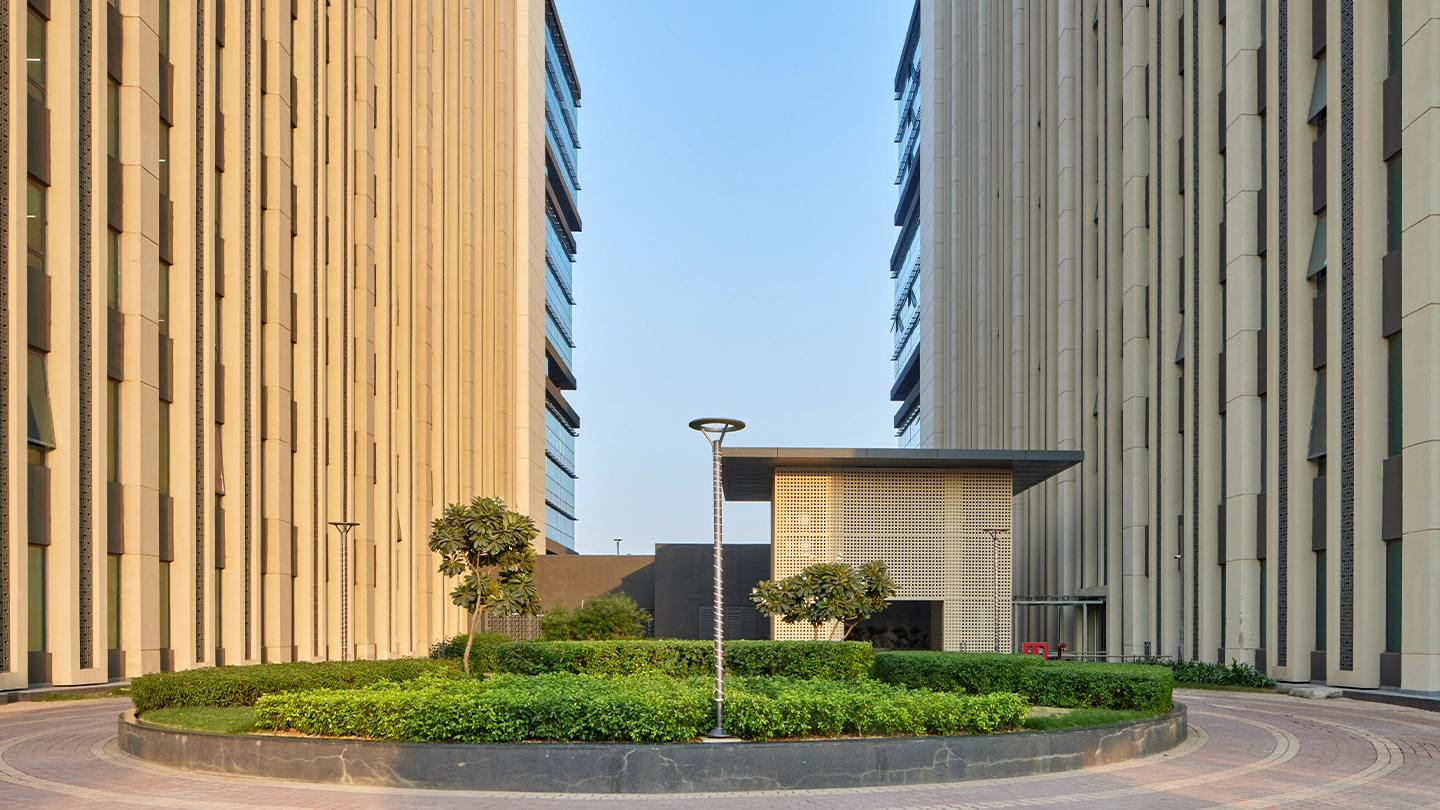
At the centre of the development, a landscaped podium recasts the campus as a predominantly pedestrian environment. By placing parking beneath this shared open plane and confining vehicular drop-off to the edges, the design creates a shaded green spine that supports movement, pause, and informal exchange throughout the day. Food courts, coffee lounges, a gym, and crèche facilities are embedded within this level, giving the campus a more inhabited and socially sustained character beyond the office floor.
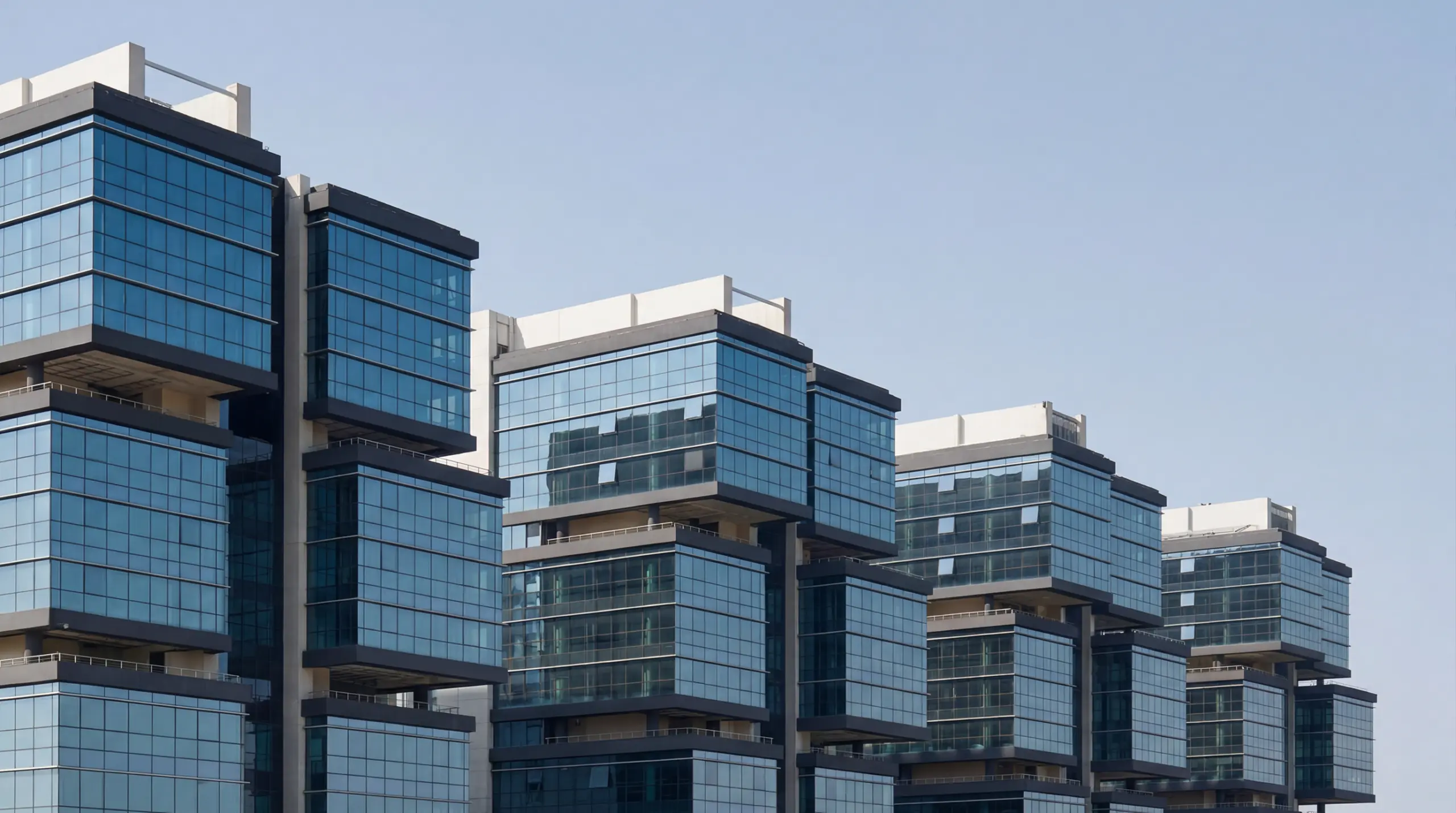
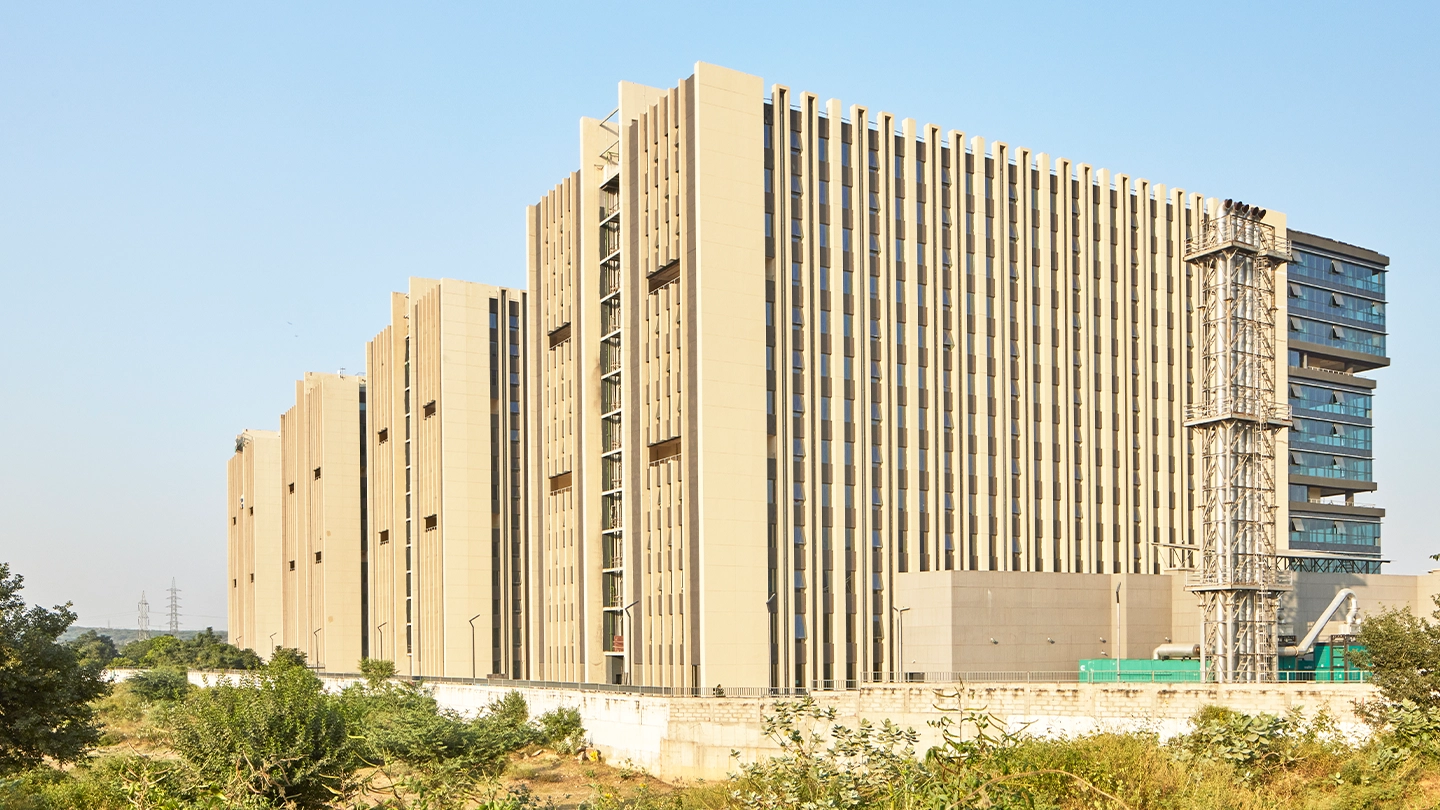
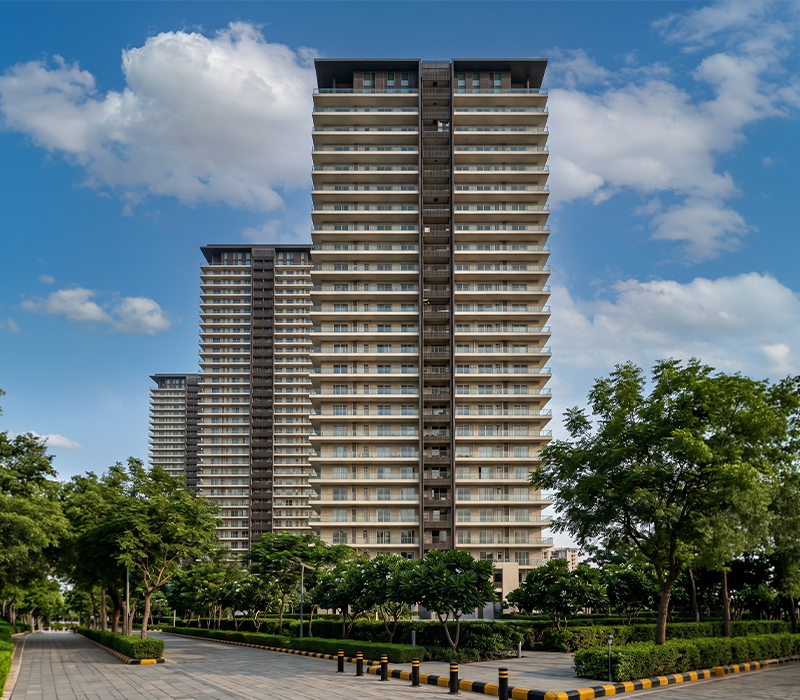
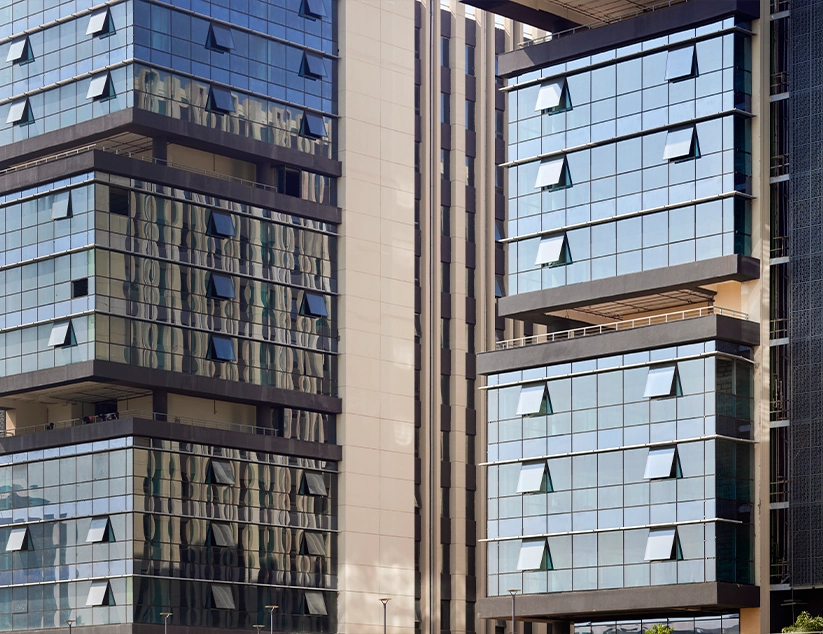
The environmental strategy is embedded within the architecture itself: buildings are oriented along the north-south axis, inter-building distances are calibrated for daylight and ventilation, and the massing is staggered to admit monsoon winds while tempering harsher summer exposure. What emerges is a workplace campus shaped as much by climate and movement as by programme, giving large-scale commercial development a clearer spatial order and a more considered public life.