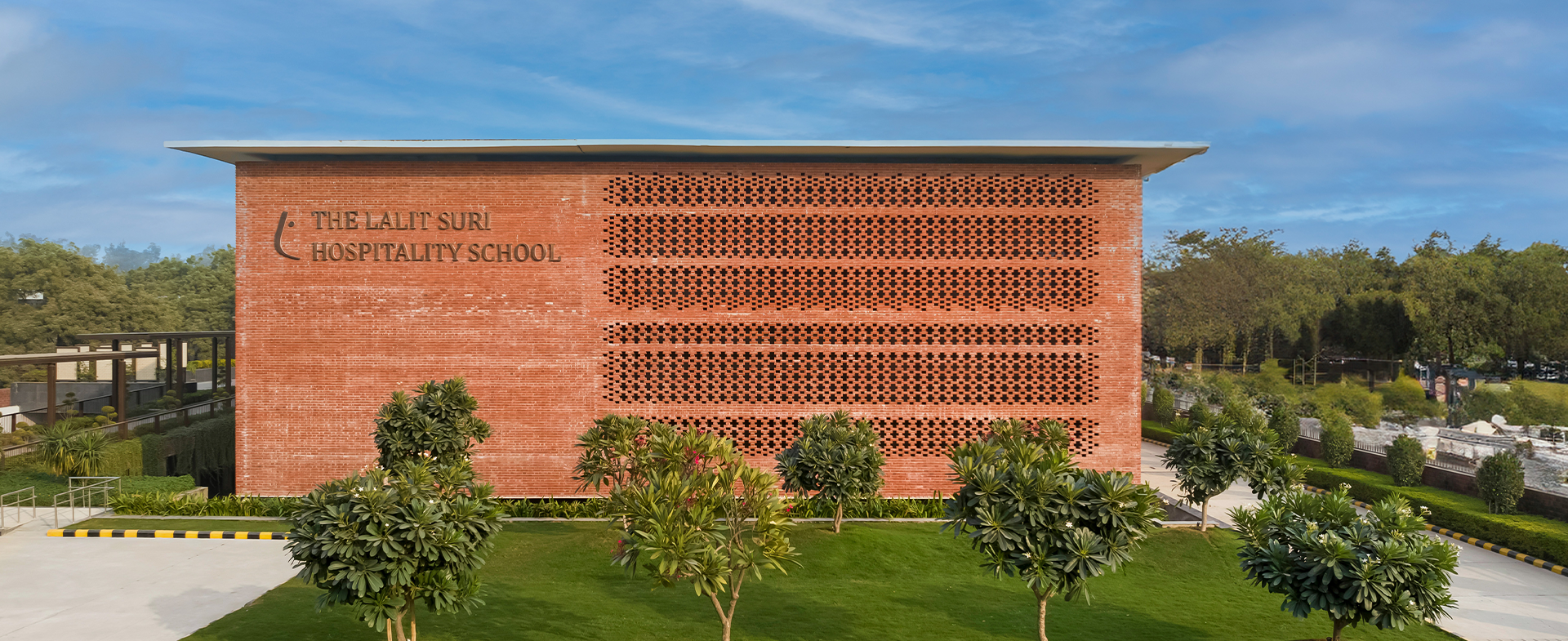
The Lalit Suri Hospitality School
Faridabad
- Site Area: 5 acres
- Built Up: 2,50,000 sq. ft.
A hospitality school where learning and luxury coexist
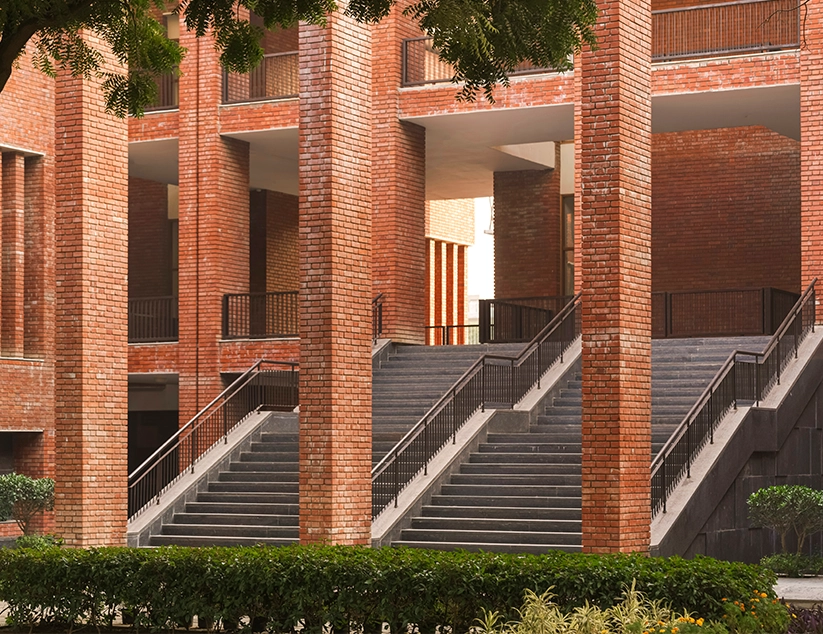
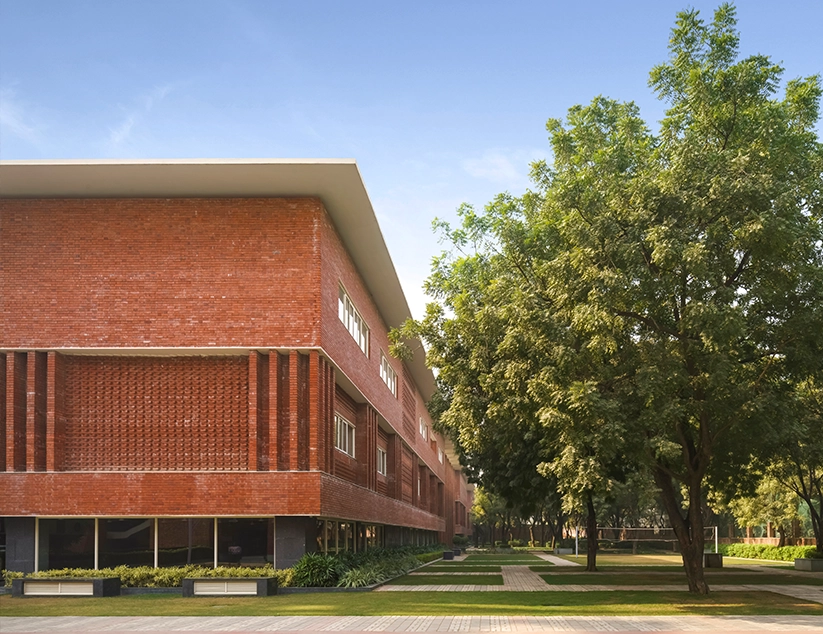
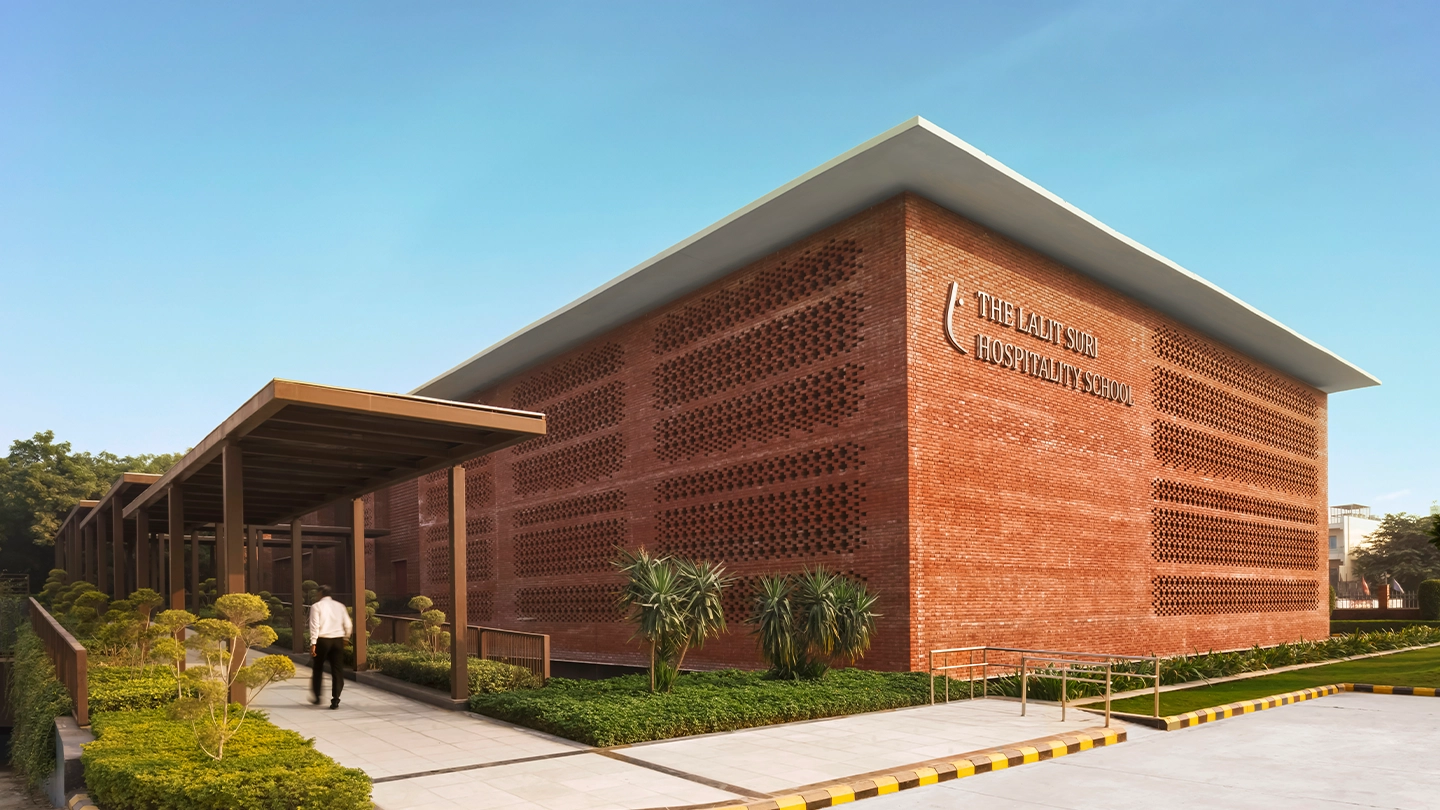
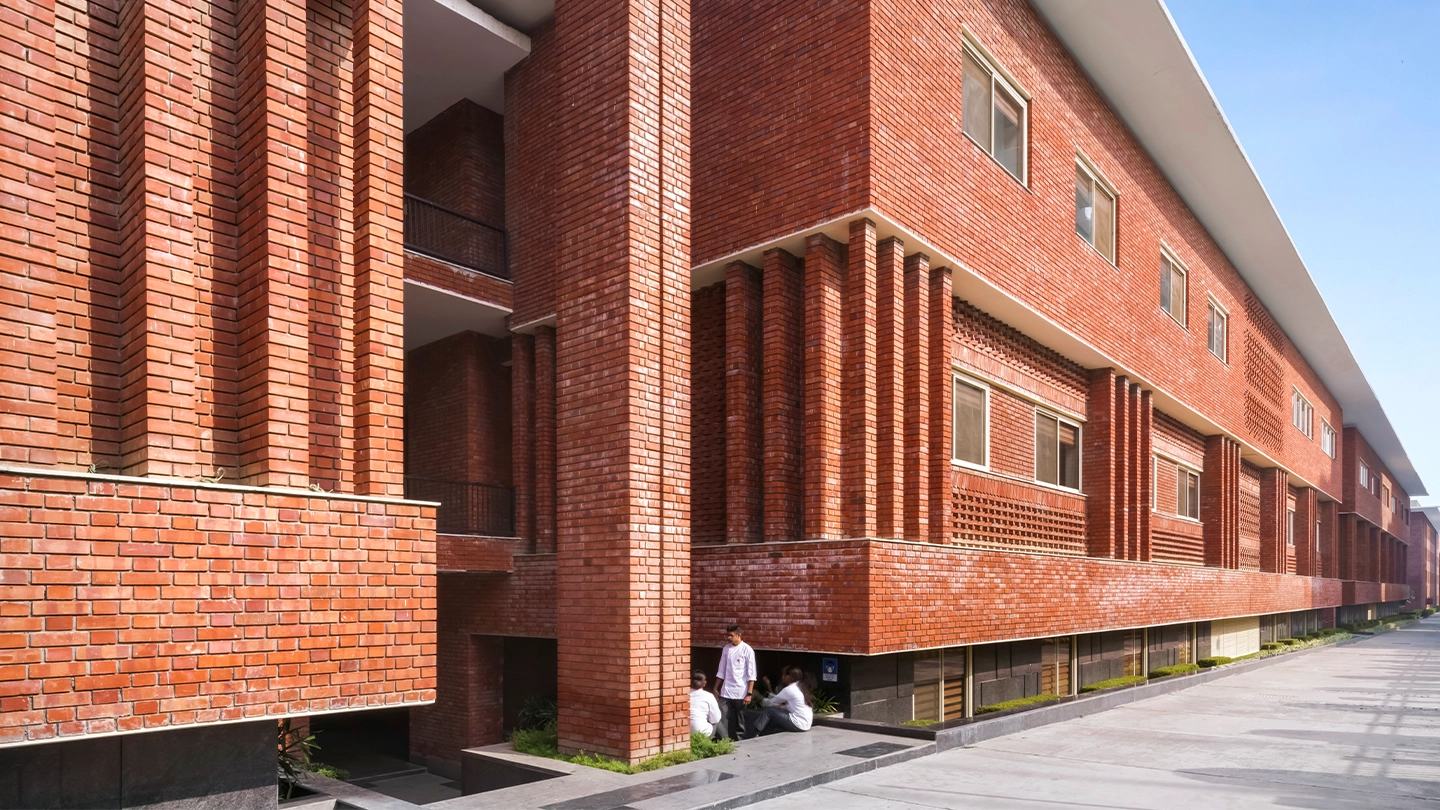
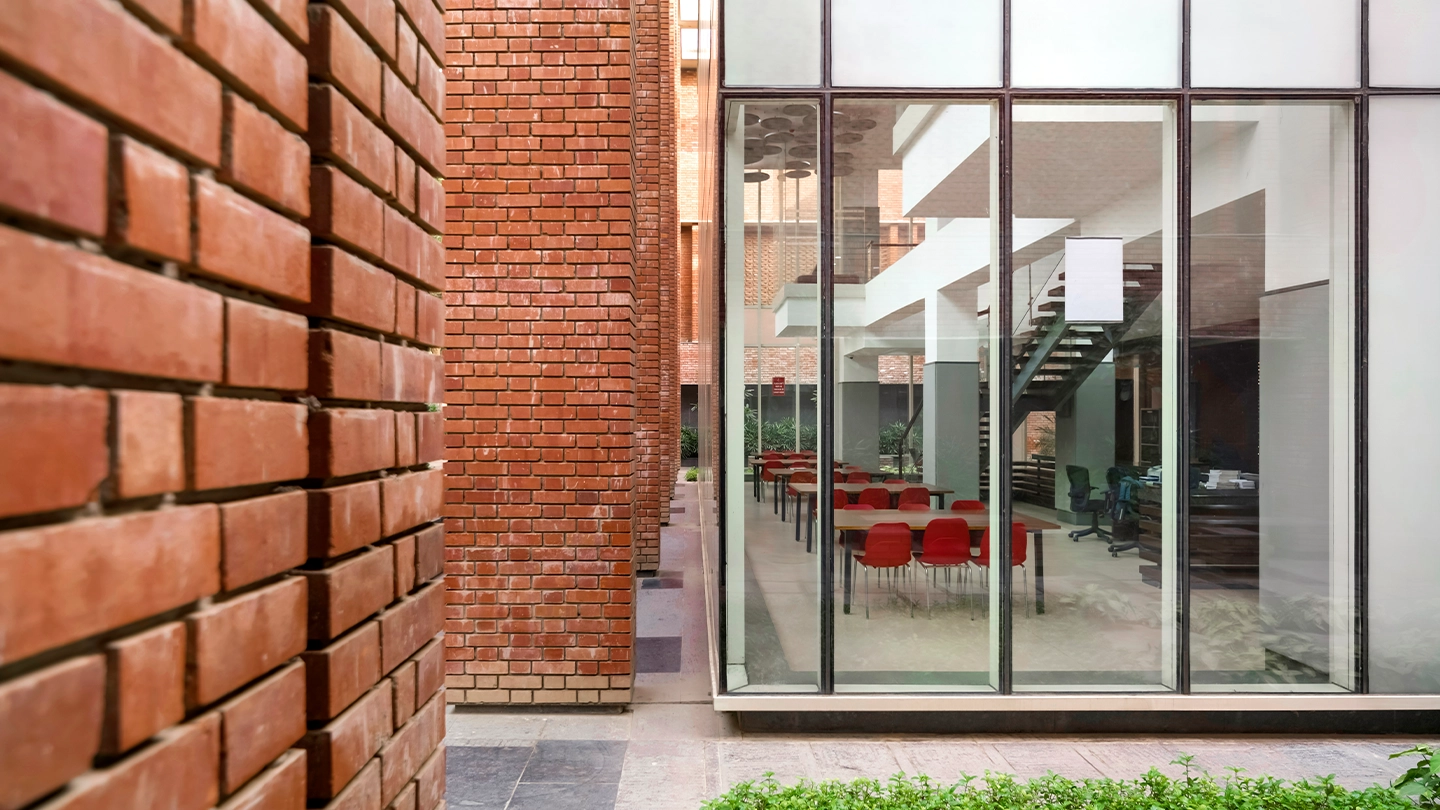
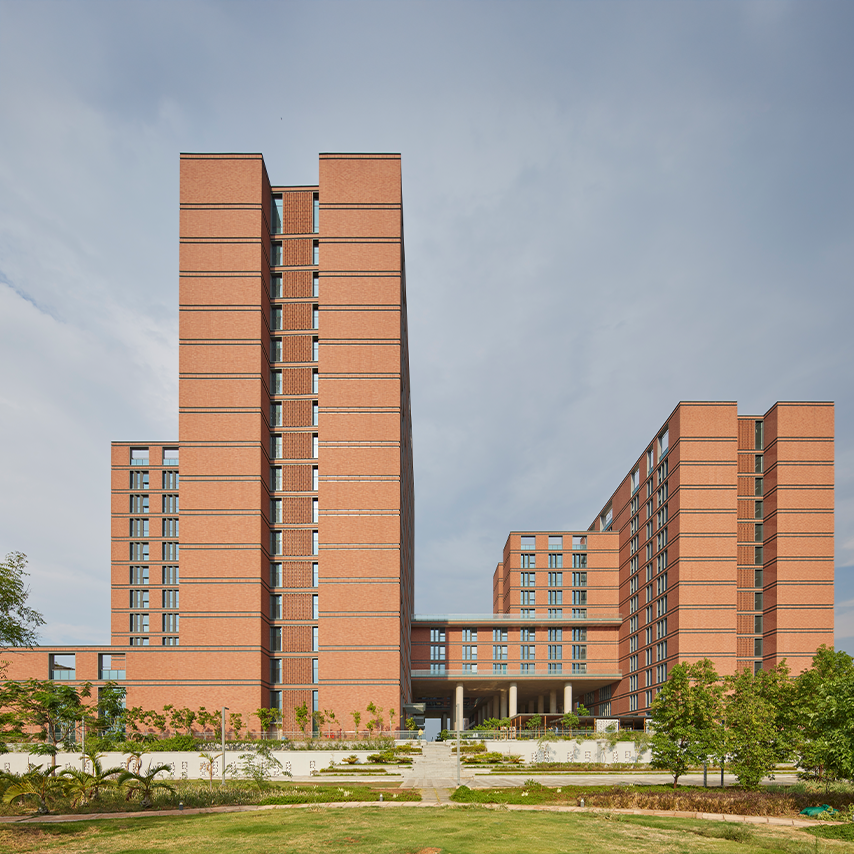
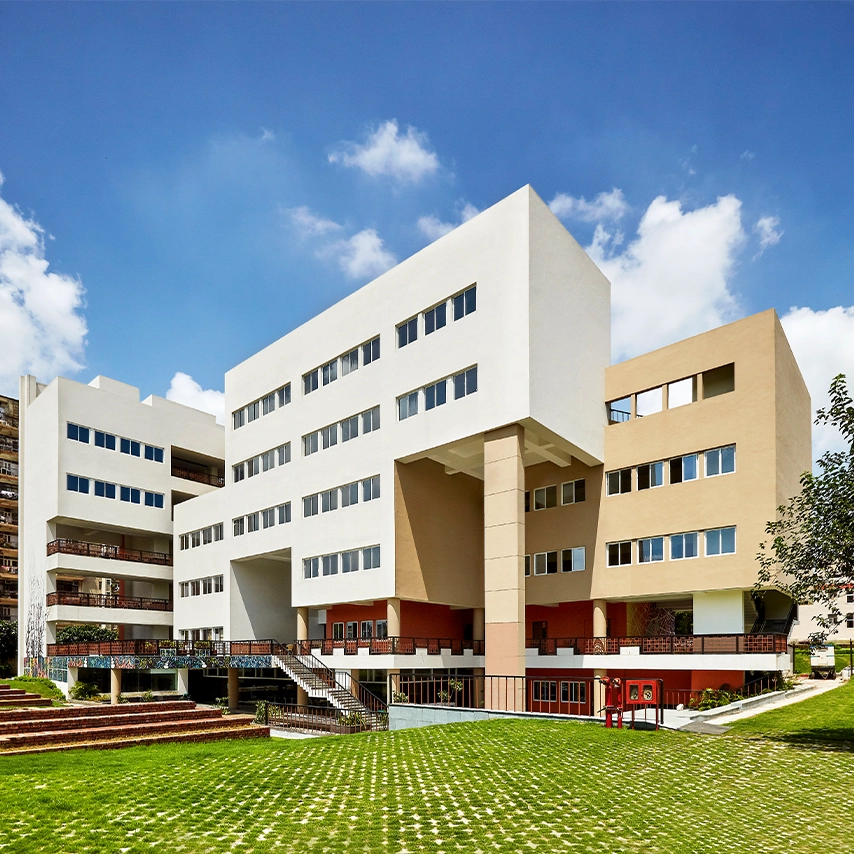
The Lalit Suri Hospitality Institute is conceived as a contemporary educational campus in Faridabad that translates the ethos of the Lalit Group into an immersive environment for hospitality training. Set within the suburbs of the National Capital Region, the project addresses a particular challenge: how to deliver world-class hospitality education within the constraints of a socially driven and resource-conscious Indian context. In response, the campus is designed so that each space performs both pedagogically and experientially. Cafeterias operate as food and beverage outlets for dining and service training, kitchens function as production and learning environments, and the hostel is planned on the model of a hotel, with rooms and shared spaces treated as serviced hospitality settings. A 400-seat auditorium, a 200-bed hostel, and a car museum reflecting the client’s personal passion deepen the programme and broaden the life of the campus.
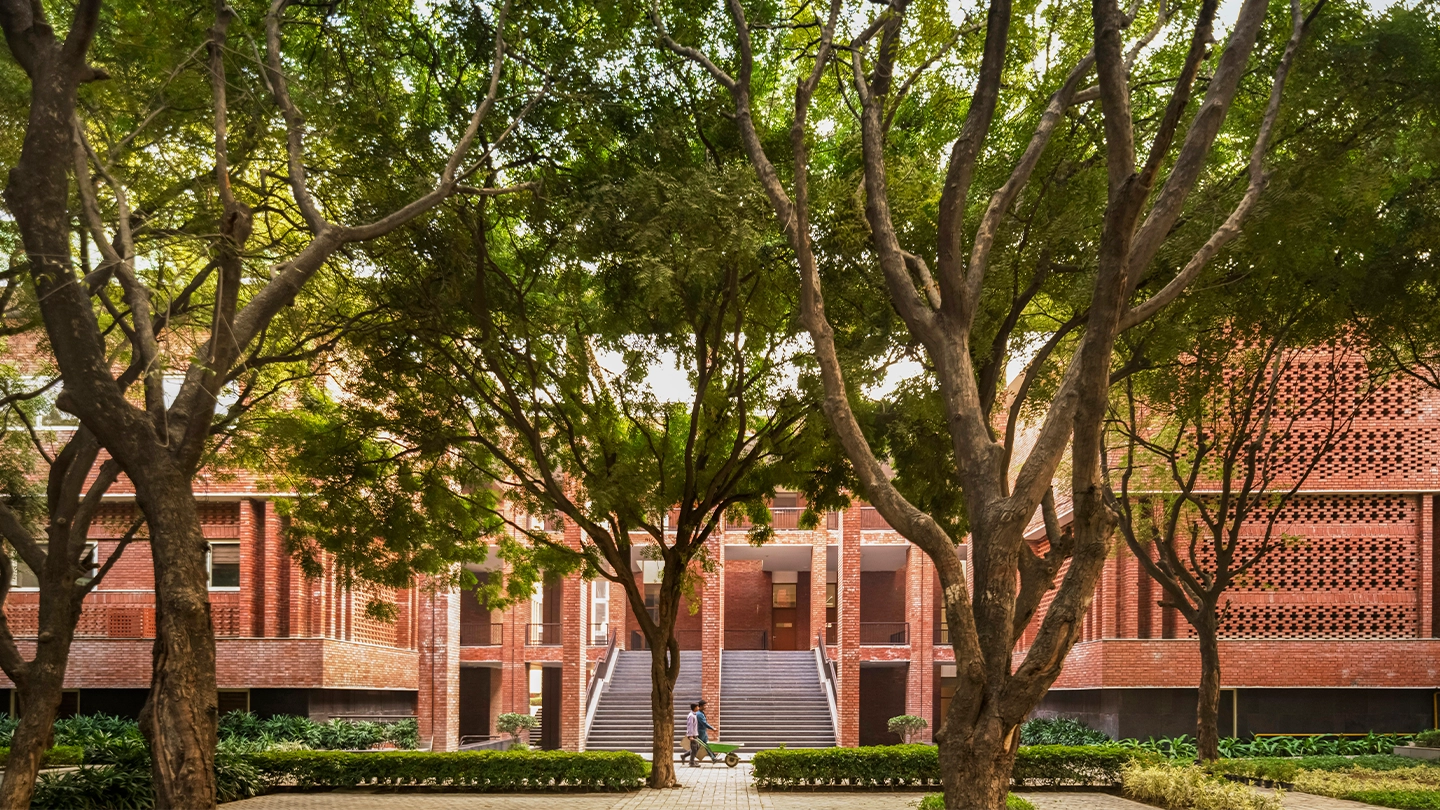
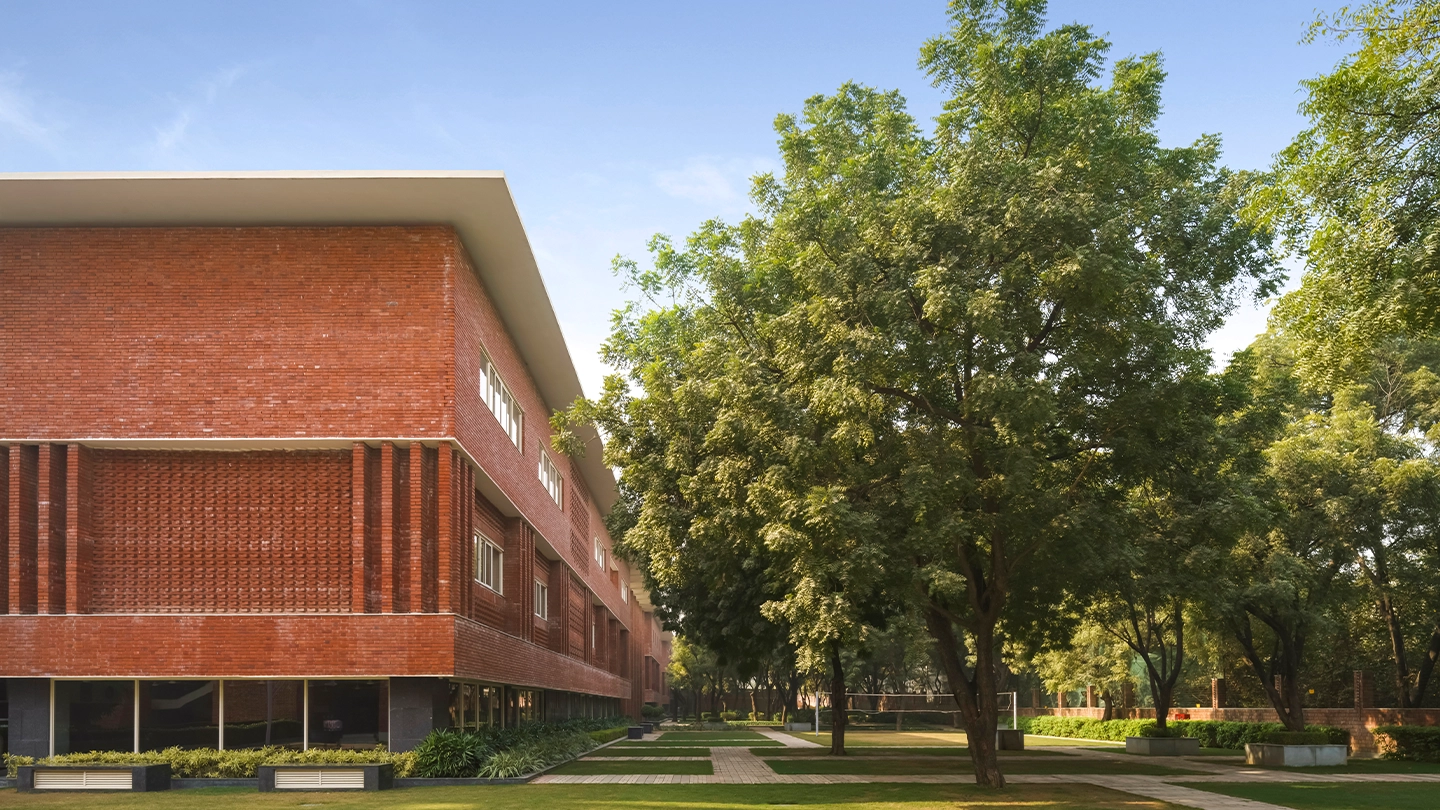
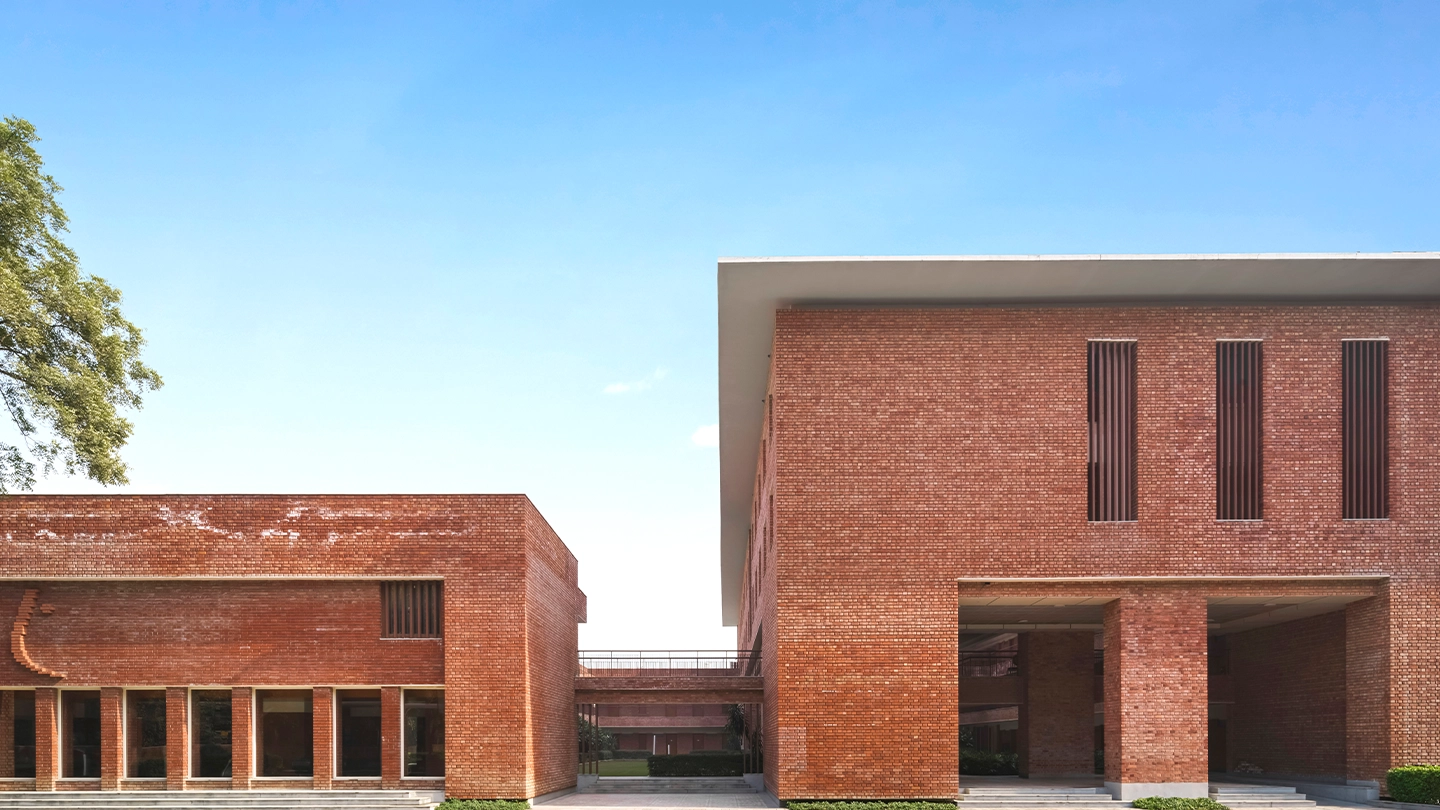
A dense grove of mature neem trees along the northern edge provides the project’s central organising device. The built form shifts around this landscape, preserving the trees while creating shaded courts, semi-open spill-out spaces, and a more temperate microclimate. Building heights are intentionally kept low, allowing the campus to retain a pedestrian scale and reinforcing a close interweaving of architecture and landscape. Open areas, informal gathering zones, and a central OAT support interaction and shape a more connected academic environment.
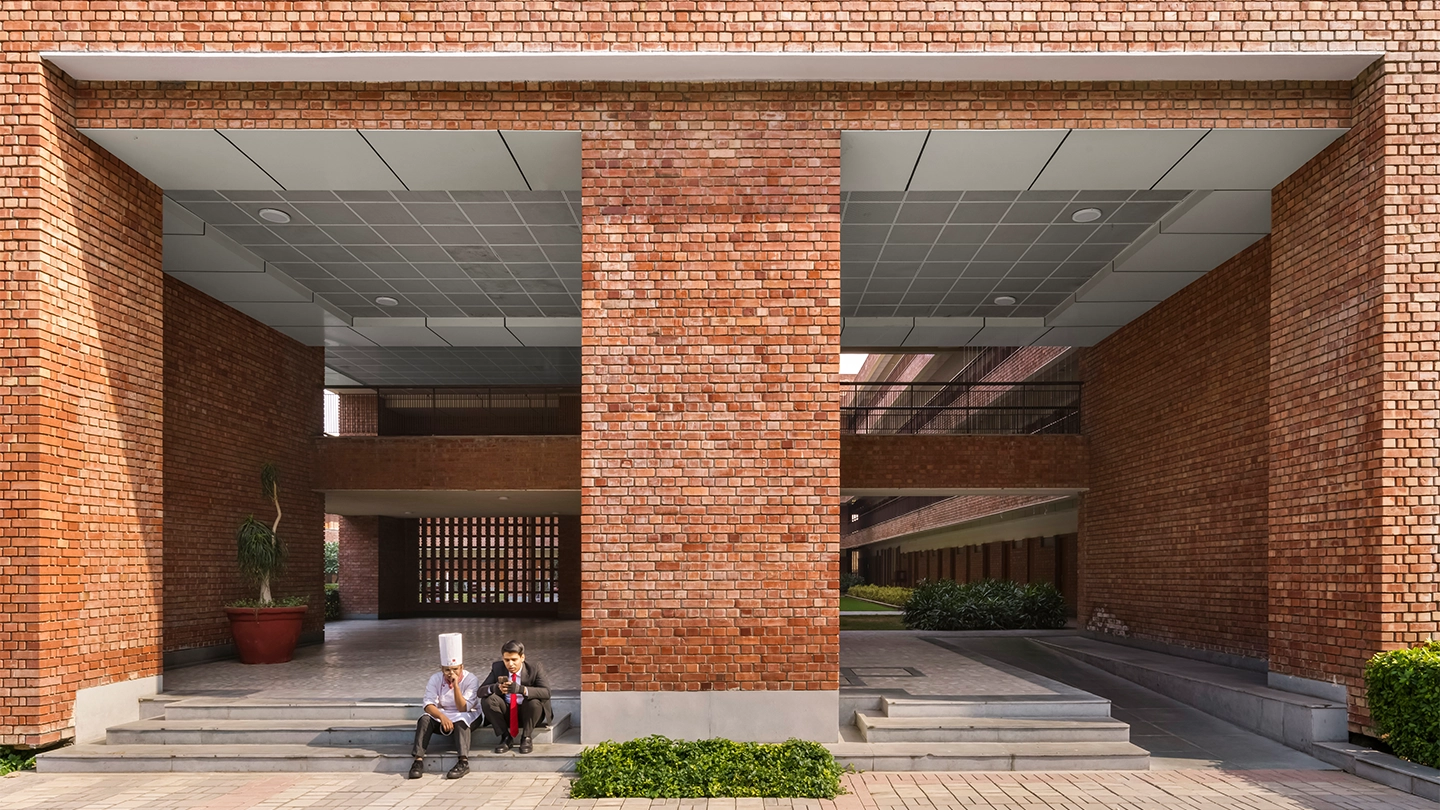
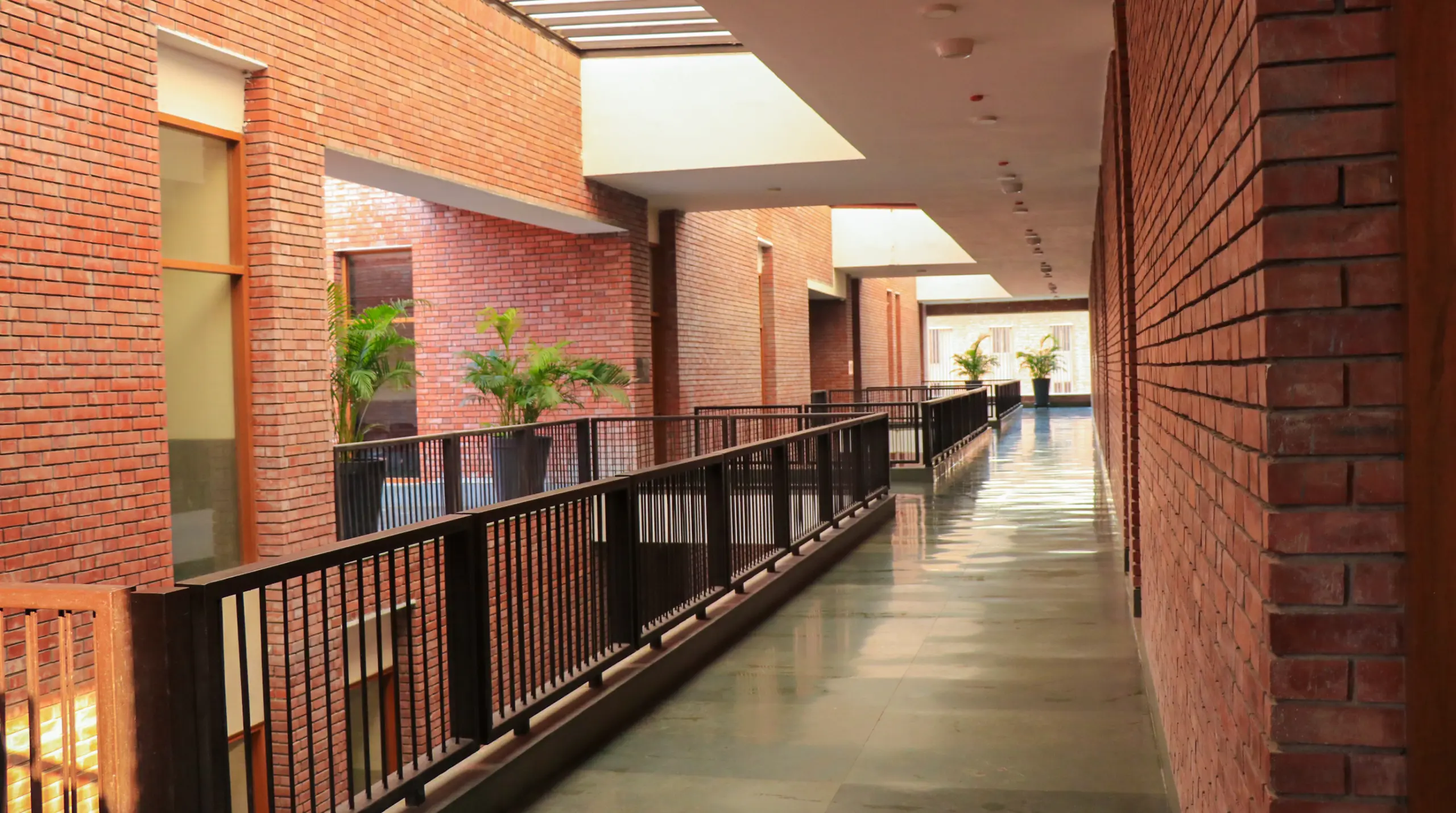
The planning is based on a single optimised modular bay, enabling flexibility, repetition, and long-term ease of maintenance while supporting efficient resource use. Passive strategies are integral to the design: north-south orientation reduces solar gain, the building opens towards the neem grove for filtered daylight and shade, and brick jaalis, cavity walls, pergolas, parasol roofs, and water features temper the microclimate. Rainwater is collected into ponds and water bodies along circulation routes, aiding evaporative cooling. Through this synthesis of hospitality training, climate-responsive design, and durable material choices, the institute establishes a pedagogical model that is immersive, efficient, and distinctly rooted in place.