Madhav Institute of Technology & Science
Gwalior
- Site Area: 44 acres
- Built Up: 2,20,000 sq. ft.
A new academic and cultural precinct where shaded learning courts meet the craft memory of Gwalior
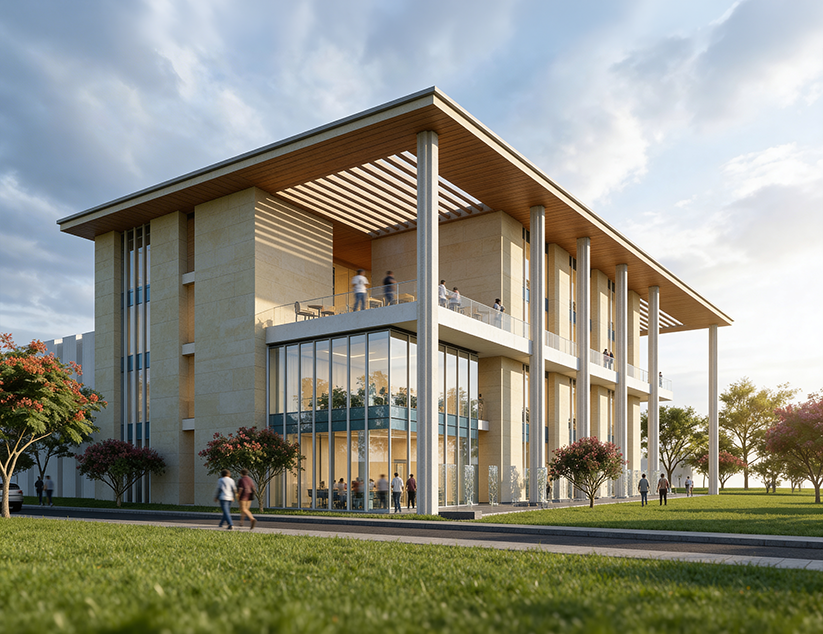
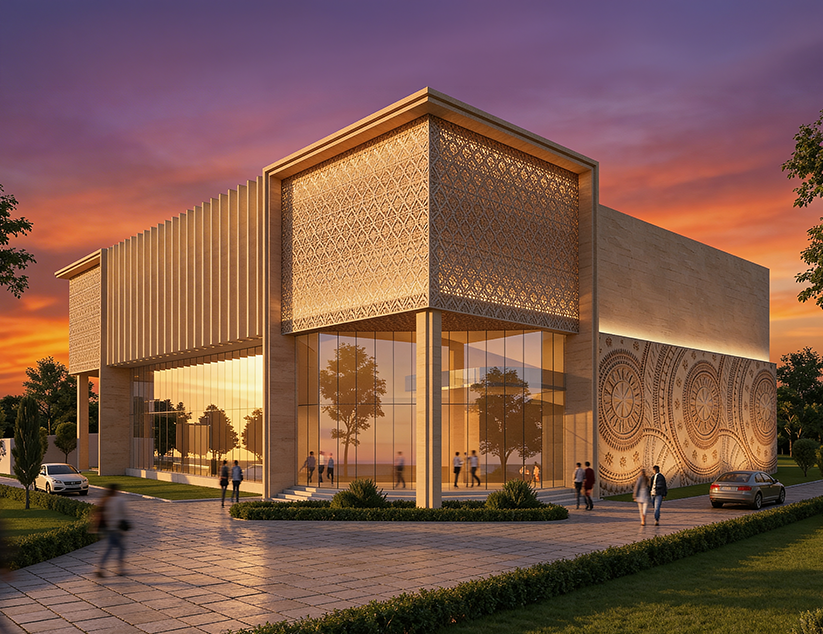
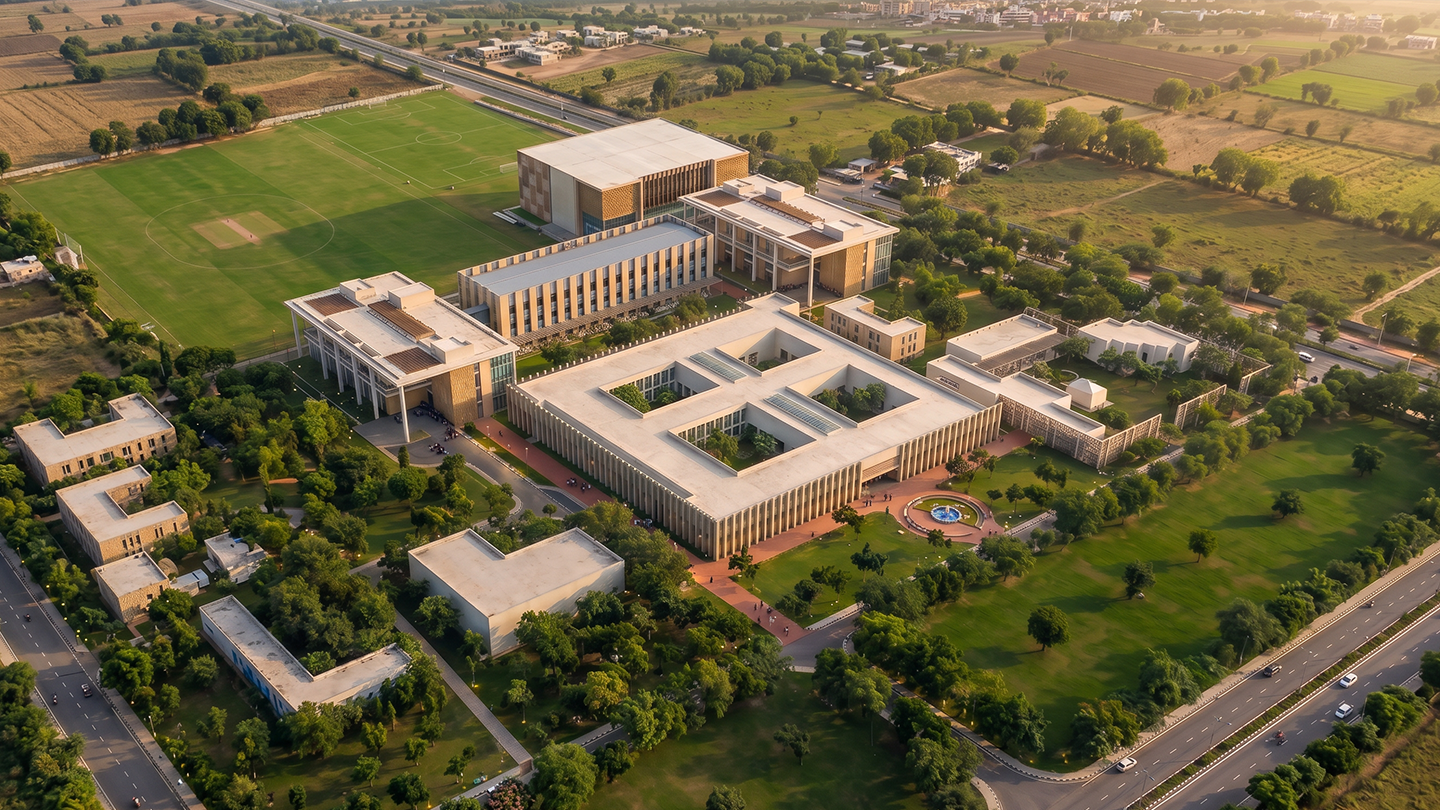
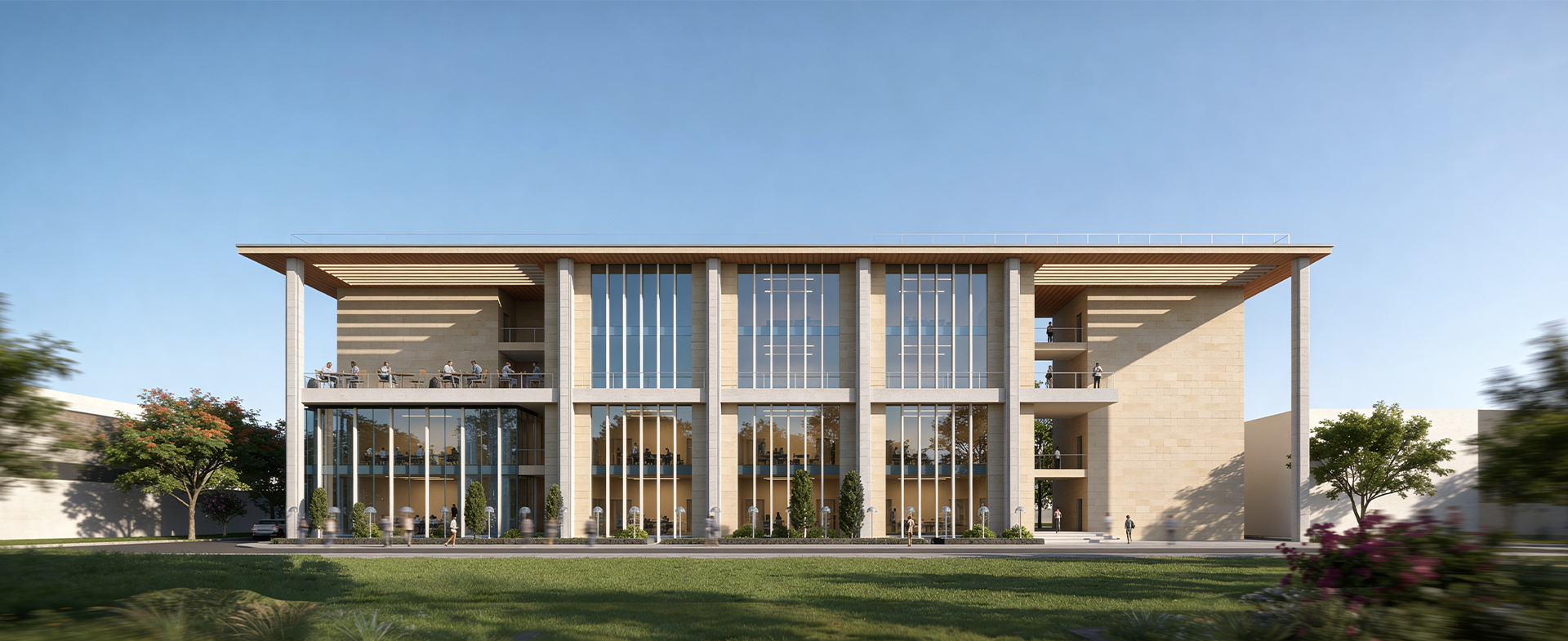
At MITS, the proposal brings together two distinct yet closely related programmes: a new academic block of approximately 77,800 square feet and a 1,500-seat auditorium of approximately 57,600 square feet, conceived as a strategic expansion of the existing campus rather than an isolated insertion. The project is shaped by the institution’s larger ambition to strengthen academic infrastructure while giving the campus a more coherent public presence, with masterplanning, landscape, façade unification, and shaded pedestrian movement all treated as part of the architectural brief.
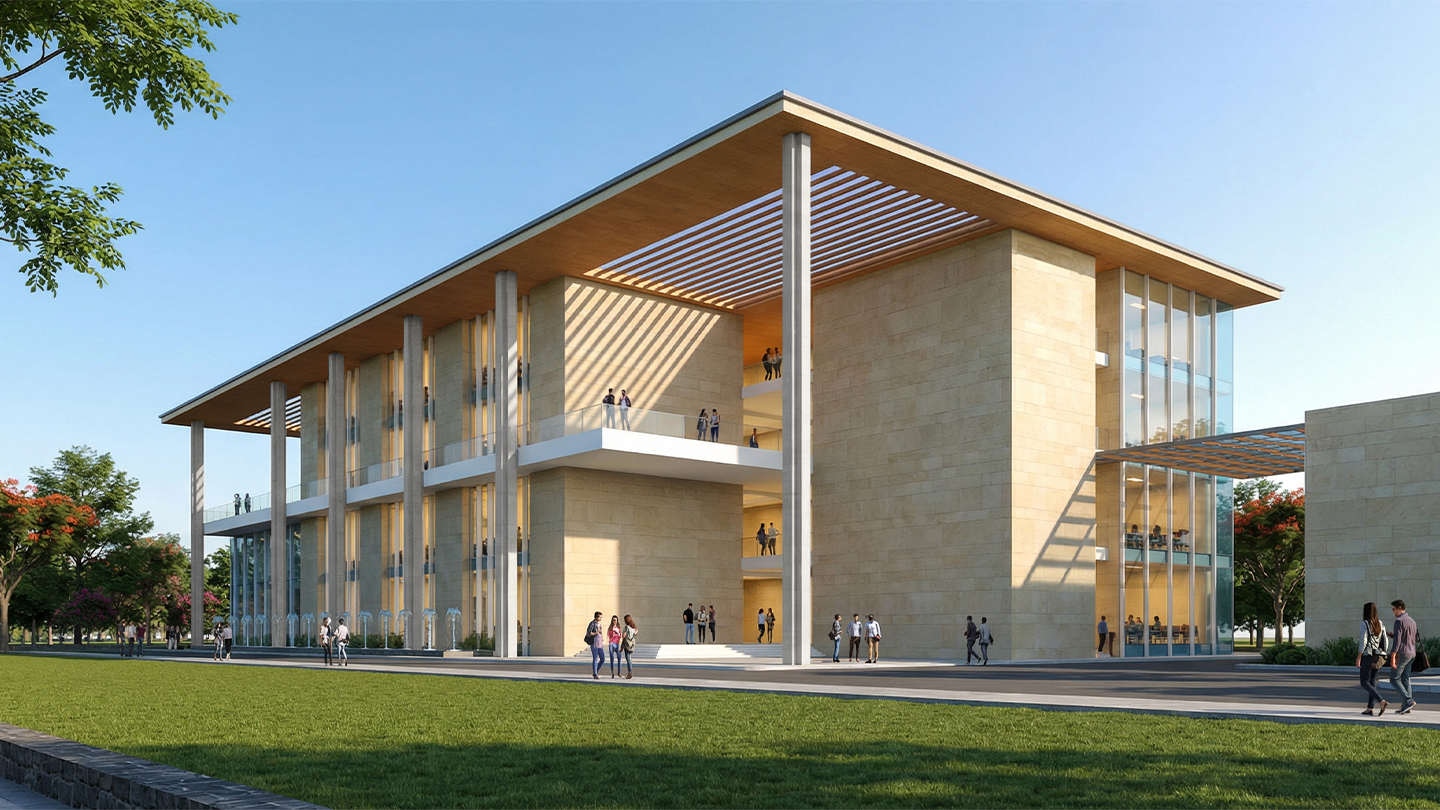
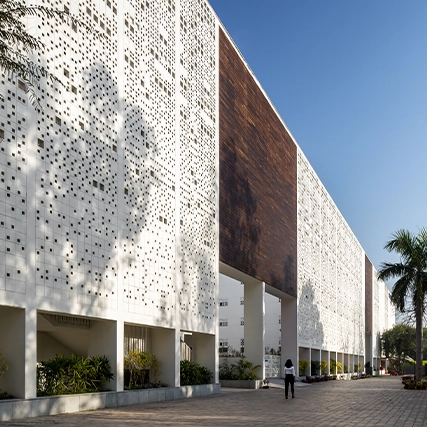
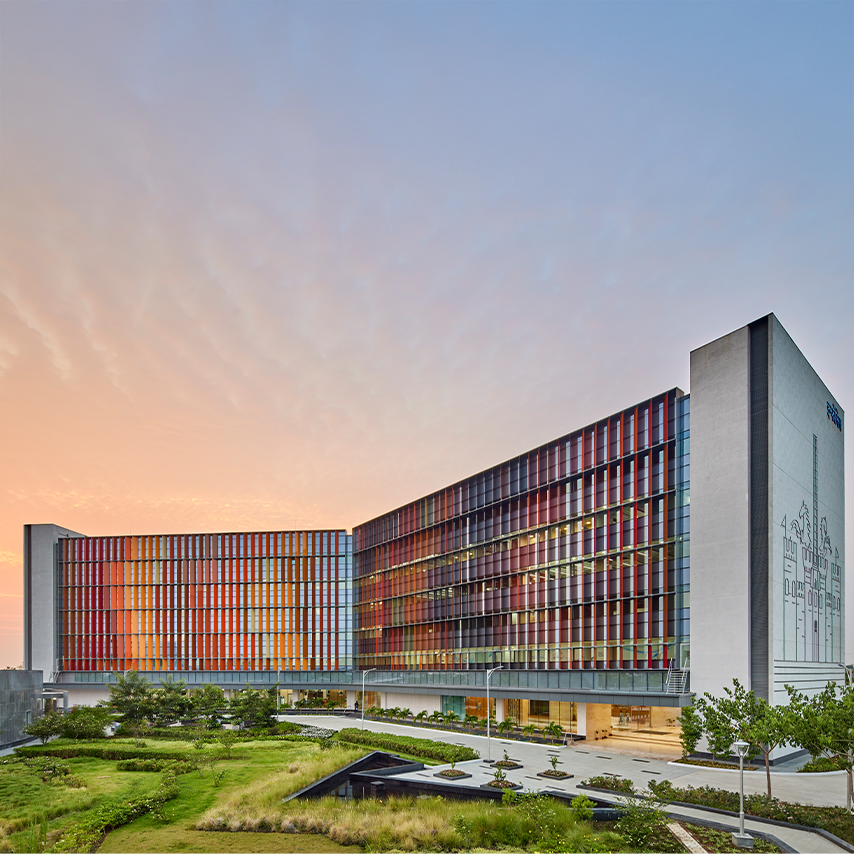
The academic block is planned as a four-level teaching building with workshops, laboratories, lecture halls, seminar rooms, computer centre, faculty spaces, and an approximately 800 square metre laboratory zone, organised along a compact linear plan that connects directly to the engineering and IoT blocks. A shaded pedestrian pathway, internal courtyard edge, and water feature at ground level lend the building a more generous social life, while the façade studies calibrate openness and solidity through sandstone cladding, plastered columns, metal fins, glass, warm wooden soffits, and selective jaali expression derived from the geometry of Gwalior Zero. This gives the building a language that is contemporary in section and proportion, yet rooted in the texture of its setting.
The auditorium assumes a more singular civic role. Planned with foyer, concession areas, VIP lounge, green rooms, projection room, and seating for 1,500, it is conceived as a cultural anchor for the campus. Its form is deliberately more monumental, with a deep overhanging roof, a tall glazed corner, and a restrained sandstone envelope animated by art façades that draw on Pithora painting, Gond art, Mandana traditions, and carved local stone. Across the proposal, the architecture works through shade, procession, and cultural reference, giving MITS an expansion that is infrastructural in function yet distinctly institutional in character.